Trump’s Nobel Ambitions Meet a Hard No From the Prize Committee
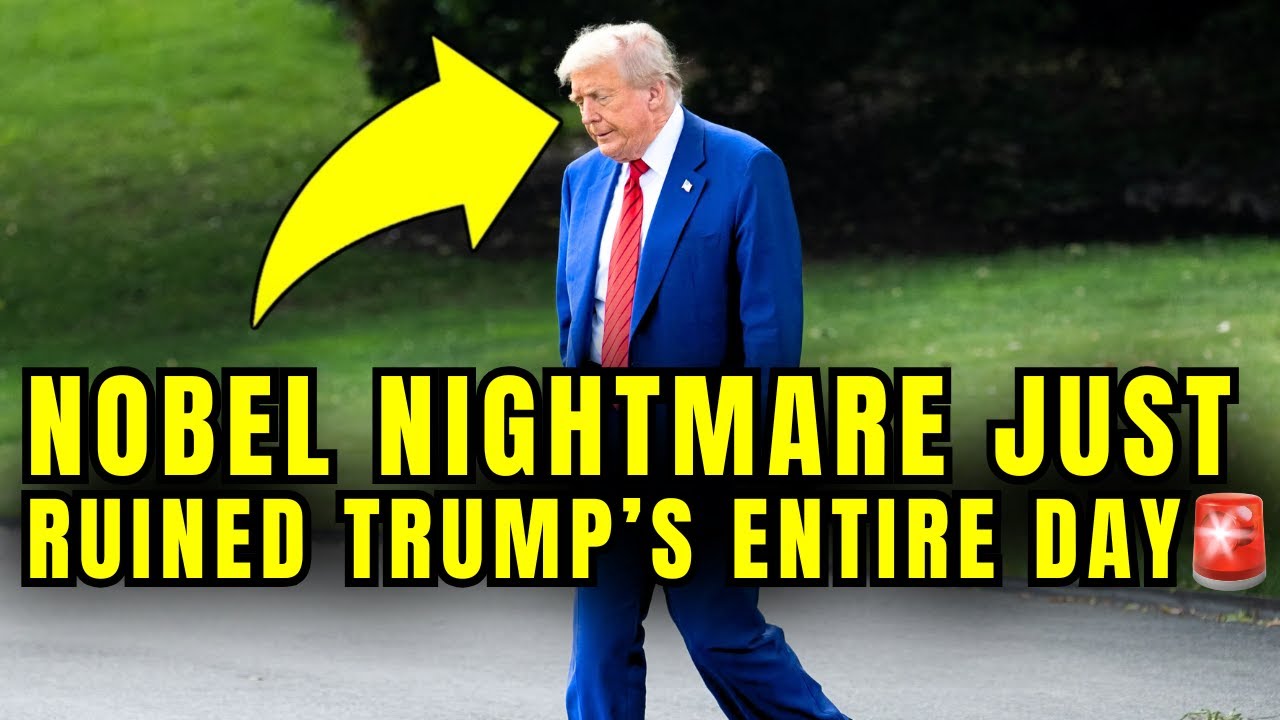
WASHINGTON — President Donald Trump has rarely hidden his desire for a Nobel Peace Prize. Since returning to the White House, he has repeatedly claimed credit for halting multiple global conflicts, casting himself as a peacemaker overlooked by an international establishment he says is biased against him.
This week, however, Trump’s long-running campaign for the world’s most prestigious peace honor collided with an immovable institution: the Nobel Committee itself.
In a statement reported Friday by The Daily Beast, a spokesperson for the Nobel Prize organization made clear that one idea floated publicly by Trump — that a current Nobel laureate might transfer her prize to him — is categorically impossible. “A Nobel Prize cannot be transferred to others once the announcement of the laureates has been made,” the spokesperson said. “The decision stands for all time.”
The clarification undercut a claim Trump made in a recent interview, in which he suggested that Venezuelan opposition leader María Corina Machado, who won a Nobel Prize earlier this year for her pro-democracy activism, was considering surrendering her medal to him.
A Prize Trump Says He Deserves
Trump has long argued that he merits the Nobel Peace Prize, frequently invoking past recipients — including former President Barack Obama — as evidence that the honor is, in his view, politically motivated.
In recent weeks, Trump has gone further, asserting that he has “stopped eight wars,” sometimes adding qualifiers such as “eight and a quarter” when conflicts reemerge or flare elsewhere. Independent analysts and foreign policy experts have challenged those claims, noting that several of the situations Trump cites were not formally declared wars, while others have since resumed hostilities.
Still, Trump has treated the Nobel as a personal grievance. In one interview, he described the committee’s failure to recognize him as “a major embarrassment to Norway,” apparently conflating the independent Nobel institutions with the Norwegian government — a mistake diplomats and historians are quick to note.
The Nobel Peace Prize is awarded by the Norwegian Nobel Committee, a body appointed by Norway’s Parliament but explicitly independent of the government. The Nobel Institute administers the prize, while the decision itself is final and non-transferable.
Venezuela at the Center
Trump’s latest Nobel rhetoric has unfolded alongside dramatic developments in Venezuela, where the administration has claimed a new, assertive approach toward the authoritarian government led by Nicolás Maduro.
Trump has publicly framed recent U.S. actions as efforts to “liberate” Venezuela, though critics argue that the administration’s strategy has been inconsistent and opaque. Opposition figures and international observers have raised questions about whether U.S. pressure has meaningfully shifted power dynamics inside the country.
At the same time, María Corina Machado has emerged as a central figure in Venezuela’s opposition movement. Banned from running for president by the Maduro government despite overwhelming support in opposition primaries, she has become an international symbol of democratic resistance — recognition that helped earn her the Nobel Prize earlier this year.
That distinction appears to have irritated Trump. In his interview, he suggested that Machado was willing to hand over her Nobel Prize to him and hinted that U.S. assistance in facilitating her return to Venezuela could follow.
There is no public evidence that Machado has offered to surrender her Nobel Prize. Her representatives have not confirmed Trump’s account, and the Nobel Committee’s statement makes clear that even if such an offer were made, it would be meaningless.

Behind-the-Scenes Pressure
The Daily Beast report added another layer to the story, alleging that Trump allies had privately urged Machado to give her Nobel medal to the president. Among those named was Rachel Campos-Duffy, a Fox News personality and the wife of Transportation Secretary Sean Duffy.
According to the report, Campos-Duffy encouraged Machado to present the medal to Trump during a potential Oval Office meeting. Neither Campos-Duffy nor the White House has publicly commented on the Nobel Committee’s statement or on the alleged outreach.
The episode has prompted incredulity among Nobel scholars. “The idea that a Nobel Prize could be handed from one person to another reflects a basic misunderstanding of how the prize works,” said a historian who has written extensively on the Nobel Peace Prize. “It is not a trophy that can be traded or reassigned. It is a historical designation.”
A Pattern of Personalization
For Trump critics, the Nobel episode fits a broader pattern: a tendency to personalize institutions and honors that are designed to stand apart from individual leaders.
Trump’s public fixation on the Nobel has resurfaced repeatedly during moments of diplomatic tension, from Middle East negotiations to dealings with North Korea. Each time, supporters echo his complaints, while detractors argue that the pursuit itself undermines the spirit of the prize.
“The Nobel Peace Prize is not awarded for wanting peace or claiming peace,” said a former U.S. diplomat. “It’s awarded for demonstrable, sustained contributions to conflict resolution or humanitarian causes. Publicly demanding it, or implying someone else should give it to you, runs counter to its ethos.”
Reaction Abroad
International reaction has ranged from bemusement to concern. Norwegian commentators, in particular, have expressed frustration at Trump’s repeated references to Norway as if it were responsible for Nobel decisions.
“The committee is independent,” one Norwegian political analyst told local media. “This is well known. Suggesting that the country should be embarrassed reflects either ignorance or disregard for how the system works.”
In Venezuela, the story has landed against a backdrop of uncertainty and fear, with many activists wary of being used as pawns in geopolitical theater. Machado herself has focused publicly on the situation inside her country rather than Trump’s remarks, emphasizing democratic reform and international pressure on the Maduro government.
An Unmoved Institution
Ultimately, the Nobel Committee’s intervention was understated but decisive. There was no rebuke, no elaboration — just a statement of fact.
A Nobel Prize, once awarded, cannot be transferred. It cannot be reclaimed, reassigned or bestowed retroactively on someone else. The decision, as the committee put it, “stands for all time.”
For Trump, the clarification represents another barrier in a quest that has increasingly taken on a personal tone. For the Nobel institutions, it was a reminder of their enduring role as guardians of a tradition meant to outlast any one leader.
And for observers, it underscored a contrast that has defined much of Trump’s second term: between a president eager for symbolic validation and institutions designed to resist precisely that kind of pressure.
As one former Nobel Committee member once said, “The prize does not chase power. Power occasionally chases the prize.”






