Senate Republicans Break With Trump on Venezuela, Signaling a Rare Reassertion of War Powers
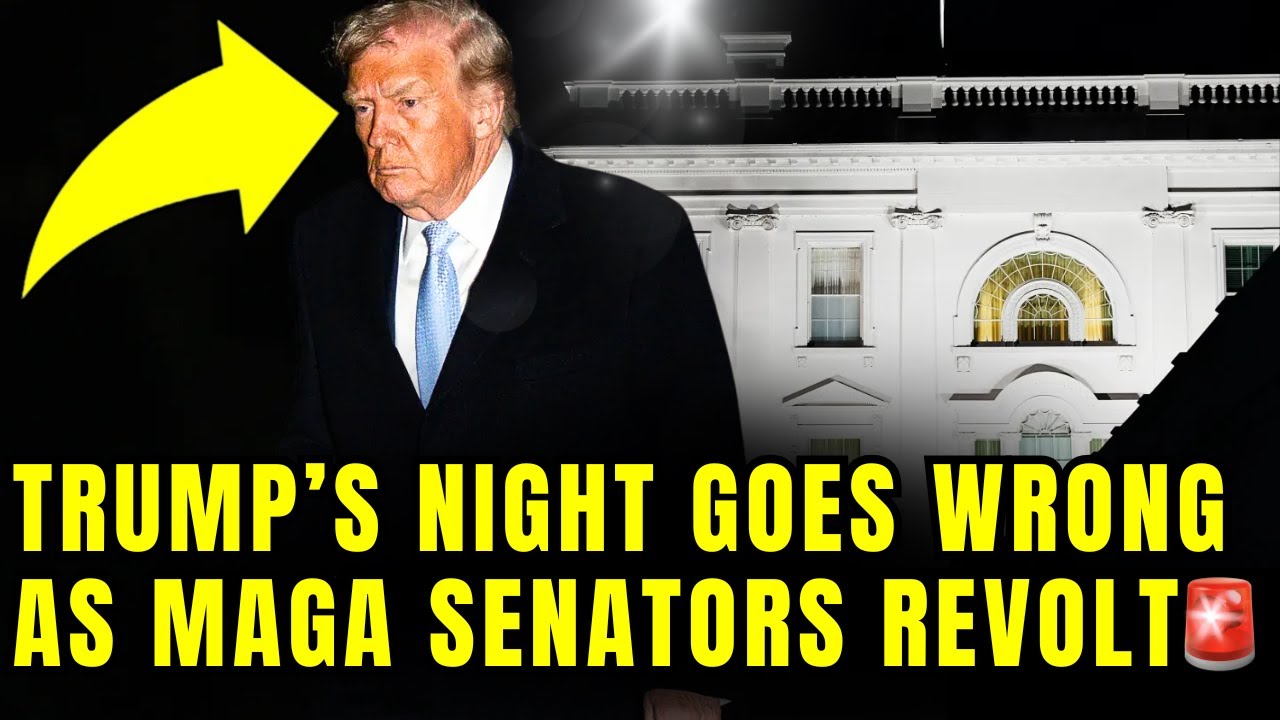
WASHINGTON — President Donald Trump is facing an unusual and potentially consequential rebuke from Capitol Hill, as a bipartisan group of senators moves to curtail his authority to use military force in Venezuela — a step that has rattled the White House and exposed deep unease even within Trump’s own party.
The measure, a narrowly tailored War Powers resolution, is scheduled for a full Senate vote as early as Tuesday. It would require explicit congressional authorization before the president could engage U.S. forces in new armed hostilities in Venezuela, effectively blocking any unilateral escalation, including the deployment of ground troops.
Five Republican senators joined Democrats to advance the resolution out of committee, a rare act of defiance in a chamber that has largely deferred to the executive branch on matters of war and peace for more than two decades.
A Shock to the System
The vote comes just days after Trump confirmed that U.S. forces had captured Nicolás Maduro, Venezuela’s authoritarian leader, in a covert operation. While Maduro has long been accused of corruption, drug trafficking and human rights abuses, the decision to seize a sitting head of state sent shock waves through diplomatic circles and raised immediate questions about the scope of presidential war powers.
In an interview with The New York Times, Trump was asked whether any checks remained on his authority abroad. “There’s one thing,” he replied. “My own morality. My own mind.”
That remark reverberated on Capitol Hill, where lawmakers from both parties said it underscored the need for Congress to reclaim its constitutional role in decisions of war.

The Resolution — and the Math
The resolution applies only to Venezuela, but its implications are far broader. Under the Constitution and the War Powers Act of 1973, Congress retains the authority to declare war, even as presidents have steadily expanded their ability to initiate military action without legislative approval.
Republicans currently hold a 53–47 majority in the Senate. If the five Republicans who supported the resolution in committee maintain their position on the floor, it will pass outright. If two of them defect, the vote would tie, allowing Vice President J.D. Vance to break the tie in Trump’s favor.
That arithmetic has fueled intense pressure from the White House.
White House Lobbying Goes Into Overdrive
According to reporting by Politico, senior administration officials have been scrambling behind the scenes to flip votes. Secretary of State Marco Rubio personally called several senators, insisting that the administration had “no plans” to send ground troops into Venezuela.
Trump himself has also made direct calls. Senator Josh Hawley told Politico that the president urged him to reverse course, warning that the resolution would weaken American power. Senators Lisa Murkowski and Susan Collins confirmed they had also received personal appeals from Trump. Ms. Collins said she would not change her vote.
Publicly, Trump has lashed out at the Republican defectors, accusing them of undermining national security and saying they “should never be elected again.”

More Than Venezuela
While the resolution is limited to Venezuela, constitutional scholars say its passage would have ripple effects far beyond Caracas.
“It would be a clear signal that the Senate is no longer willing to be a rubber stamp,” said one former Senate legal adviser. “Once Congress reasserts itself in one theater, it becomes harder for the president to claim unchecked authority elsewhere.”
Lawmakers privately acknowledge that a successful vote could complicate any future unilateral actions involving places Trump has publicly mentioned, including Greenland, Canada, Iran or expanded military deployments tied to immigration enforcement and border security.
The vote also represents a sharp break from the post–September 11 era, when Congress ceded broad war-making authority to the executive branch through sweeping authorizations that later became politically toxic. Several senators, Democrats and Republicans alike, have said they regret those votes.
A Senate Finding Its Voice Again
For years, both parties have been reluctant to confront presidents of their own party on national security, wary of appearing weak or undermining troops in the field. That reluctance has been especially pronounced among Republicans during Trump’s presidency.
This week’s move suggests that dynamic may be changing.
“The Senate is remembering that it has a spine,” said a former Republican aide. “This isn’t about loving or hating Trump. It’s about whether one person gets to decide when the country goes to war.”

What Comes Next
Even if the resolution passes the Senate, Trump could veto it, setting up a further confrontation over war powers. Overriding a veto would require a two-thirds majority in both chambers — a high bar that makes immediate enforcement uncertain.
Still, the political message would be unmistakable. A bipartisan vote to rein in Trump’s authority would mark one of the most significant congressional pushbacks against presidential war-making since the Vietnam era.
And it would underscore a reality the White House is keenly aware of: for the first time in years, Congress appears willing to challenge the premise that the president alone decides when, where and how the United States uses force.
As the vote approaches, the outcome remains uncertain. But regardless of the final tally, the episode has already shifted the balance of the debate — away from fear and deference, and back toward constitutional limits that have long sat dormant.
For a Senate that has spent decades watching power drift down Pennsylvania Avenue, this week may be remembered as the moment it finally tried to take some of it back.






