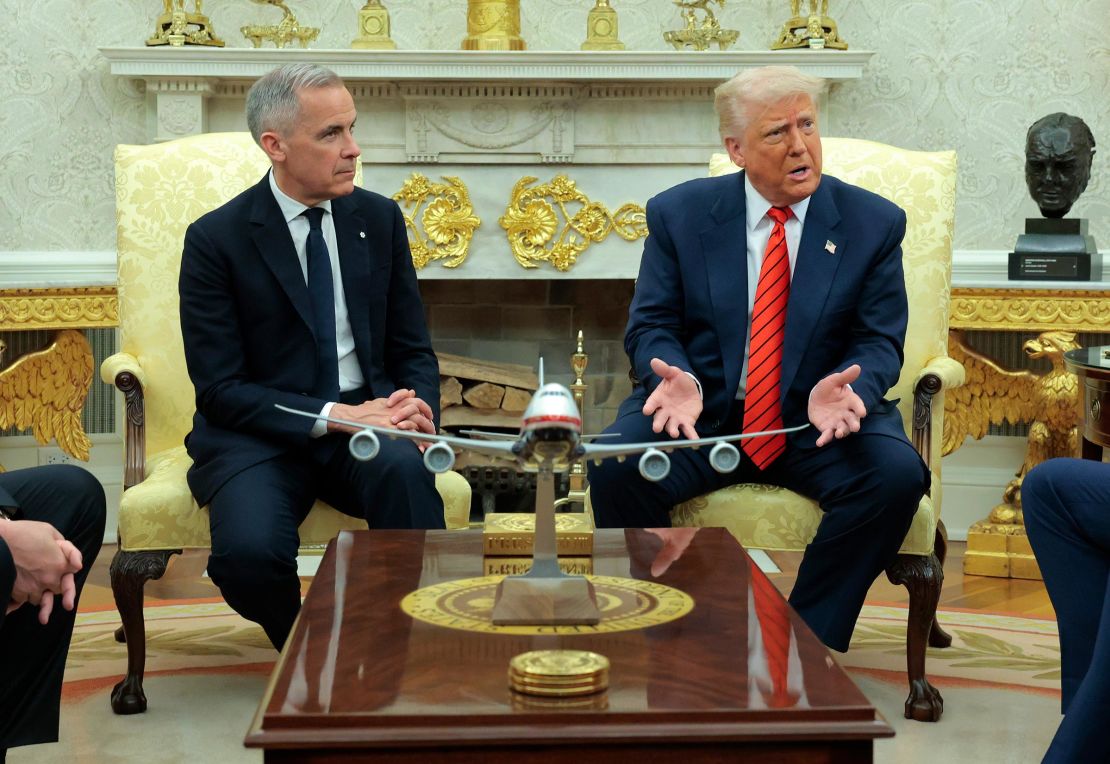
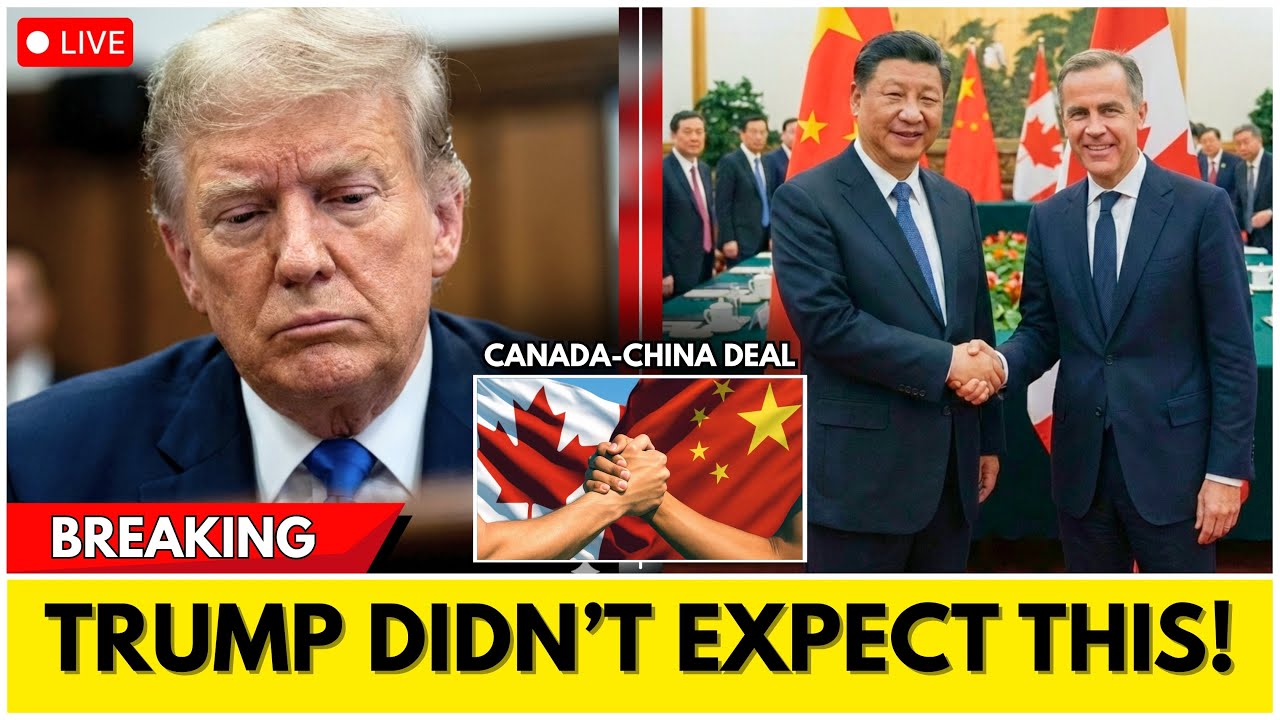
In a move that has rocked North American economic relations, Canada under Prime Minister Mark Carney has executed a dramatic pivot toward deepened trade and energy partnerships with China, sealing multi-billion-dollar deals that sideline the United States and expose the limits of President Donald J. Trump’s tariff-heavy strategy. As Carney wraps up his historic four-day visit to Beijing—the first by a Canadian prime minister since 2017—announcements of expanded contracts for liquefied natural gas (LNG), critical minerals, crude oil, and agricultural goods have detonated an economic bomb, leaving U.S. exporters facing lost markets worth billions and Washington scrambling to regain leverage in a rapidly shifting continental trade landscape.
The pivot, framed by Carney as a necessary step toward “resilience” amid U.S. unpredictability, marks a bold diversification effort. Canada aims to double non-U.S. exports over the next decade, reducing reliance on a neighbor that now accounts for roughly 76% of its trade but has imposed punishing tariffs on key sectors like steel, aluminum, autos, and agriculture. During the visit, which included meetings with President Xi Jinping, Premier Li Qiang, and business leaders, Canada and China inked memoranda of understanding (MOUs) and advanced negotiations on major energy flows. China, already a top buyer of Canadian crude via the expanded Trans Mountain pipeline, is set to increase imports significantly, with potential deals boosting volumes amid supply uncertainties from Venezuela.
Experts highlight LNG as a cornerstone. British Columbia’s projects, including LNG Canada, position the province as a supplier of “the lowest-emission LNG in the world,” appealing to China’s energy needs. Sources indicate progress toward long-term contracts that could lock in billions in annual exports, diverting volumes previously eyed for U.S. markets. Critical minerals—essential for batteries, clean tech, and electronics—also feature prominently. Canada, rich in reserves of lithium, cobalt, nickel, and rare earths, is positioning itself as a stable alternative supplier, though discussions emphasize selective engagement to avoid over-dependence.
The economic fallout for the U.S. is stark. American industries reliant on Canadian resources face shortages and price spikes, as redirected flows reduce availability. U.S. refineries dependent on heavy Canadian crude could see disruptions, while manufacturers competing for critical minerals confront higher costs. Analysts estimate the shift could lock the U.S. out of $20-40 billion in annual trade value across energy and minerals alone. “This isn’t just diversification—it’s a structural realignment,” said Pedro Antunes, chief economist at the Conference Board of Canada. “Trump’s tariffs forced Canada’s hand, and Beijing is capitalizing.”
Carney’s administration celebrates the deals as a triumph of pragmatic diplomacy. In Beijing, the prime minister emphasized Canada’s role as a “rules-based” supplier of energy, resources, and food, while navigating security concerns like human rights and foreign interference. Officials stress balance: advancing where interests align (energy, agriculture) while guarding sensitive areas (AI, defense). Progress on China’s tariffs on Canadian canola—imposed in retaliation for past disputes—also appears on the horizon, potentially unlocking billions more for Prairie farmers.
Yet the deeper motive is unmistakable: retaliation against Trump’s aggressive “America First” policies. Since taking office in January 2025, Trump has wielded tariffs as leverage, breaking from the USMCA framework with emergency measures on Canadian goods and even floating annexation rhetoric. Trade talks stalled, and threats of further escalation left Ottawa with few options. Carney’s pivot—coupled with outreach to India and other partners—serves as a hedge, reducing vulnerability to unilateral U.S. actions. “The old era of ever-closer integration is over,” Carney stated earlier, signaling a “reliance to resilience” doctrine.

Trump’s response has been furious but notably toothless. Truth Social posts railed against “disloyal” Canada and “communist” deals, with aides like Stephen Miller warning of adversaries gaining Western Hemisphere resources. However, experts note Washington holds limited cards. Military bluster—threats toward Greenland, Mexico, or even Canada—rings hollow against economic realities. Tariffs have backfired, accelerating diversification rather than forcing compliance. “Trump thought leverage came from threats; Canada proved it comes from options,” said Eurasia Group analyst.
The implications ripple far. For U.S. dominance claims, this exposes cracks: allies once tethered now seek alternatives. For Canada, success hinges on execution—building infrastructure, managing security risks, and avoiding over-reliance on China. Critics warn of trading U.S. democracy for Beijing’s authoritarianism, while supporters see it as sovereignty in action.
As clips of Carney and Xi’s meetings flood global media, the North American trade map redraws in real time. Billions in redirected flows, skyrocketing U.S. shortages, and a prime minister who turned crisis into opportunity—this pivot isn’t just policy; it’s a statement. Trump may still hold the White House, but Canada has shown the continent’s economic future may no longer be dictated from Washington alone.






