Canada Reconsiders the F-35, Testing the Limits of Alliance, Autonomy, and Cost

OTTAWA — When Canada announced in March 2025 that it was taking a second look at its $19 billion deal to purchase 88 F-35 fighter jets from Lockheed Martin, the decision reverberated far beyond Parliament Hill. For a country long seen as a dependable, if cautious, partner in American-led defense initiatives, the move signaled something deeper than procurement anxiety. It suggested a reassessment of how far loyalty, cost, and sovereignty should stretch in an era of intensifying geopolitical strain.
The reconsideration was made more striking by what followed: Canada openly acknowledged it was weighing an alternative once thought decisively defeated — the Swedish-built Gripen E, produced by Saab. No NATO country has ever come this close to stepping back from the F-35 after formally committing to the program. That Canada would do so publicly has turned a domestic defense debate into a case study watched closely in Washington, Brussels, and beyond.
A Deal That Would Not Settle
Canada’s relationship with the F-35 has been uneasy from the beginning. In 2010, the government announced plans to buy 65 jets without a competitive tender, triggering fierce political backlash over transparency, cost, and whether the aircraft suited Canada’s specific defense needs. The plan was eventually shelved, reviewed, revived, and restructured over more than a decade of studies and delays.
In 2023, after an open competition, Ottawa again selected the F-35A, this time committing to 88 aircraft. Officials described the decision as final — the result of exhaustive analysis. The jets were to replace the CF-18 Hornets, which have flown for more than 40 years and were becoming increasingly costly to maintain. Delivery of the first 16 aircraft was scheduled for early 2026, with the rest arriving through 2032.
But by 2025, that sense of closure began to erode.
Costs, Politics, and a Changed Climate
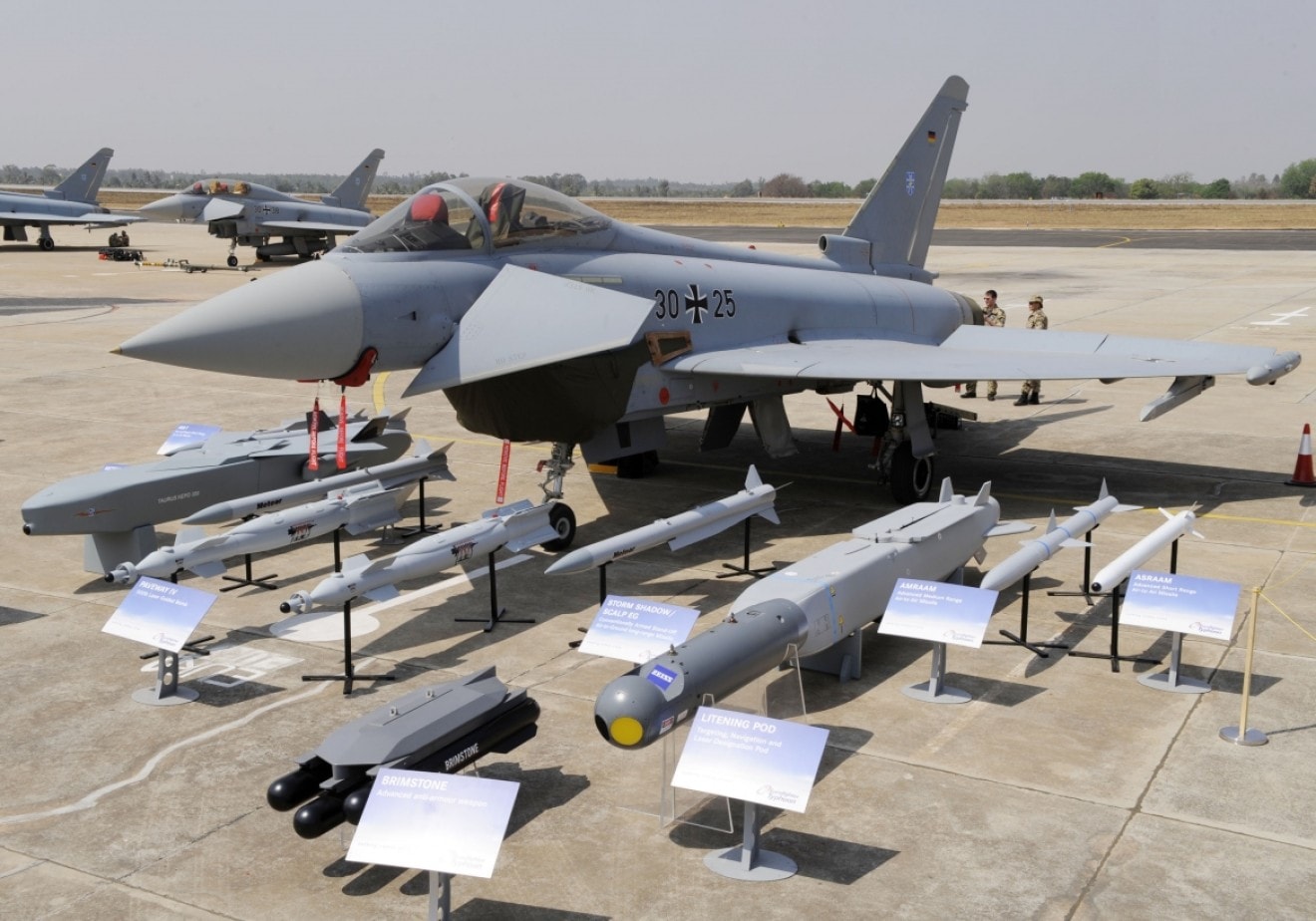
The first blow came from economics. In June 2025, Auditor General Karen Hogan released a report that reframed the public understanding of the deal. The oft-cited $19 billion price tag, she concluded, reflected only acquisition costs. When infrastructure upgrades, weapons systems, and early operating expenses were included, the figure rose to $27.7 billion. Over the program’s full life cycle, costs could reach $33 billion — nearly 75 percent higher than originally presented to Parliament.
The second blow was political. Trade relations with the United States deteriorated sharply under President Donald Trump, who openly threatened sweeping tariffs on Canadian exports and suggested Canada should consider becoming the 51st U.S. state. Those remarks, widely circulated and debated across American and Canadian social media, hardened Canadian public opinion around questions of dependence on Washington. Defense policy, once insulated from such disputes, became entangled with national identity and sovereignty.
In Ottawa, the question shifted. The issue was no longer simply whether the F-35 was the most capable aircraft. It was whether Canada could afford the financial and political dependencies that came with it.
Saab’s Alternative — and Its Appeal
Into this uncertainty stepped Saab. The Swedish defense firm had lost the 2021 competition but never fully disengaged from Canada. In August 2025, Ottawa and Stockholm signed a new framework agreement on defense and aerospace cooperation, with a strong emphasis on Arctic security — an area of growing concern as Russia and China expand their northern presence.
Saab’s proposal went far beyond selling jets. The company pledged to assemble every Gripen E in Canada, offer full technology transfer, and allow Canadian engineers to maintain, modify, and upgrade the aircraft domestically. It promised up to 10,000 manufacturing and research jobs — later estimates put the figure closer to 12,000 — a message that resonated loudly amid inflation and industrial anxiety.
Canadian officials took notice. Industry Minister Mélanie Joly publicly stated that defense procurement should deliver broader economic returns, signaling openness to Saab’s approach. On social media and in policy circles, the debate began to resemble a broader argument about industrial strategy rather than a narrow military choice.
Capability Versus Control
Yet the military case for reopening the deal remains fraught.
In December 2025, Radio-Canada published leaked evaluation documents from the 2021 Future Fighter Capability Project. They showed that the F-35 had overwhelmingly outscored the Gripen E in Canada’s own assessments. On mission effectiveness, long-term upgrade potential, and survivability against advanced threats, the gap was not marginal — it was decisive.
Senior Royal Canadian Air Force figures weighed in publicly. Retired Lieutenant General Yvan Blondin warned that Arctic operations against near-peer adversaries demanded overwhelming technological superiority. Major General Chris McKenna echoed that view, arguing that a mixed fleet — 16 F-35s supplemented by Gripens — would dilute Canada’s deterrent power rather than strengthen it.
Defense analysts across U.S. media platforms have made similar points, noting that Canada’s security obligations under NATO and NORAD rely heavily on interoperability with U.S. forces — an area where the F-35 excels.
Dependencies That Cut Both Ways
Still, critics of the F-35 point to a different vulnerability: control. The aircraft’s software, maintenance systems, and upgrade pathways are managed by the Pentagon’s Joint Program Office. With the exception of Israel, no buyer has access to the source code. While Lockheed Martin denies the existence of any “kill switch,” the reality is that without continuous U.S.-approved updates, the aircraft’s effectiveness could degrade quickly.
President Trump has previously stated that weapons sold to allies would never match U.S. versions because “alliances can change” — remarks frequently resurfaced in online debates in Canada.
The Gripen, however, is not free of American leverage. Its General Electric F414 engine is U.S.-made, meaning export licenses remain subject to Washington’s approval. Analysts have noted that the United States has used such leverage before, complicating the notion that switching aircraft would guarantee autonomy.
An Unresolved Choice
As of January 2026, Canada has committed to accepting the first 16 F-35s already in production. The fate of the remaining 72 remains uncertain. Officials insist a complete withdrawal is unlikely, but negotiations with Lockheed Martin continue, focused on industrial benefits and cost controls. Talks with Saab and European partners also remain active.
What Canada ultimately decides will say less about any single aircraft than about how a middle power navigates alliance politics in an era of rising uncertainty. The F-35 represents unmatched capability and deep integration with the United States. The Gripen offers industrial participation and a measure of control but at a cost in raw performance.
For Washington, the episode is a warning. Even close allies are beginning to question not just what American power provides, but what it demands in return. For Ottawa, the choice is a defining one: between certainty and flexibility, between alliance orthodoxy and strategic independence.
The decision, whenever it comes, will shape Canada’s defense posture — and its relationship with the United States — for decades to come.






