A Wave of Resignations at the Justice Department Signals a Deepening Crisis Over the Rule of Law
Washington —
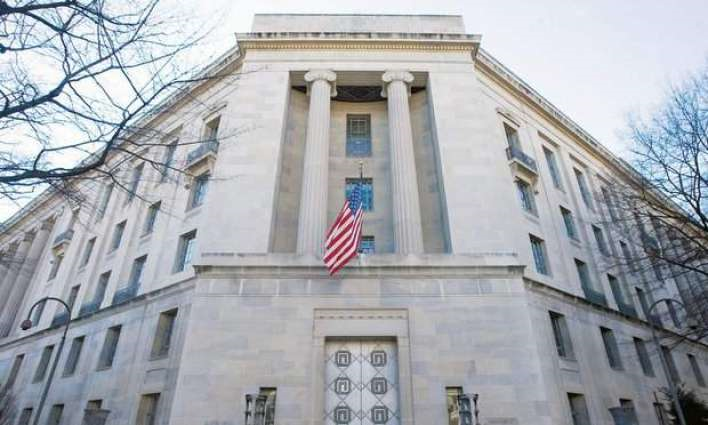
A sudden cascade of resignations at the Justice Department this week, stretching from Washington to Minneapolis, has exposed a widening rift between career prosecutors and the Trump administration, raising fresh questions about political interference, prosecutorial independence, and the future of civil rights enforcement in the United States.
Within a span of 24 hours, senior leaders from the Civil Rights Division in Washington and top prosecutors from the U.S. Attorney’s Office in Minnesota stepped down, according to reporting by MSNBC, CNN, The New York Times, and the Minnesota Star Tribune, as well as statements circulating widely among former federal officials on social media. The departures followed internal disputes over how the department handled the fatal shooting of 37-year-old Renee Nicole Good by an Immigration and Customs Enforcement officer last week.
At the center of the controversy is a decision by senior Justice Department leadership not to pursue a criminal civil-rights investigation into the ICE officer involved in the shooting, while reportedly urging prosecutors to examine potential charges against Good’s widow and others associated with her. Career lawyers familiar with the matter said such a shift ran counter to longstanding Justice Department norms.
“This is the kind of moment where experienced prosecutors know exactly what line they’re being asked to cross,” said one former senior Justice Department official, speaking on condition of anonymity to discuss internal deliberations. “And when you know the line is wrong, resignation becomes the last remaining ethical option.”
A Break With Post-Watergate Norms
After Watergate, the Justice Department established guardrails designed to insulate criminal investigations from political pressure. Central among them was the principle that similar cases should be treated alike, regardless of political consequences — a concept lawyers often summarize as the rule of law.
In fatal shootings involving law-enforcement officers, it has been routine for the Civil Rights Division’s criminal section, often in coordination with a U.S. Attorney’s Office, to lead or jointly conduct investigations. According to multiple current and former officials, that process was bypassed in this case.
Six senior members of the Civil Rights Division’s criminal section resigned in protest, according to MSNBC and corroborated by current DOJ employees. The lawyers who departed included veteran prosecutors with decades of experience investigating police misconduct and excessive use of force.
“These are not junior attorneys making political statements,” said a former Civil Rights Division lawyer who has publicly commented on the resignations on X. “These are the people who normally do these cases.”
Minnesota in Turmoil
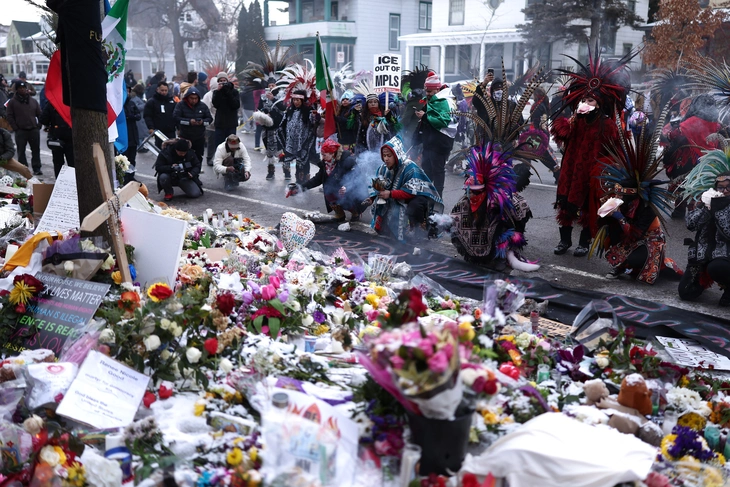
The shockwaves were felt most acutely in Minnesota, where at least six prosecutors — including Acting U.S. Attorney Joe Thompson — resigned from the U.S. Attorney’s Office, according to the Minnesota Star Tribune. Thompson, a 12-year veteran, had been leading a major federal investigation into social-services fraud, a priority repeatedly emphasized by President Trump.
Governor Tim Walz called Thompson’s resignation “a huge loss for our state,” praising him as “a principled public servant who spent more than a decade pursuing justice.” Minneapolis Police Chief Brian O’Hara struck a sharper note, saying that the departure of the office’s leadership raised doubts about the administration’s stated priorities. “When you lose the leader responsible for major fraud cases,” he said, “it tells you this isn’t really about prosecuting fraud.”
According to sources familiar with the internal dispute, prosecutors were instructed to limit cooperation with state investigators examining the ICE shooting and were encouraged instead to pursue possible charges against Good’s widow — a move several attorneys described as indefensible.
“Whatever the background of the victim or her family, it has no bearing on whether a federal officer’s use of lethal force was justified,” said a former federal prosecutor who worked on civil-rights cases. “That’s Prosecutorial Ethics 101.”
A Pattern, Not an Isolated Event
The resignations have revived memories of earlier departures at the Justice Department under President Trump, including a wave of exits tied to controversial prosecutorial decisions involving New York Mayor Eric Adams and pressure campaigns targeting perceived political adversaries.
Former DOJ officials across the political spectrum have taken to social media to describe a department increasingly divided between political appointees and career staff. Many have echoed a common refrain: senior prosecutors can tolerate policy disagreements, but not orders they believe violate professional ethics.
“There’s a difference between aggressive enforcement and politicized enforcement,” wrote a former assistant U.S. attorney on LinkedIn. “Once prosecutors are told the outcome in advance, the job is no longer about justice.”
Escalating Tensions on the Ground
As the internal crisis unfolded, Minneapolis saw escalating protests against the federal presence. According to CNN crews on the scene, law-enforcement agents deployed pepper balls and flashbangs as crowds shouted “ICE out now.” Snowballs were thrown. Federal vehicles surged in and out of protest zones.
More than 3,000 federal agents from ICE and Customs and Border Protection are now deployed in the city, with additional reinforcements expected. Department of Homeland Security officials, speaking anonymously, described mixed morale among agents, noting long-standing tensions between ICE and CBP that have complicated operations.
One DHS official described Minneapolis as “a proving ground” for the administration’s broader immigration strategy — a convergence of enforcement surges, threats to withhold federal funding, and aggressive rhetoric aimed at Democratic-led cities.
White House Rhetoric Fuels Backlash
President Trump has publicly defended ICE agents, writing on Truth Social that “the day of reckoning and retribution is coming.” White House officials have referred to Renee Good in derogatory terms, comments that former prosecutors say further undermined confidence in the department’s neutrality.
Deputy Attorney General Todd Blanche said the Justice Department found no evidence warranting a criminal investigation of the ICE officer, though critics note that the most experienced investigators were never allowed to conduct a full review.
What Comes Next
The U.S. Attorney’s Office in Minnesota employs roughly 60 to 70 prosecutors; the loss of six senior leaders in a single day represents a significant disruption. Current officials acknowledge that more resignations are possible as prosecutors weigh whether they can continue under current directives.
For many legal observers, the episode has crystallized a broader concern: that the Justice Department’s institutional credibility — painstakingly rebuilt over decades — is once again under strain.
“When career prosecutors start keeping resignation letters in their desks,” said a former DOJ ethics adviser, “it means they’re preparing for the moment when saying ‘no’ becomes unavoidable.”
Whether this moment marks a turning point or merely another chapter in a prolonged erosion of trust remains uncertain. What is clear, former officials say, is that the Justice Department is facing not just a staffing crisis, but a crisis of legitimacy — one playing out in public, and in real time.






