In a scenario that even the most optimistic political observers could not have predicted, the Supreme Court of the United States has just delivered a fatal blow to Donald Trump’s executive power agenda. This ruling is not merely a legal defeat; it is an electric shock that shakes the very foundations of Trump’s ambitions, right on the eve of an impeachment vote and a looming arrest warrant.

In a landmark decision, the Supreme Court blocked Trump’s attempt to federalize the Illinois National Guard for domestic law enforcement in Chicago. Trump had declared a public safety emergency and demanded federal military intervention, but Illinois Governor JB Pritzker sued, arguing that Trump was abusing his power and violating state sovereignty.
The Court sided with Illinois. The ruling stated: Federal law only allows the President to federalize the National Guard under extremely specific circumstances—specifically when regular federal forces are unable to execute the law. Trump failed to provide evidence that the FBI, DEA, or U.S. Marshals were unable to handle the situation in Chicago. The Court concluded: “You cannot federalize the military based on vague claims; you need concrete evidence”.
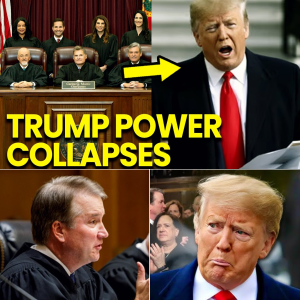
What stings Trump most is not just the 6-3 outcome, but the breakdown of the votes. Chief Justice Roberts wrote the majority opinion, joined by the three liberal justices and, most significantly, Kavanaugh and Barrett—two justices appointed by Trump himself.
The fact that the justices Trump expected to be “loyal” turned against him in a major executive power case is a profound personal humiliation. This sends a powerful message: Supreme Court justices are not personal loyalists; they are guardians of the Constitution. When Trump violates legal boundaries, even his judicial allies will say “No”.
Legal experts argue that this National Guard ruling is a “preview” of the fate awaiting Trump’s global tariff policies. Trump has been using the International Emergency Economic Powers Act (IEEPA) to impose sweeping tariffs, claiming a “national economic emergency”.
However, applying the Court’s logic from the National Guard case:
Is it truly an emergency? There was no immediate economic crisis threatening the nation when Trump imposed the tariffs.
Why bypass Congress? Trump declared an emergency simply to circumvent the normal legislative process.
Chief Justice Roberts emphasized in the ruling that when the President invokes emergency powers to override normal processes or infringe upon areas traditionally left to Congress, the courts must apply strict scrutiny. This means Trump’s entire tariff-based economic agenda is now on the verge of being declared unconstitutional.
The timing of this ruling could not be worse for Trump. It arrives just as he faces:
The Impeachment Vote: Article 3 of the impeachment charges is Abuse of Power. The Supreme Court ruling is the “smoking gun” that impeachment managers will use to prove Trump has systematically exceeded his constitutional authority.
The Surrender Deadline: Trump has until 5:00 PM tomorrow to surrender on fraud charges. His argument that “the President has absolute immunity” has been demolished by this ruling.
This ruling provides “political cover” for Republicans in Congress. They can now state: “I am not voting against Trump out of personal spite; I am voting to protect the constitutional limits that even the Supreme Court has confirmed”.
Trump built his political brand on the image of an all-powerful leader who can break the rules to “get things done”. However, being publicly rebuked by the Supreme Court over his emergency powers has eroded this image. It shows that Trump is not invincible.
The misuse of emergency powers as a substitute for the legislative process has been exposed by the Court as an unconstitutional act. With unilateral executive power stripped away, Trump is left with only one option: working with Congress—a place where he has almost no remaining trusted allies.
This ruling is about more than just troops in Chicago; it is about the Supreme Court reaffirming that in America, the law rules, not the President.
Trump’s strategy of governing by declaring “emergencies” has collapsed. With a third impeachment, a pending arrest warrant, and an economic agenda facing erasure, Donald Trump is watching his empire crumble piece by piece. This is the final legacy of this ruling: it marks the moment when America’s democratic institutions truly reclaimed control from an individual who sought to be a “king”.






