How a Late-Night Joke Became a First Amendment Crisis
By late September 2025, a feud between a comedian and the vice president of the United States had escalated into something far more serious: a documented confrontation over government power, media independence, and the limits of free speech in modern America.
What began as a late-night monologue ended with threats from a federal regulator, the temporary removal of a network television show, mass resignations inside the Justice Department, and an extraordinary attempt by senior officials to deny that any pressure had ever been applied at all.
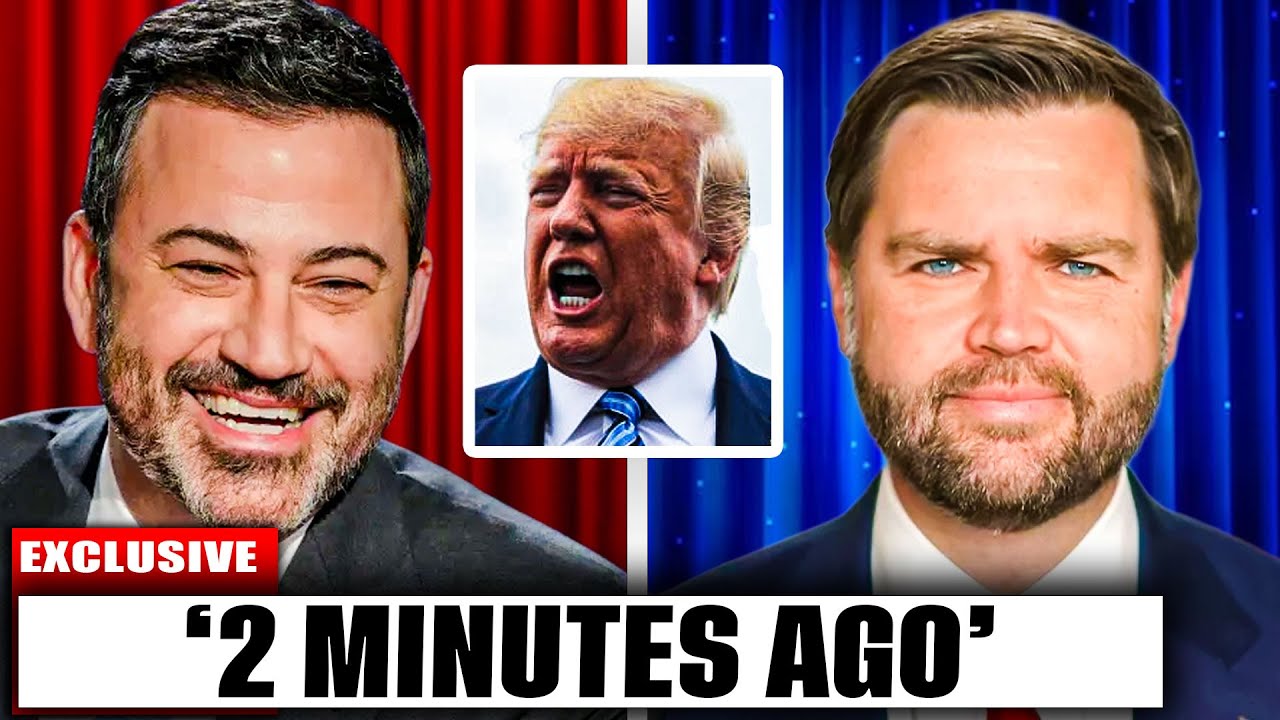
At the center of the storm were three figures: Jimmy Kimmel, the longtime host of Jimmy Kimmel Live!; Brendan Carr, the chairman of the Federal Communications Commission; and Vice President J.D. Vance, who became the administration’s most prominent public defender as the controversy unfolded.
The Spark: September 17, 2025
The chain of events began on September 17, when FCC Chairman Brendan Carr appeared on a podcast hosted by conservative commentator Benny Johnson. Responding to remarks Kimmel had made about the assassination of conservative activist Charlie Kirk, Mr. Carr issued a warning that immediately alarmed media lawyers and free-speech advocates.
“Frankly, when you see stuff like this,” Mr. Carr said, “we can do this the easy way or the hard way. These companies can find ways to change conduct, to take action, frankly, on Kimmel — or there’s going to be additional work for the FCC ahead.”
The phrasing was striking. The FCC, an independent regulatory agency, does not possess authority to punish broadcasters for political speech or comedy. Yet Mr. Carr went further, suggesting that ABC and its parent company, Disney, could face consequences if the show continued unchanged. He even raised the specter of broadcast license review — the most severe sanction available to the agency.
To legal experts, the implication was unmistakable.
“That language is not regulatory guidance,” said one former FCC official. “It sounds like coercion.”
The Immediate Fallout
Within hours of the podcast appearance, ABC announced that Jimmy Kimmel Live! would not air as scheduled. While the network cited internal programming decisions, multiple sources later told CNN that Mr. Carr’s remarks were perceived internally as a “serious threat” to the entire company, not just one show.
Major station groups followed suit. Nexstar Media Group and Sinclair Broadcast Group, which control hundreds of local affiliates, began pre-empting the program in multiple markets. Conservative media figures celebrated the move, with Mr. Johnson posting online, “This is what got Kimmel fired right here.”
But Kimmel was not fired. Instead, he went dark — temporarily.
A Broader Crisis Inside Government
As the media controversy intensified, a separate but related crisis was unfolding inside the Justice Department. Late in September, four senior leaders of the Civil Rights Division unit that investigates police killings resigned in protest after being instructed not to investigate the fatal shooting of Renee Nicole Good, but instead to examine her affiliations.
The resignations echoed an earlier wave of departures from the department’s Public Integrity Section and contributed to growing concerns among federal judges that the Justice Department had become politicized and dysfunctional.
Although unrelated on paper, the timing reinforced a broader narrative: an administration increasingly willing to exert pressure on institutions traditionally insulated from political control.
The Return — and the Denial
On September 22, amid mounting backlash from free-speech organizations and celebrities, ABC announced that Kimmel would return to the air the following night.
When he did, more than 6.3 million viewers tuned in — a number that directly contradicted claims circulating from administration allies that the show was faltering due to low ratings.
Still, several affiliates refused to restore the program.
The next day, Vice President Vance addressed the controversy at a press conference in North Carolina. Asked whether the administration had pressured broadcasters, he flatly denied it.
“The government took no action,” Mr. Vance said. “Literally nothing. Any decision made by networks was based on ratings and advertiser preferences.”
He dismissed the FCC chairman’s comments as irrelevant and insisted that claims of censorship were fabricated.
Gaslighting and Documentation
Those statements were quickly challenged by journalists and legal analysts who pointed to the recorded podcast, the precise timeline, and the language Mr. Carr had used.
“This isn’t speculation,” said one First Amendment attorney. “We have the quotes. We have the dates. We have the cause and effect.”
CNN later reported that when asked why Mr. Vance had promoted false claims — including a widely debunked conspiracy theory that Haitian immigrants in Springfield, Ohio, were abducting and eating pets — his office responded that the senator was merely repeating concerns raised by constituents who had called and emailed him.
The explanation only fueled criticism, suggesting that unverified rumors had been elevated to national talking points by the vice president himself.
Kimmel’s Response
Jimmy Kimmel did not respond with a lawsuit or a formal statement. He responded with comedy — sharp, documented, and unusually direct.
On air, he read Mr. Carr’s quotes verbatim. He mocked the claim that ratings were the issue. And in a moment that instantly went viral, he compared Mr. Vance’s approval ratings to chlamydia — “unpleasant, widespread, and easy to get rid of.”
The joke landed not just because it was cruel, but because it punctured the administration’s narrative.
Comedy, in this case, functioned as a form of record-keeping.
Why It Matters
The episode raised a question that extends far beyond late-night television: What happens when government officials can threaten broadcasters behind the veil of regulatory authority and then deny it ever occurred?
Broadcast networks operate on public airwaves, licensed by the federal government under the condition that they serve the public interest. That structure has always carried risk. But critics argue that what occurred in September 2025 crossed a line from regulation into intimidation.
More than 400 actors, writers, and media figures signed an open letter condemning the FCC chairman’s remarks and warning that political pressure on broadcasters — even informal pressure — undermines the First Amendment.
The administration insists no line was crossed.
The record suggests otherwise.
An Uncomfortable Precedent
In the end, Jimmy Kimmel Live! survived. But the precedent remains.
A federal regulator threatened consequences. A network complied. Affiliates pulled a show. And senior officials later denied that any pressure existed at all.
That sequence — pressure, compliance, denial — is familiar in less democratic systems. Its appearance in the United States, even briefly, is what made this episode extraordinary.
Late-night comedy has always irritated those in power. What changed in September 2025 was the response.
And that, more than any punchline, is why this story still matters.