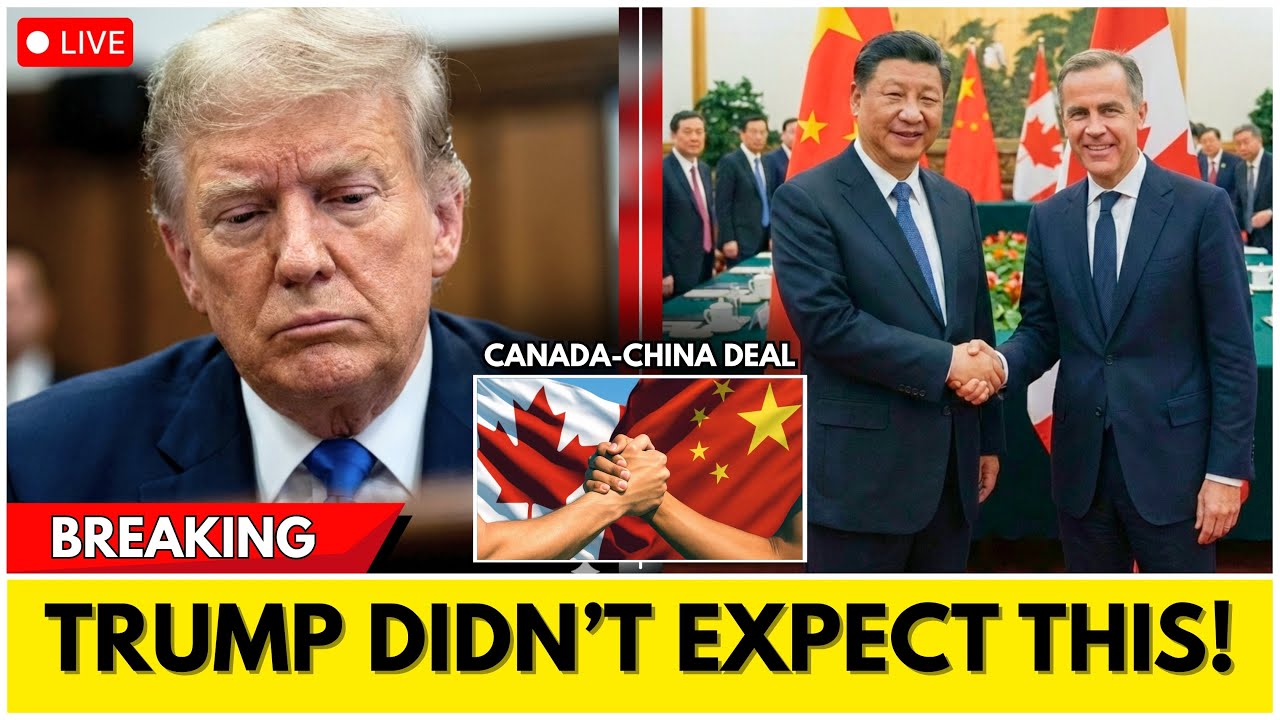
According to multiple trade observers, negotiations that once involved strong U.S. participation shifted dramatically when Ottawa accelerated talks with Beijing. This sudden Canada–China trade realignment unfolded at remarkable speed, effectively sealing the agreement before U.S. policymakers could react, highlighting how quickly global trade dynamics can change.
For Donald Trump, the development is being described by insiders as a major diplomatic blindside. His “America First” trade doctrine emphasized tariffs and hardline tactics toward China, aiming to protect U.S. interests. Paradoxically, those tensions may have created the opening Canada needed to present itself as a more pragmatic and reliable partner to Beijing.
At the center of the narrative is Mark Carney, a figure respected in international financial circles for his globally integrated economic outlook. While not holding elected office, Carney’s influence has fueled speculation that Canada recognized a rare strategic moment—leveraging U.S.–China friction to secure a massive trade windfall.

The implications for U.S. economic influence and North American trade are profound. A deal of this magnitude could reshape supply chains, redirect investment flows, and shift geopolitical leverage for years. Critics argue Washington underestimated Canada’s readiness to diversify away from its southern neighbor, while others see the episode as a warning shot for future U.S. trade policy.
As global competition intensifies, this case underscores a hard truth of modern geopolitics: in trade, timing is everything. Billions can be lost overnight. Whether the U.S. can reclaim lost ground remains uncertain, but one fact is clear—Canada’s pivot toward China has redrawn the trade map, and the ripple effects are only beginning to unfold.






