A Viral Oval Office Story Recasts Old Grievances as a New Confrontation
A YouTube video titled “Trump Tried to Trap Obama in the Oval Office — Obama Gave Him Something Worse” presents an ominous, cinematic scene: President Donald J. Trump summons former President Barack Obama for a private meeting and attempts to bait him with the long-debunked falsehood that Obama was not born in the United States. In the script, Obama responds with measured calm, produces a copy of his birth certificate, and then pivots to a different kind of accountability — quoting Trump’s past remarks and letting silence do the work.
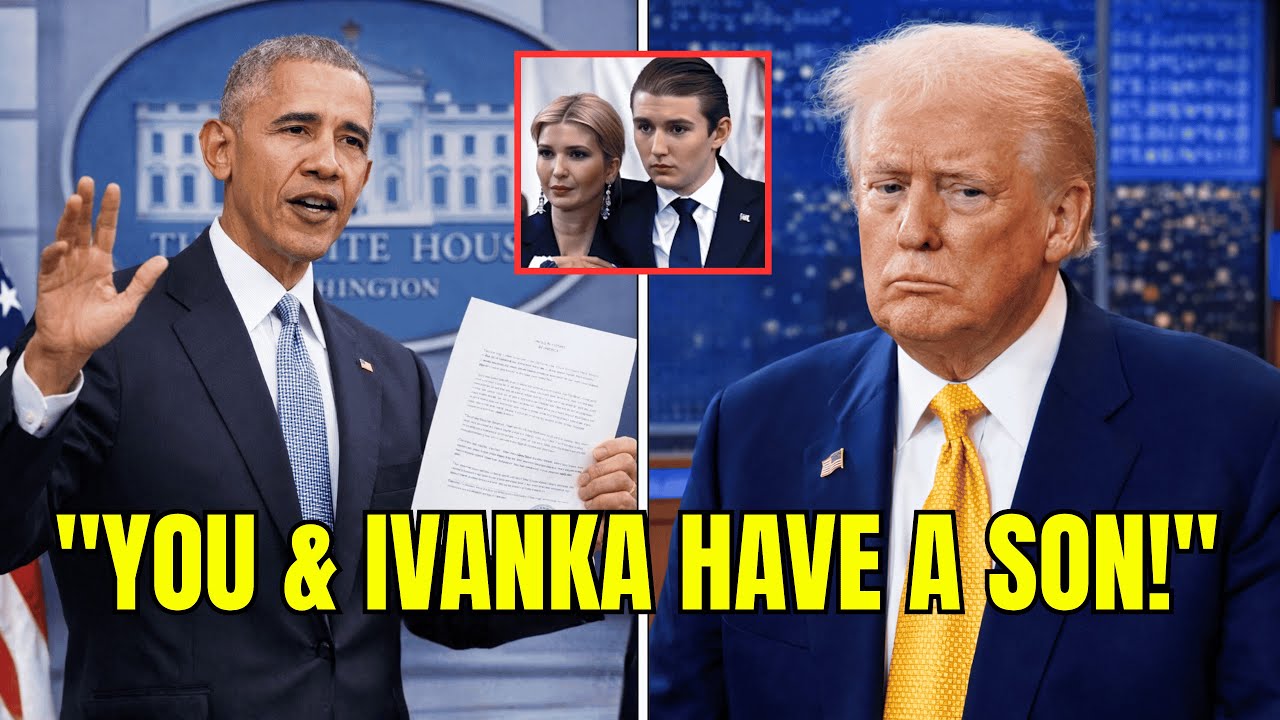
The problem is that the “meeting” appears to be a narrative construction, not a documented event. The transcript reads like political fiction, complete with stage directions (“the room tightened,” “pens froze”), carefully timed pauses, and dialogue written for maximum dramatic payoff. The video borrows from real history — but packages it as a fresh Oval Office showdown without the usual markers of verification: a date, an official readout, a network recording, or identifiable participants beyond the two principals.
There was an Oval Office meeting between Obama and Trump, but it took place on November 10, 2016, shortly after Trump won the election and before he took office. The Obama White House published remarks from both men afterward, describing a wide-ranging transition conversation and a longer-than-expected meeting. The viral video’s premise — a later, trap-like summons in which Trump seeks to settle an old score — is not supported by that contemporaneous record.
What is grounded is the subject matter the script uses as its bait. Trump spent years amplifying the “birther” conspiracy theory about Obama’s citizenship, a claim repeatedly disproven. In April 2011, the Obama White House published the long-form birth certificate from Hawaii in an attempt to end the distraction. Trump continued to flirt with the lie for years and, during the 2016 campaign, eventually acknowledged that Obama was born in the United States.
The video’s second pivot — toward Trump’s past comments about his daughter Ivanka — also draws on verifiable controversy. Trump has faced recurring scrutiny for remarks that critics have called inappropriate; one widely cited quote, repeatedly resurfaced and fact-checked, is his statement that if Ivanka were not his daughter, “perhaps” he would date her. In the script, Obama deploys that line as a moral counterweight to Trump’s provocation, reframing the encounter from partisan dispute to character and judgment.
Taken together, the clip functions less as journalism than as a morality play built from recognizable political artifacts: a discredited conspiracy, a document release meant to end it, and a catalog of past comments that have shadowed Trump for years. The payoff is emotional clarity — calm versus agitation, restraint versus domination — rather than new information.
That formula helps explain why this genre travels so well online. It offers viewers a satisfying arc in a chaotic news environment: the bully’s tactic fails, the target stays composed, and the room “turns” without anyone needing to shout. But as with any political content framed as reportage, the essential question remains whether the central scene can be independently verified. In this case, the historical ingredients are real; the Oval Office confrontation appears to be the invention.






