Canada’s Railway Power Play Sidelines Trump, Spurns U.S. Ports
In a stunning economic snub, former President Donald Trump’s vision of American trade dominance has been publicly undercut by a key ally, as Canada redirects a massive $262 million rail investment away from U.S. ports. This move, framed by Ottawa as a simple logistical upgrade, is being interpreted in Washington as a humiliating strategic rejection, revealing the limits of Trump’s “America First” pull even with its northern neighbor. The decision signals a direct blow to U.S. port competitiveness and a symbolic defiance, suggesting America’s geopolitical leverage may be fraying where it once seemed unassailable.
The fallout is a bipartisan alarm bell. Critics are lambasting the move as a catastrophic failure of U.S. economic statecraft, while analysts see a clear message: allies are actively building supply chains to bypass American influence. This single railway project is now framed as a potential turning point, a warning shot that could empower other nations to similarly diminish U.S. hubs. The narrative of American economic indispensability has been shaken, leaving Washington scrambling to respond before a symbolic snub becomes a lasting trend.
**The Bypass: A $262 Million Vote of No Confidence**
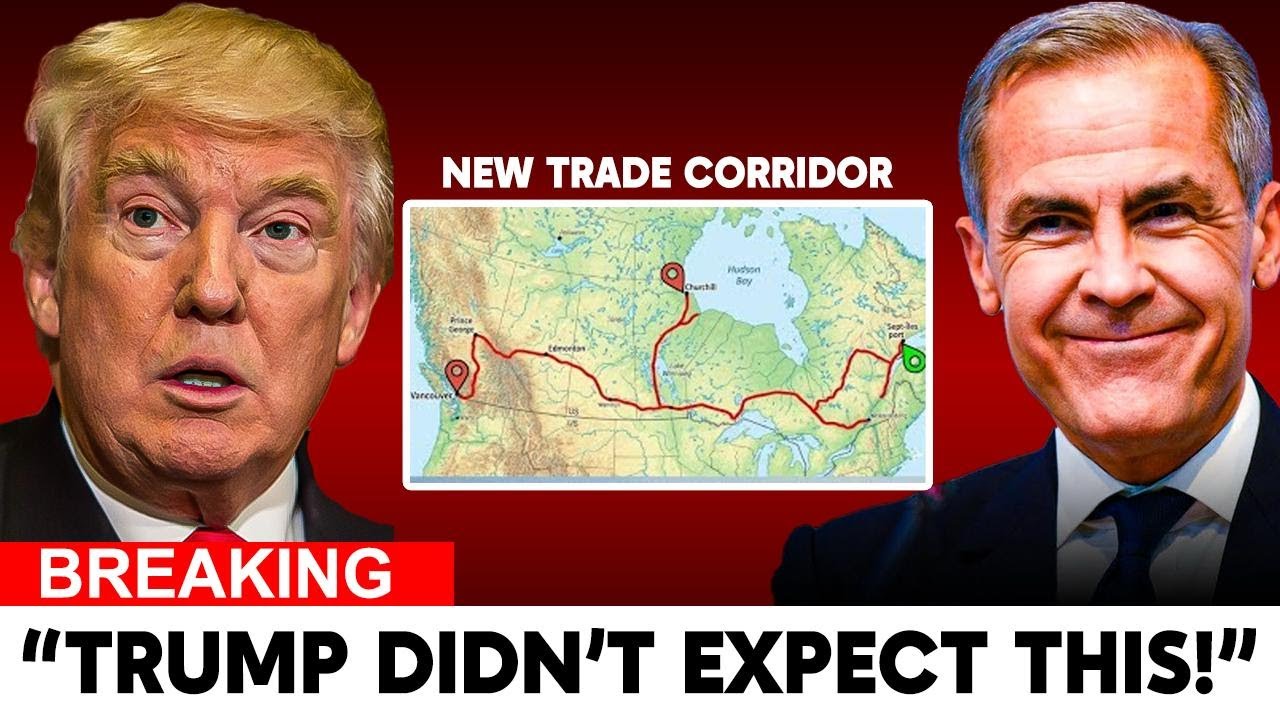
The core of the controversy is a targeted infrastructure investment: $262 million to modernize and increase capacity on a critical Canadian National Railway (CN) corridor that connects the industrial heartland of Ontario directly to the Canadian port of Prince Rupert in British Columbia. Prince Rupert, already the fastest-growing port on the West Coast of North America, is positioned as a gateway to Asia that is over two days sailing time closer to key markets like Shanghai than its American rivals, Seattle and Los Angeles. By pouring funds into this artery, Canada is not merely tweaking its logistics; it is deliberately strengthening an end-to-end national supply chain that deliberately circumvents the United States. For American ports and the railways that feed them, it’s a direct competitive threat. For political observers, it’s a profound symbolic act—a close ally choosing sovereign control over continental integration.
**The Trump Factor and the “America First” Hangover**
The move lands with particular force because it reads as a direct rebuttal to the Trumpian trade doctrine. The former president’s tenure was defined by hardball renegotiations of NAFTA into the USMCA, punitive tariffs on Canadian steel and aluminum, and a relentless emphasis on bilateral deficits. His “America First” mantra was predicated on the idea that the U.S.’s economic gravity was irresistible, forcing neighbors and allies to reorient their economies to American advantage. Canada’s railway investment tells a different story. It suggests that the pressure applied during the Trump years had an unintended consequence: it spurred Canada to accelerate its plans for economic resilience and autonomy. In effect, analysts argue, Trump’s confrontational tactics may have taught America’s closest trading partner a brutal lesson—never again be overly reliant on U.S. infrastructure or political goodwill. The project, years in planning, now serves as a perfect cudgel for Trump’s critics to argue his strongman approach ultimately weakened, not strengthened, U.S. economic centrality.

**Bipartisan Blowback in Washington: A Rare Moment of Unity**
The reaction in Washington has been one of rare bipartisan dismay. For Democrats, the move is cited as evidence of failed strategic foresight and a neglect of America’s own crumbling infrastructure, which makes U.S. ports less attractive. For Republicans, especially those aligned with Trump, it is framed as an act of betrayal by a freeloading ally that must be met with consequences. Senators from coastal states whose ports stand to lose business have issued joint statements demanding a review of the USMCA, suggesting the deal’s terms did not do enough to protect U.S. transportation interests. The Biden administration, caught between its desire to mend alliances and its “Buy American” priorities, faces a delicate balancing act. Publicly, officials downplay the rift, speaking of “shared prosperity.” Privately, sources indicate intense lobbying occurred to try to sway the Canadian decision, making its final announcement feel like a diplomatic defeat.
**The Prince Rupert Gambit and the New Geopolitics of Trade**
Canada’s bet on Prince Rupert is not happening in a vacuum. It reflects a new, fracturing global trade landscape defined by geopolitical tension and a post-pandemic push for supply chain redundancy. By offering a secure, efficient, Canadian-controlled route from the Great Lakes to the Pacific, Ottawa is marketing itself to European and Asian shippers as a stable, predictable alternative to the often congested and politically volatile U.S. corridor. This aligns with a broader global trend of “friendshoring” and regionalization. The message to Washington is stark: in an era of uncertainty, even traditional allies will prioritize their own sovereign channels. The railway upgrade is a physical manifestation of this strategic decoupling, moving goods that might have once traveled through Chicago and onto Mississippi River barges or through the ports of Long Beach instead on an all-Canadian path.
**A Turning Point in Continental Relations?**
Is this a blip or a fundamental pivot? While the monetary value of the rail investment is a fraction of the trillion-dollar annual trade between the two nations, its symbolic weight is immense. It demonstrates that Canada has both the capability and the political will to build alternatives to U.S. systems. The danger for American strategists is the “demonstration effect.” If Canada, America’s most integrated partner, can successfully reroute trade flows, what is stopping other allies or even competitors from making similar calculations? Mexico is already investing heavily in its own southern rail corridors and Gulf ports. The long-assumed inevitability of north-south supply chains running through the United States is now in question.
The ultimate impact may depend on the American response. Will it spur a long-overdue, massive investment in U.S. port efficiency, rail connectivity, and customs modernization to win back business competitively? Or will it trigger a new wave of protectionist threats and punitive measures, further encouraging the very economic independence it seeks to prevent? For now, the clatter of trains on newly upgraded tracks heading to Prince Rupert serves as a rolling warning to Washington: economic primacy is no longer a birthright, but a prize that must be continuously earned, even with the neighbor next door.






