A single question in the House of Commons has erupted into a full-scale national controversy, with critics slamming a Labour MP’s English delivery while supporters accuse the backlash of being outright racist and xenophobic.
The drama unfolded during a parliamentary session focused on escalating tensions in the Middle East. Labour MP Afzal Khan, representing Manchester Gorton, rose to speak not just about the regional crisis, but to unexpectedly praise Pakistan’s diplomatic efforts in brokering peace talks between Iran and the United States.
Khan publicly thanked the Pakistani government for hosting negotiations and securing a ceasefire. He specifically singled out Prime Minister Shahbaz Sharif and military chief General Syed Asim Munir, describing their actions as “global leadership.” He then pressed Prime Minister Keir Starmer to reveal exactly what support Britain was providing to help sustain the fragile peace, citing the UK’s long-standing alliance with Pakistan.
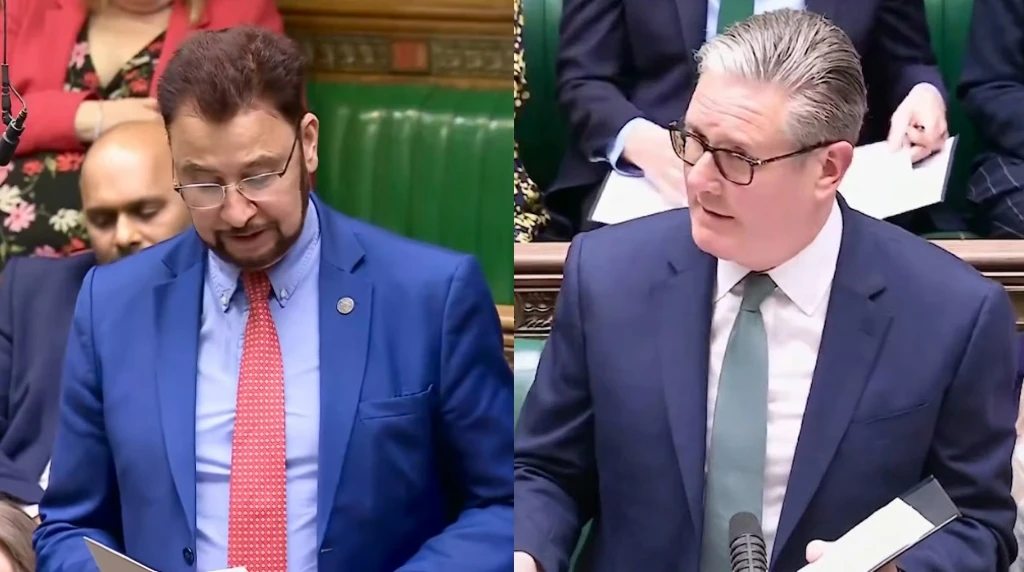
Prime Minister Starmer responded directly and substantively. He confirmed he had spoken personally with the Pakistani Prime Minister ahead of the weekend talks, while Foreign Secretary David Cameron had also engaged with his counterpart. The government emphasised its commitment to preventing further escalation in the Middle East.
Yet the substance of the exchange was almost instantly overshadowed by a viral video posted by a prominent online political commentator. In the clip, which has now been viewed hundreds of thousands of times, the commentator replayed Khan’s question and expressed open disbelief at the delivery.
“Did anybody understand what he was saying?” the commentator asked his audience, shifting the focus from foreign policy to language proficiency. He went further, linking the moment to wider national concerns about immigration and integration, declaring: “We talk about people not being able to speak English in our country, but I didn’t know we’d have ministers not being able to speak English.”
The criticism quickly escalated into accusations of misplaced priorities. The commentator questioned why a British MP was focusing on Pakistan during a debate on the Middle East, implying divided loyalties and suggesting the intervention revealed deeper issues of representation in Parliament.

The fallout has been swift and bitterly divided. Supporters of Afzal Khan and multiculturalism advocates have condemned the remarks as racially motivated and xenophobic, arguing that the attack ignores Khan’s long record of public service and the legitimate strategic importance of Pakistan as a key Commonwealth partner.
Critics, however, insist the issue is not about race but about basic competence. They argue that clear, understandable English is a fundamental requirement for any elected official legislating in the British Parliament and representing constituents from all backgrounds.
Downing Street has declined to comment on the style of Khan’s speech, choosing instead to reiterate only the substance of the Prime Minister’s response on UK-Pakistan coordination. The Labour Party issued a strong defence of Afzal Khan, highlighting his dedication to his Manchester constituency and his right to raise important international matters in the House.
Linguistic experts have offered a more nuanced perspective, noting that the acoustics of the Commons chamber, combined with strong accents and rapid delivery, frequently make speeches difficult to follow — a challenge faced by many MPs regardless of background. They warn against equating imperfect delivery with lack of intelligence or legitimacy.
What began as a routine foreign policy question has now transformed into a lightning-rod debate touching the UK’s most sensitive nerves: immigration policy, national identity, standards of public office, and the limits of acceptable political discourse. The rapid spread of the clip across social media has amplified these tensions, turning a parliamentary moment into a digital cultural battlefield.
In an era where every Commons clip can be isolated, dissected, and reframed within hours, the incident highlights how quickly political debate can shift from policy substance to questions of identity and belonging. Whether this episode represents a legitimate concern about parliamentary standards or a troubling slide into divisive rhetoric remains fiercely contested.
As thousands continue to comment and share the viral video, one thing is clear: Britain’s House of Commons is no longer just debating foreign policy — it is confronting uncomfortable questions about whose voice truly belongs in British democracy.






