Canada’s China Pivot, and the Limits of Trump’s Tariff Power
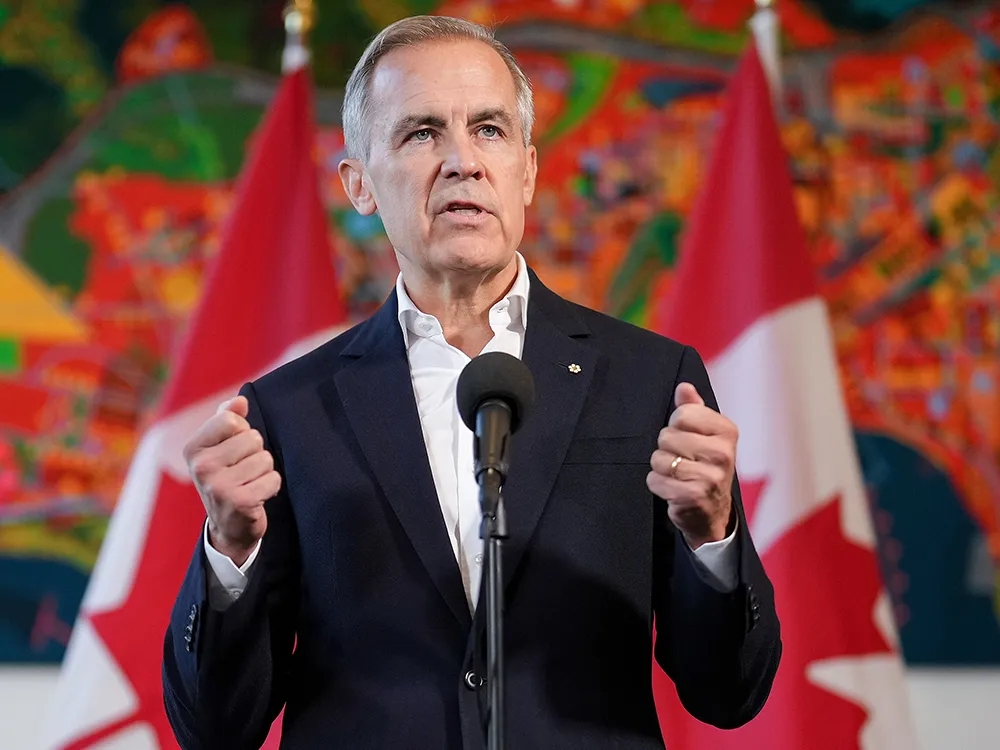
BEIJING — Standing beneath the eaves of a traditional pavilion beside a frozen pond, Prime Minister Mark Carney delivered a message that would have been unthinkable in Ottawa a year ago. Canada, he said, was forging a “new strategic partnership” with China — one defined not by shared values but by “realistic, respectful and interest-based engagement.”
The announcement, made after meetings with President Xi Jinping at the Great Hall of the People, capped a week of diplomacy that signaled a sharp reorientation of Canadian trade policy and underscored a broader recalibration underway among U.S. allies unsettled by President Trump’s tariff-heavy approach. At its center was a sweeping preliminary agreement: Canada would sharply lower tariffs on a capped number of Chinese electric vehicles, while China would slash punitive duties on Canadian agricultural exports, reopening a market that had been largely closed by a multi-year trade dispute.
For Mr. Carney, the deal was framed as a matter of necessity. With Washington imposing steep tariffs on Canadian goods and injecting uncertainty into the North American trade relationship, Ottawa went looking for alternatives. Beijing, eager to present itself as a stable counterweight to American unpredictability, was ready to oblige.
The headline provisions were striking. Canada said it would reduce its tariff on up to 49,000 Chinese electric vehicles a year to roughly 6 percent, down from a prohibitive 100 percent imposed during the height of the trade war. China, in turn, agreed to cut tariffs on Canadian canola seed from levels exceeding 80 percent to around 15 percent, and to lift or suspend punitive measures on products ranging from canola meal and peas to lobster and crab.
Canadian officials described the package as a calibrated opening rather than a flood. The vehicle quota represents a small share of Canada’s annual auto market and is designed to expand gradually over several years. By the end of the decade, half of the permitted imports would need to fall below a price threshold intended to improve affordability for consumers — a nod to rising concern about the cost of living and the slow adoption of electric vehicles.
Behind the technical details lay a larger strategic wager. Chinese manufacturers dominate the global market for low-cost, energy-efficient electric cars, a segment Canada has struggled to cultivate domestically. Ottawa is betting that limited market access, paired with promises of Chinese investment in Canadian manufacturing, can accelerate its climate goals without hollowing out its industrial base.
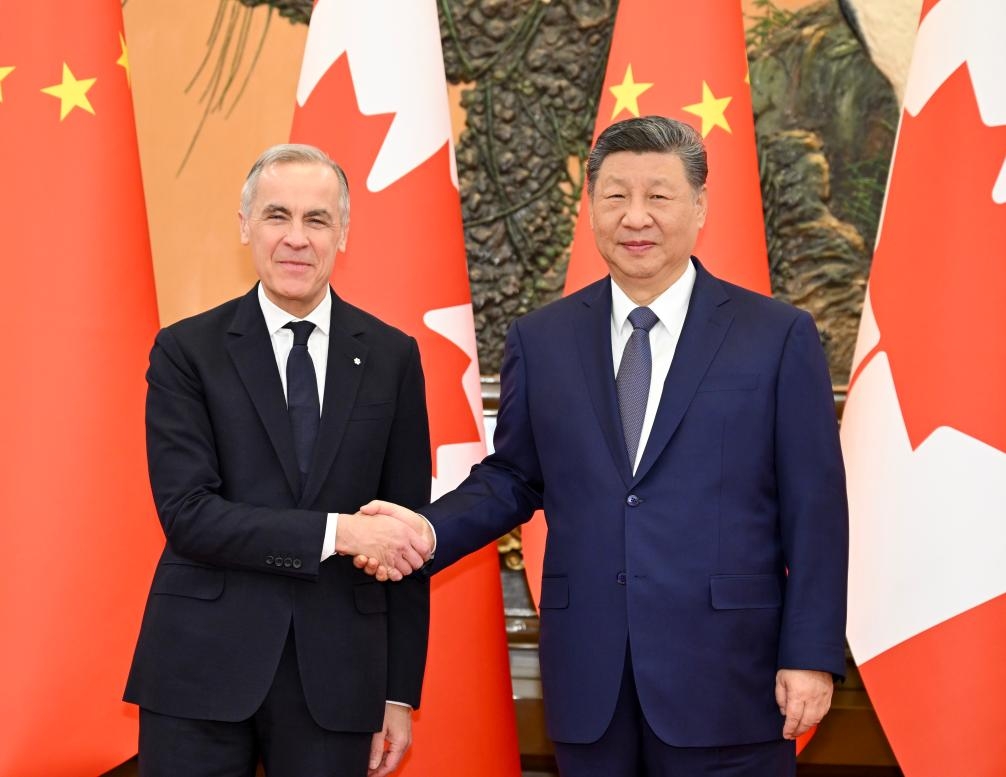
China, for its part, gains a foothold in a G7 market at a time when access to the United States is increasingly restricted. With Washington tightening controls to prevent Chinese goods from entering through third countries, Canada offers an alternative production base — one with an established auto sector, skilled labor and proximity to U.S. supply chains.
Agriculture may be where the immediate impact is felt most sharply. China is Canada’s second-largest destination for canola, and the collapse of that trade hit farmers in Saskatchewan and Manitoba particularly hard. Provincial leaders and industry groups welcomed the tariff relief as overdue, even as they cautioned that rebuilding market share would take time. Some noted that canola oil itself remains subject to high duties, forcing producers to ship raw seed rather than higher-value processed goods.
Reaction at home was mixed. In Ontario, where the auto industry employs tens of thousands of workers, Premier Doug Ford warned that easing tariffs on Chinese vehicles risked undercutting domestic manufacturers and provoking retaliation from Washington. The concern is not abstract. Mr. Trump has repeatedly argued that Chinese products should be kept out of North America entirely, and he has floated penalties on countries he believes serve as “back doors” into the U.S. market.
Those anxieties highlight the delicate balance Mr. Carney is attempting to strike. Canada remains deeply integrated with the United States economically, culturally and militarily. Yet in public remarks, the prime minister drew a sharp distinction between closeness and predictability. While the U.S. relationship is broader, he suggested, engagement with Beijing has recently produced clearer rules and tangible results.
That assertion — that China has become a more predictable economic partner than the United States — reverberated well beyond Beijing. On American social media, commentators across the political spectrum seized on it as evidence of eroding U.S. influence. Some conservative voices accused Ottawa of “appeasement,” while others, including business analysts and former trade officials, argued that allies were responding rationally to volatility emanating from Washington.
In Beijing, state-aligned commentators portrayed the deal as vindication of China’s long-standing argument that economic engagement should be insulated from ideological disputes. The phrase “strategic partnership,” repeated by both sides, was emphasized as proof that China could work pragmatically with democracies despite differences over governance and human rights.
The timing added to the symbolism. Mr. Carney’s visit followed months of escalating trade tensions with the Trump administration, including across-the-board tariffs and rhetoric questioning Canada’s sovereignty. For Beijing, the episode fit neatly into a broader narrative: that U.S. pressure pushes even close allies to diversify away from Washington, accelerating a shift toward a more multipolar trading system.
Other capitals are watching closely. European officials facing their own tariff threats have quietly explored limited resets with China. In Asia, governments from Seoul to Canberra are recalibrating how to balance security ties with the United States against economic realities in which China looms large. Canada’s move provides a case study — and a cautionary tale.
None of this erases the risks. China’s record on human rights, market access and state intervention remains a source of deep concern in Ottawa. Canadian officials insist that engagement does not mean endorsement and say contentious issues were raised privately. Nor does the agreement guarantee that promised investment will materialize on the scale envisioned.
What is clear is that the old assumption — that Canada’s prosperity would always be anchored primarily to the United States — is being tested. Mr. Trump’s strategy of economic coercion has not compelled compliance so much as it has encouraged hedging. In that sense, the deal in Beijing is less about China’s allure than about America’s volatility.
As Mr. Carney departed for meetings in the Middle East and Europe, he cast the agreement as part of a broader effort to widen Canada’s options. Whether it proves a durable rebalancing or a temporary adjustment will depend on forces far beyond Ottawa’s control — including, not least, the next move from Washington.
For now, the image of a Canadian prime minister announcing a strategic partnership with China, against a backdrop of frozen water and ancient architecture, captures a moment of transition. The world, Mr. Carney said, must be engaged “as it is.” Many of America’s allies appear to be taking him at his word.






