Canada’s Pacific Turn: How a $109 Billion LNG Bet Is Rewriting North American Energy

When Canada’s energy minister, Tim Hodgson, stood before reporters in Beijing on January 15 and described his country as the world’s lowest-carbon producer of liquefied natural gas, the remark barely registered in Washington. But within global energy markets, it landed as a signal of a deeper and more consequential shift.
Canada, long tethered economically to the United States by geography, pipelines, and habit, is quietly reorienting one of its most strategic industries toward Asia. At the center of that turn is liquefied natural gas, or LNG, and a planned build-out that could deliver as much as 50 million metric tons annually to Asian markets by 2030 — entirely bypassing the United States.
The scale is staggering. According to Natural Resources Canada, the projects now under development represent as much as $109 billion in capital investment, the largest energy infrastructure expansion in Canadian history. Seven export terminals are planned or under construction along British Columbia’s Pacific coast, clustered around the deep-water port of Kitimat. Once completed, they would transform Canada from a marginal LNG exporter into one of Asia’s most significant suppliers.
For decades, Canada’s natural gas flowed almost exclusively south. American utilities and industrial buyers were the default market, and the U.S. held decisive leverage over pricing, access, and regulation. That era may now be ending.
A Deal Years in the Making
The immediate catalyst was a memorandum of understanding signed in Beijing this month between Canada and China, establishing a framework for long-term energy cooperation. The agreement commits both governments to regular ministerial dialogue and explicitly identifies LNG, conventional oil and gas, and emissions reduction as shared priorities.
While nonbinding, the memorandum formalizes what markets had already begun to price in: China is not merely a buyer of Canadian LNG, but an investor.
Chinese state-linked firms now hold equity stakes in Canada’s flagship LNG Canada project in Kitimat, alongside Shell, Malaysia’s Petronas, Japan’s Mitsubishi, and South Korea’s KOGAS. ProChina, the Chinese participant, owns roughly 15 percent of the facility, giving it direct access to output rather than reliance on spot purchases.
Energy analysts note that this ownership model reflects Beijing’s broader strategy. “China increasingly prefers to secure supply through equity investment,” wrote several U.S. energy commentators on X (formerly Twitter) following the announcement. “It reduces exposure to political shocks and price volatility.”
LNG Canada, which began shipping cargoes in 2025, is designed to produce 14 million tons annually from its first two liquefaction trains, with the potential to expand to 26 million. Additional projects — including Cedar LNG and Woodfibre LNG — are expected to come online between 2027 and 2030.
Together, they would give Canada export capacity comparable to some of the world’s largest LNG producers.
Why Asia, and Why Now?
Asia is the growth center of global LNG demand. In 2025, the region imported roughly 270 million tons, according to industry data. By 2030, demand is projected to reach 350 million tons, driven primarily by China and India.
China alone imported about 90 million tons in 2025, with analysts expecting that figure to climb toward 120 million by the end of the decade as Beijing replaces coal with gas in power generation, heating, and industrial use.
Canadian LNG carries a particular appeal. British Columbia’s liquefaction facilities are powered largely by hydroelectricity, giving Canadian LNG a carbon intensity significantly below the global average. Estimates place Canadian production at roughly 15 tons of CO₂ equivalent per ton of LNG, compared with 26 to 35 tons for many competitors.
That distinction matters for a Chinese government committed, at least on paper, to reaching carbon neutrality by 2060. It also resonates in Japan and South Korea, where utilities face growing pressure from investors and regulators to lower emissions.
Geography adds another advantage. Shipping LNG from Canada’s Pacific coast to Asia is faster and cheaper than from the U.S. Gulf Coast, where tankers must transit the Panama Canal or sail around South America. Several U.S. energy analysts on LinkedIn have noted that, on a delivered basis, Canadian LNG can be competitive even when upstream costs are higher.
A Strategic Bypass of the United States
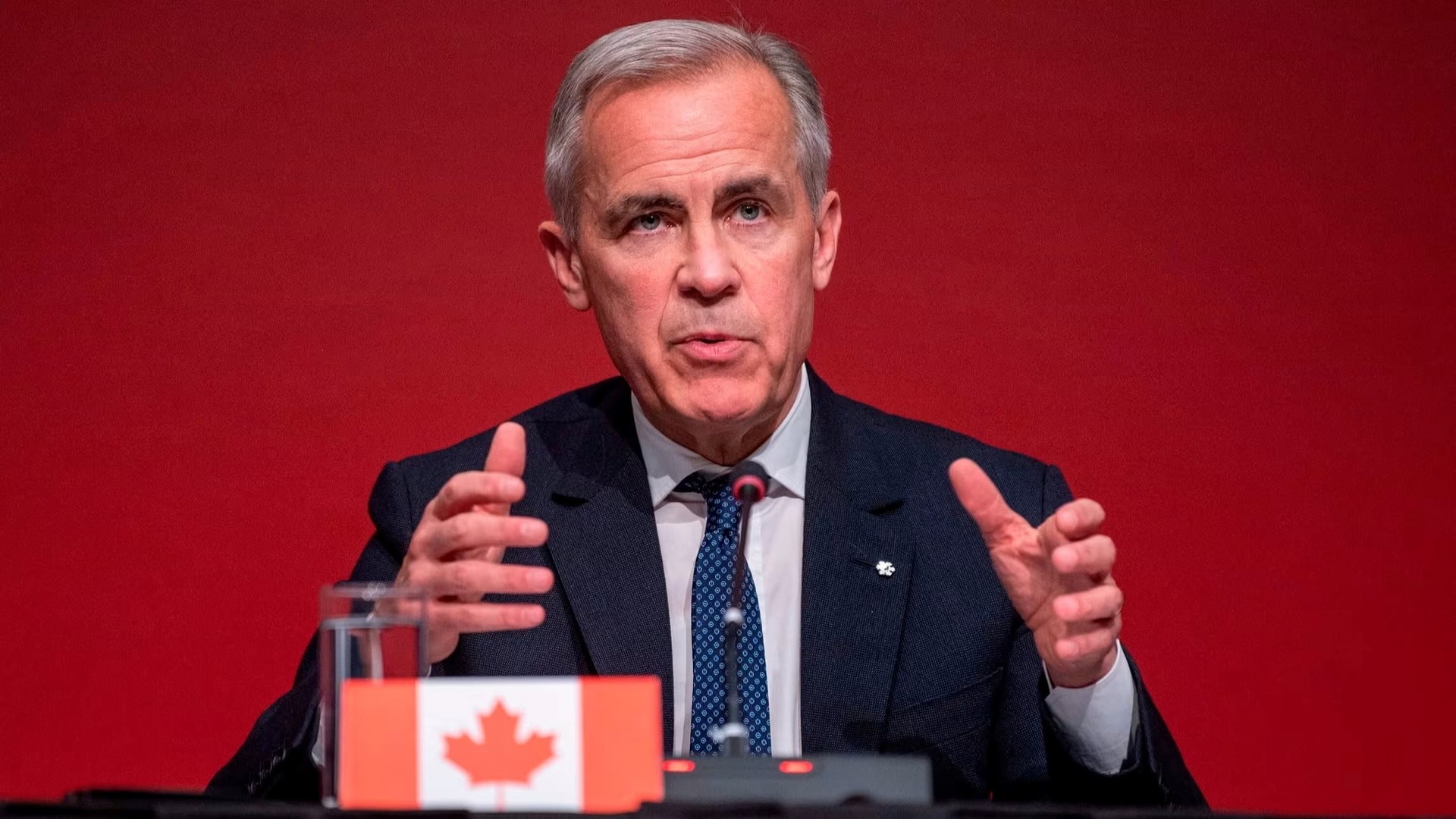
What has drawn the most attention in Washington is not simply Canada’s expansion, but its direction. Prime Minister Mark Carney made clear at a Beijing press conference on January 16 that the new LNG volumes are “destined for Asian markets,” not the United States.
That choice reflects both economics and politics.
The Trump administration’s renewed tariff threats against Canadian goods, combined with rhetoric questioning Canada’s sovereignty, unsettled Canadian policymakers and executives alike. Energy infrastructure, built to last 30 or 40 years, requires predictable political relationships. Many in Ottawa concluded that dependence on a single market — especially one increasingly willing to weaponize trade — posed unacceptable risk.
“Canada learned the same lesson Europe learned from Russia,” wrote a former U.S. diplomat on X. “Energy dependence cuts both ways.”
By building export terminals that face west, Canada is creating what economists call path dependency. Once liquefaction plants, pipelines, and long-term contracts are in place, redirecting supply becomes impractical. The United States could not simply demand access to LNG that has been contractually committed to Asian buyers for decades.
Economic and Geopolitical Consequences
For Canada, the implications are profound. The LNG build-out promises tens of thousands of construction jobs, thousands of permanent positions, and a new industrial base centered on advanced energy processing rather than raw resource export. British Columbia, in particular, stands to become a hub of Pacific trade.
For China, the benefits are equally clear: diversified supply away from the Middle East and Russia, secured in a stable, democratic jurisdiction, and integrated into long-term planning.
For the United States, the picture is more complicated. American LNG exports are booming, but largely from the Gulf Coast, and primarily to Europe. Canada’s pivot reduces U.S. leverage over a close ally and introduces a competitor into Asia’s most lucrative growth market.
Several U.S. business outlets have noted the irony: policies intended to assert American dominance may have accelerated its erosion.
An Irreversible Shift
Energy infrastructure endures. The liquefaction plants now rising along Canada’s Pacific coast are expected to operate into the 2060s and beyond. Ownership stakes, financing arrangements, and supply contracts lock in relationships that outlast election cycles in Ottawa, Washington, or Beijing.
Five years from now, if current plans hold, Canada will be shipping 50 million tons of LNG annually across the Pacific. Chinese, Japanese, and Korean companies will own pieces of the production. Asian utilities will depend on the supply. And the United States — once the unavoidable market for Canadian gas — will be entirely bypassed.
In the long arc of North American energy history, it may come to be seen as a quiet but decisive turning point: not announced with fanfare, not driven by ideology, but built in steel, concrete, and contracts that make reversal all but impossible.






