Canada’s Arctic Awakening: How U.S. Pressure Helped Push Ottawa Toward Strategic Independence
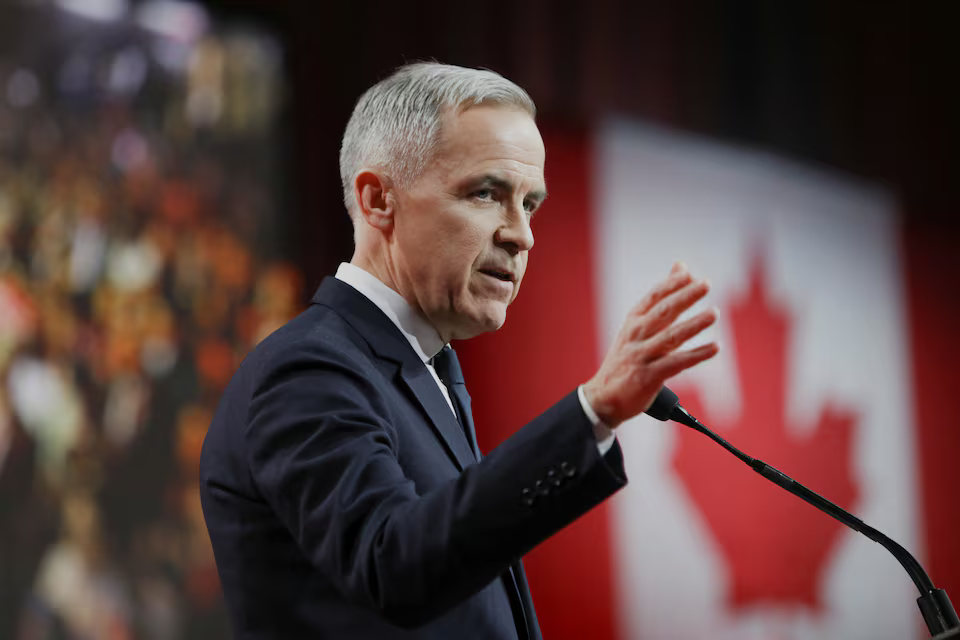
By late 2025, the Arctic had ceased to be a distant abstraction in Canadian politics. It had become immediate, contested and, for the first time in decades, central to questions of national survival. When Prime Minister Mark Carney stepped before Parliament to announce the finalists for the largest submarine procurement program in Canadian history, he was not simply unveiling a defense project. He was marking a turning point in how Canada understands sovereignty in a rapidly hardening world.
Canada’s Arctic story begins with geography that refuses to be ignored. The country possesses the longest coastline on Earth, much of it stretching into polar waters where ice, distance and silence determine who truly controls territory. For generations, Ottawa relied on diplomacy, legal arguments and the assumption of American goodwill to manage that vast northern expanse. But events over the past year have made clear that those tools are no longer sufficient on their own.
The catalyst came in November 2025, when President Donald Trump released a revised U.S. national security strategy that framed the Western Hemisphere as a zone of enforced American dominance. Greenland and the Arctic were named explicitly as strategic priorities. The document invoked a renewed Monroe Doctrine logic, arguing that the United States could not tolerate restrictions on access to routes deemed vital for deterrence and defense.
For Canadian officials, the implications were unmistakable. The Northwest Passage, a sea lane threading through the Canadian Arctic Archipelago and linking the Atlantic and Pacific Oceans, has long been the subject of quiet disagreement. Canada maintains that these are internal waters; the United States has consistently treated them as an international strait. For decades, the dispute was managed through ambiguity, including the 1988 Arctic Cooperation Agreement, under which Washington sought Ottawa’s consent before transiting icebreakers through the passage.
Trump’s strategy effectively ended that balance in practice. American planners, it argued, could not allow any contingency that limited access to strategically vital routes during a crisis, particularly if Russian or Chinese activity intensified in the Arctic. Consent, in other words, would no longer be decisive.
In Ottawa, that shift landed with force. As Mr. Trump publicly mused about annexing Greenland and demonstrated a willingness to threaten military action to secure what he defined as American security interests elsewhere, Canadian leaders drew a stark conclusion: sovereignty that cannot be enforced is sovereignty only on paper.
The response has been swift by Canadian standards. In August, Prime Minister Carney named two finalists for a contract to supply up to 12 conventionally powered submarines designed specifically for under-ice Arctic operations: Germany’s Thyssenkrupp Marine Systems and South Korea’s Hanwha Ocean. The fleet, expected to cost between 20 billion and 60 billion Canadian dollars depending on configuration and infrastructure, would represent the most ambitious naval investment in the country’s history.
The technical requirements underscore how far Ottawa is willing to go. The submarines must be capable of operating beneath Arctic ice for weeks at a time, traveling up to 3,500 nautical miles and sustaining covert patrols for 21 days. These are not adaptations of existing platforms but vessels conceived from the outset for polar conditions, where endurance and stealth matter more than speed.
Hanwha Ocean has outlined a delivery schedule that would see the first submarine arrive in 2032, with four operational by 2035 if a contract is signed in 2026, and a full fleet by the early 2040s. Thyssenkrupp brings a different appeal: a long track record supplying the majority of NATO’s conventional submarine fleets, emphasizing reliability and proven cold-water designs. Whichever bid prevails, the strategic effect will be the same. Canada will possess an underwater surveillance and deterrence capability in the Arctic that does not depend on American combat systems, logistics or training pipelines.
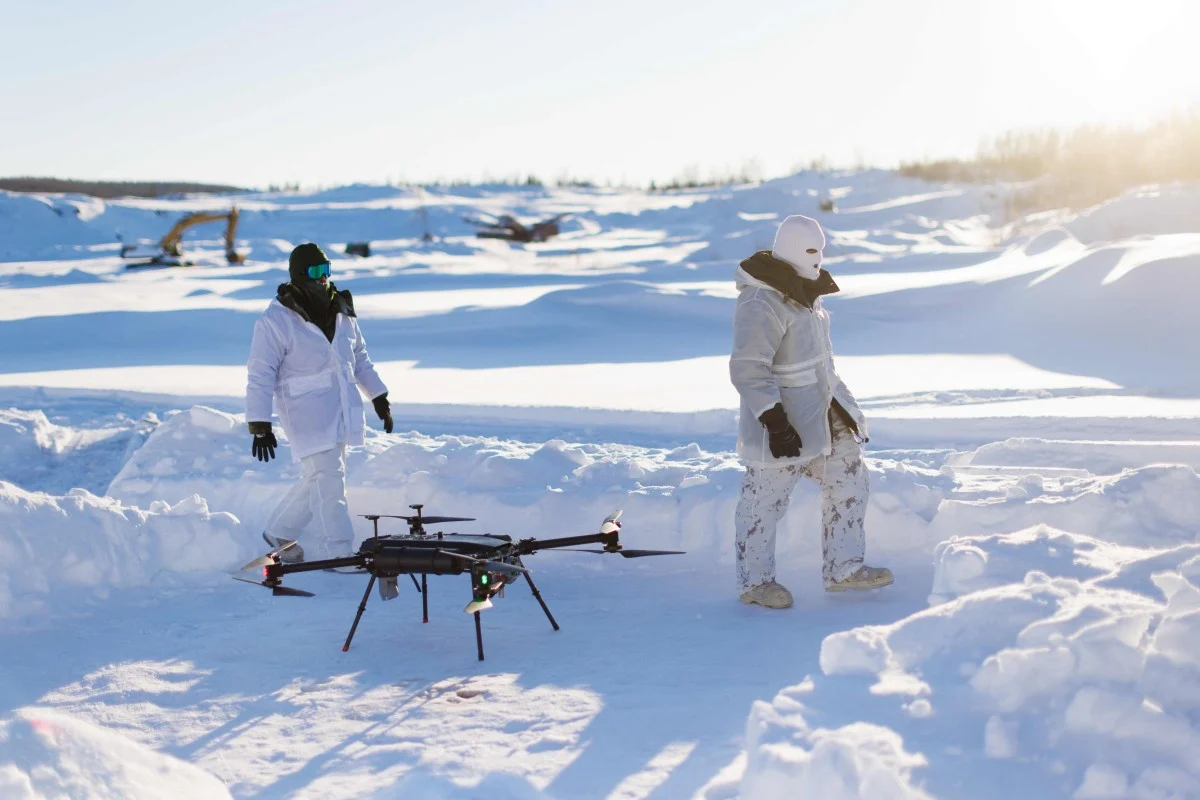
Submarines are only one layer of a broader transformation. Ottawa is also moving ahead with an over-the-horizon radar system, developed in partnership with Australia, that will be capable of detecting aircraft and ships up to 3,000 kilometers away. The technology, adapted from Australia’s Jindalee Operational Radar Network, is scheduled to begin coming online later this decade.
The choice of Australia is telling. Rather than rely on American radar systems, Canada opted to license proven technology from another middle power with similar geographic challenges. The infrastructure will be built on Canadian soil, operated by Canadian personnel and integrated into Canadian command structures. Initial capability is expected by 2029, with full operational status in the early 2030s.
Together with investments in polar communication satellites, ports, airfields and logistics hubs, these systems are designed to create a permanent Arctic presence. Once built, they will not be easily dismantled by future governments. Submarines delivered in the 2030s will remain in service into the 2070s. Radar installations are expected to form the backbone of northern defense for half a century.
What is striking is how quickly domestic politics aligned behind this shift. Defense spending has traditionally been a hard sell in Canada, particularly at the scale now contemplated. Yet Mr. Trump’s rhetoric had a unifying effect. Premiers who once resisted large federal expenditures accepted the necessity of Arctic investment. Industrial regions saw long-term economic opportunities. Polling data circulated widely on American social media platforms showed roughly 80 percent of Canadians agreeing that Arctic sovereignty must be actively exercised or risk being lost.
Even debates about Greenland resonated north of the border. When asked how Canada should respond if the United States attempted to annex the territory, only a small minority favored keeping a low profile. Many supported diplomatic pressure; others endorsed stronger measures. The message was clear: ambiguity no longer felt safe.
American commentators on X and cable news often framed Canada’s moves as an overreaction or an unnecessary assertion of independence within an alliance. But from Ottawa’s perspective, the logic is defensive rather than confrontational. The aim is not to challenge the United States but to ensure that Canadian interests cannot be overridden by unilateral decisions made elsewhere.
In that sense, the irony is difficult to miss. Pressure intended to assert American primacy appears to have accelerated Canadian autonomy. By redefining the Arctic as a zone where U.S. security interests trump allied sensitivities, Washington forced Ottawa to confront realities it had long deferred.
As climate change opens northern waters and great-power competition moves steadily poleward, the Arctic is no longer a frozen buffer. It is a frontier where capability defines credibility. Canada’s answer, at least for now, is clear: sovereignty will be exercised, not merely asserted.
Whether this marks a lasting redefinition of the Canada–U.S. relationship or a moment shaped by an unusually confrontational presidency remains to be seen. But the infrastructure now being laid under ice and across tundra suggests that Ottawa is planning for a future in which goodwill alone is no longer enough.






