When Late-Night Television Stops Joking and Starts Documenting
New York —
The moment did not arrive with outrage or spectacle. It arrived quietly, almost politely.
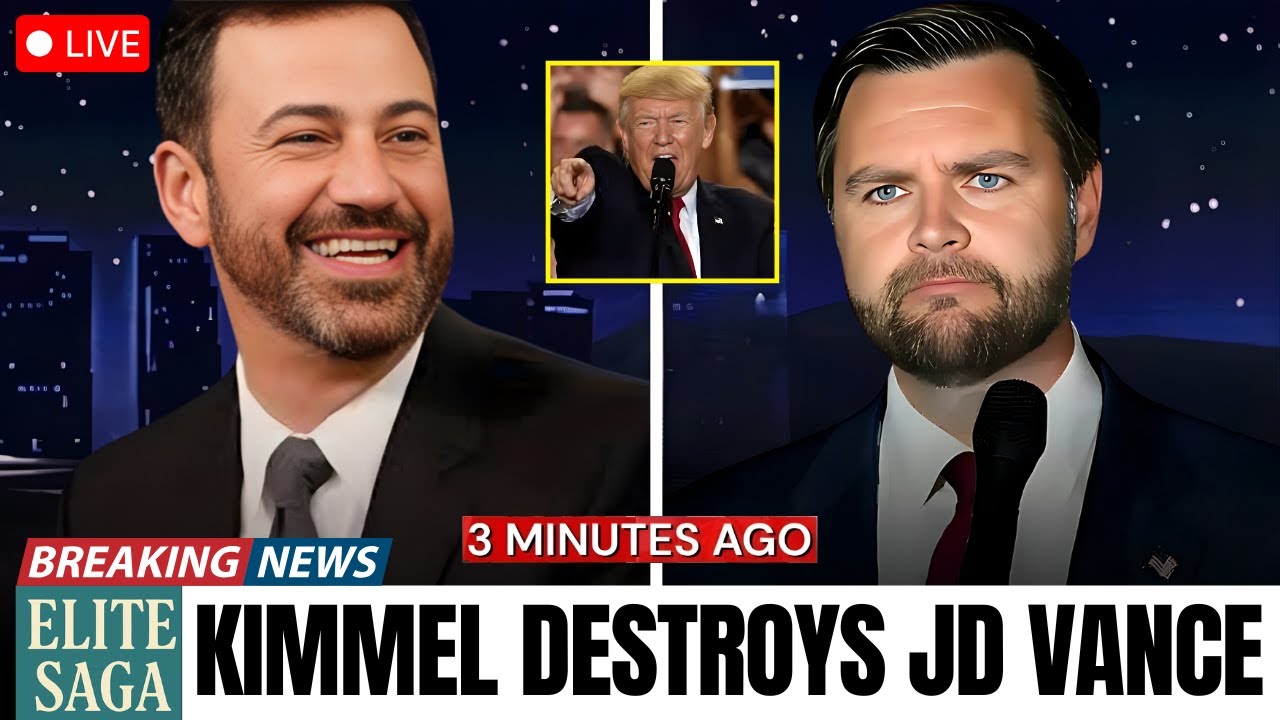
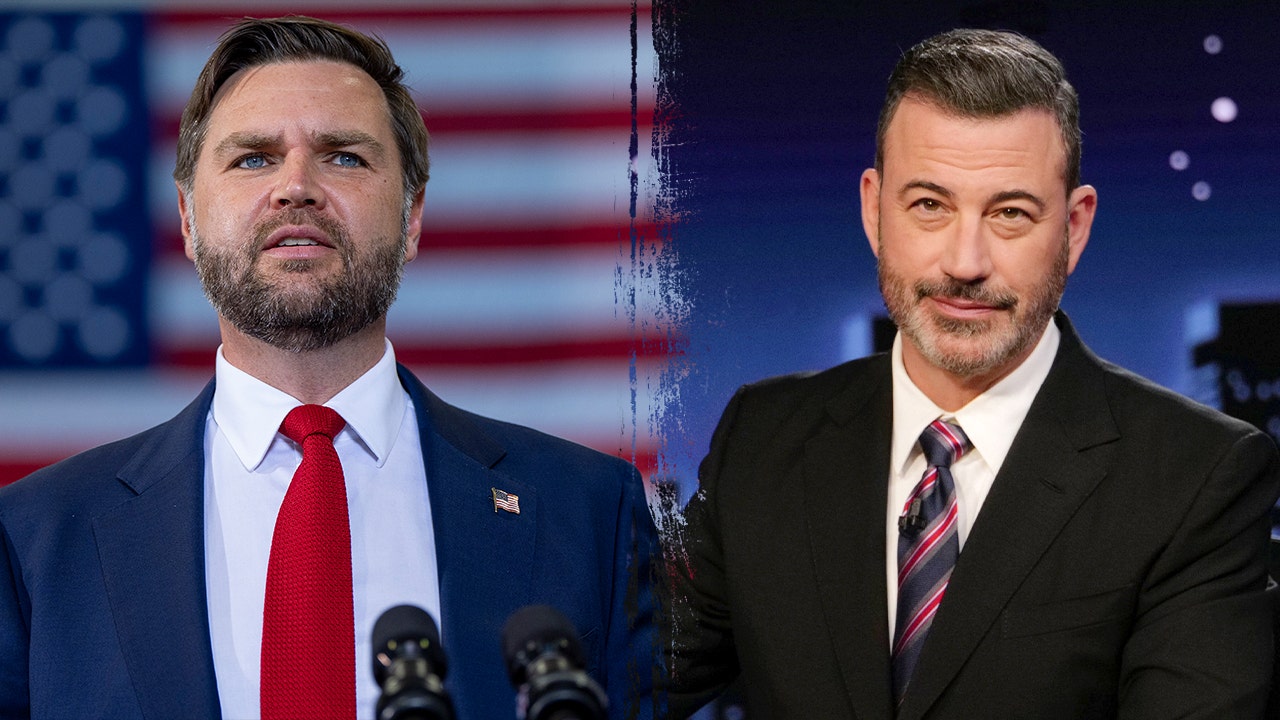
On a recent episode of Jimmy Kimmel Live!, the host set aside the familiar rhythms of late-night comedy and did something deliberately restrained. He did not raise his voice. He did not deploy punchlines. He did not even editorialize much at all.
Instead, he played the tape.
Behind him appeared a simple title card: JD Vance, in His Own Words. No music. No graphics. Just dates, clips, and silence between them. One segment showed Senator J.D. Vance speaking on a Sunday news program about seriousness, decorum, and responsible leadership. Another showed him days later at a rally, mocking political opponents in blunt, derisive terms. A third clip followed, with Vance insisting he had never spoken disrespectfully.
Kimmel let the clips run uninterrupted. Then he asked a single question: If your brand is seriousness, why does the record sound like a contradiction?
The audience reaction was subdued at first, then unmistakable — not partisan laughter, but recognition.
A Shift From Commentary to Record-Keeping
Late-night television has long functioned as a cultural pressure valve, translating politics into humor. What made this segment different was not its criticism, but its method. Kimmel did not accuse. He documented.
“I’m not saying you can’t change your mind,” he said. “I’m saying you can’t change your story without someone noticing.”
Media scholars say that distinction matters. In an era of fragmented information and algorithm-driven outrage, simply placing conflicting statements side by side can be more destabilizing than overt attack.
“It removes the host from the argument,” said one media analyst. “The evidence does the work.”
Kimmel reinforced that point by slowing the segment down even further. He replayed a single line from Vance, then paired it with another that directly contradicted it — same topic, same confidence, different conclusion. The laughter that followed was not sharp or cruel. It was the sound of a pattern clicking into place.
The Reaction Comes Fast — and Loud
Within an hour of the broadcast, Senator Vance responded online, calling the segment dishonest and selectively edited, and accusing Hollywood of contempt for “regular Americans.” The posts multiplied quickly, each more forceful than the last.
Kimmel appeared unsurprised.
The following night, he opened with a single line: “If the clips were fake, he’d post the full clips.”
The studio audience erupted. Kimmel remained measured.
“I’m not asking you to like me,” he said. “I’m asking him to answer the record.”
Then he widened the lens. When contradictions are shown calmly, he explained, the response is often not clarification but attack — because attacks change the subject.
From One Senator to a Larger Pattern
That observation proved prescient. Former President Donald Trump soon entered the dispute, posting criticism of Kimmel that focused on ratings, insults, and familiar grievances — but not on the substance of what had been shown.
Rather than respond in kind, Kimmel printed Trump’s post and walked onstage holding it like an exhibit.
“This,” he said, “is what unbothered looks like.”
The crowd’s reaction was immediate. What followed was not a shouting match but an escalation by omission: the louder the counterattack became, the more conspicuous the absence of factual rebuttal appeared.
By the end of the segment, Kimmel delivered a line that sounded almost procedural.
“If I’m wrong,” he said, “correct me with facts. If I’m right, don’t punish the question.”
The applause that followed was steady and sustained.
The Public Airwaves Question
The exchange revived a deeper issue that extends beyond late-night television or any single politician. Broadcast networks like ABC, NBC, and CBS operate on public airwaves under licenses that require service to the public interest.
Some media critics argue that this obligation includes not only entertainment and balance, but accountability — especially when public figures make contradictory or misleading statements.
Kimmel’s segment, they say, resembled less a comedy monologue than a civic exercise: show the quote, show the date, ask the question, stop talking.
“It’s journalism-adjacent,” said a former broadcast executive. “And that’s why it landed.”
The Internet Takes Over
By morning, clips of the segment were circulating widely across platforms. Supporters framed it as overdue accountability. Critics dismissed it as partisan performance. But a notable share of viewers — those without strong political affiliations — shared it with the same observation: he didn’t yell; he just showed it.
Other programs soon adopted similar formats. Fewer adjectives. More timelines. Viewers described it as refreshingly straightforward.
Meanwhile, Trump continued posting responses, each one driving renewed attention back to the original clip — and to the unanswered contradictions at its center.
Performance Versus Accountability
The episode illustrates a broader shift underway in political media. As audiences grow more skeptical of both outrage and spin, restraint itself has become persuasive.
“When you put the record on screen,” one commentator noted, “the reaction becomes part of the evidence.”
Whether intentionally or not, that dynamic now defines the moment. The louder the denunciation, the clearer the original question becomes.
And that question — simple, unadorned, and unanswered — continues to echo: if the words are being taken out of context, why not show the context?
In the end, the segment’s power lay not in its conclusion, but in its refusal to supply one. It trusted viewers to connect the dots themselves.
In a media environment saturated with noise, that restraint may be the most disruptive move of all.