Political Tensions After Election in Hungary: Viktor Orbán Questions the Results
The political situation in Hungary has escalated significantly following the release of a controversial election result. Prime Minister Viktor Orbán expressed serious doubts about the validity of the outcome in a public statement, citing major irregularities. The debate has drawn attention not only domestically but also across Europe.
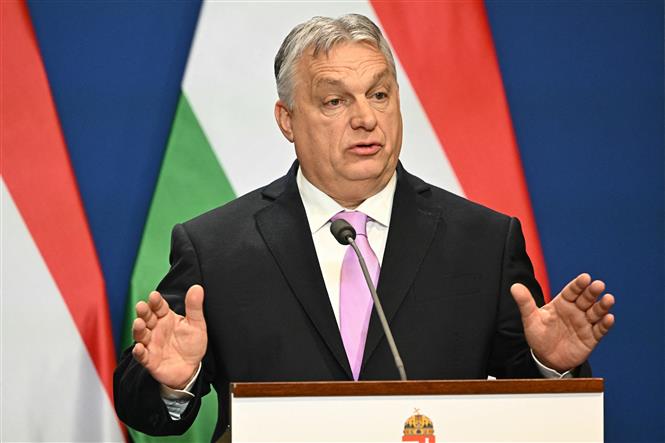
At the center of the dispute is the claim that an opposition force achieved a clear electoral victory, while Orbán’s party, Fidesz, reportedly dropped to around 37 percent according to the presented figures. However, Orbán firmly rejected this narrative. In a live statement, he described the result as “invalid” and questioned the legitimacy of the entire election.
A key element of his argument concerns Hungary’s electoral system. This system allocates a majority of parliamentary seats—specifically 106 out of 199—through individual constituencies. Orbán emphasized that his party has traditionally been strongly rooted in these structures, making such a dramatic shift in voter sentiment difficult to comprehend.
The Prime Minister was particularly critical of the reportedly unusually high voter turnout. According to figures cited in the video, turnout reached approximately 89 percent—significantly higher than previous levels. Orbán questioned how such an increase could have occurred, suggesting that it might indicate irregularities.
He also referred to an extensive document allegedly originating from circles within the U.S. Congress. According to the transcript, this document contains indications of interference in several European elections. Orbán used this reference to reinforce his broader criticism of international political mechanisms.
As his argument continued, Orbán expanded his focus to the role of European institutions. In particular, the European Commission came under scrutiny. He suggested that political processes within the European Union are increasingly influenced by external factors.

The role of digital platforms and so-called “fact-checkers” was also addressed. According to statements in the transcript, there are concerns that information flows are being managed and certain content deliberately restricted. This development raises questions about transparency and freedom of expression.
At the same time, another political figure was highlighted in the context of the election: Peter Magyar. The transcript attributes a central role to him while also mentioning allegations from his personal and professional environment. However, these claims remain part of the positions expressed in the video and have not been independently verified.
At the European level, developments are reportedly being closely monitored. European Commission President Ursula von der Leyen is said to be under increasing scrutiny, while discussions about potential political consequences are taking place within the EU. References were also made to possible measures under Article 7, which could affect a member state’s voting rights.
The transcript also outlines a broader geopolitical picture. In addition to Hungary, countries such as Slovakia and the Czech Republic are mentioned, whose political leadership is said to hold similar positions. Figures like Robert Fico and Andrej Babiš are cited as potential political allies in this context.
A recurring theme in the narrative is the question of the integrity of democratic processes in Europe. It describes a growing tension between national sovereignty and supranational governance, which appears increasingly politically charged.
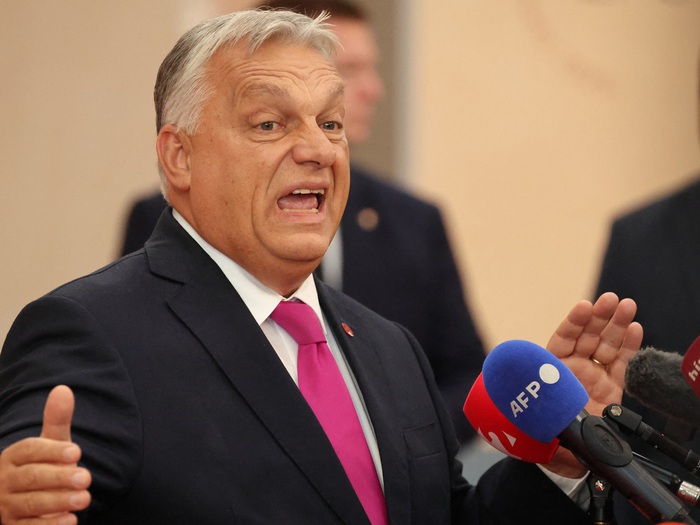
At the same time, it must be noted that many of the allegations and conclusions presented in the transcript are part of a highly interpretative political narrative. Independent verification of the mentioned documents, figures, or events is not provided. Therefore, key aspects of the situation remain unclear.
In conclusion, the events surrounding the Hungarian election and Viktor Orbán’s response may mark a new phase of political confrontation. The combination of institutional criticism, doubts about election results, and the broader European dimension adds significant sensitivity to the issue.
Whether these allegations will be substantiated or disproven remains uncertain. What is clear, however, is that the debate over democratic processes, transparency, and political influence in Europe is likely to intensify further.






