WASHINGTON — In recent weeks, a dramatic story has circulated widely online, portraying a tense, private confrontation between Donald Trump and Barack Obama inside a secure meeting room in Washington. According to the narrative, Mr. Trump arrived expecting to dominate the encounter, only to find himself disarmed by Mr. Obama’s silence and methodical restraint.

There is no public evidence that such a meeting occurred as described. Yet the story’s popularity says less about its factual accuracy than about the political moment in which it has flourished — one marked by deep distrust, competing narratives of power, and a growing appetite for scenes in which dominance gives way to accountability.
The story unfolds with cinematic precision. Mr. Trump is depicted as entering aggressively, filling the room with motion and sound, seeking to establish control through pressure and provocation. Mr. Obama, by contrast, is portrayed as still and deliberate, responding not with argument but with silence. In the telling, that silence becomes its own form of authority, forcing Mr. Trump to keep speaking, escalating, and ultimately revealing strain.
At the center of the account is a symbolic prop — an envelope, slid across a table — meant to represent preparation, evidence, and inevitability. The contents, as described in the video, allude to explosive implications involving past associations and family legacy. None of these claims are substantiated, and they echo long-debunked conspiracy theories that have circulated for years in various corners of the internet.
What makes the story notable is not the allegations themselves, but the structure of the drama. It casts politics as a contest not of policy but of temperament: noise versus quiet, impulse versus preparation, reaction versus control. The narrative suggests that power can be undone not by confrontation, but by patience — by allowing an opponent to exhaust himself in the absence of resistance.
This framing resonates because it draws on well-established public perceptions of both men. Mr. Trump is often characterized by supporters and critics alike as combative and instinctual, relying on force of personality to command attention. Mr. Obama, even after leaving office, is remembered for a measured style that favored deliberation over spectacle. The viral story amplifies these archetypes to their extremes, transforming them into symbols rather than people.
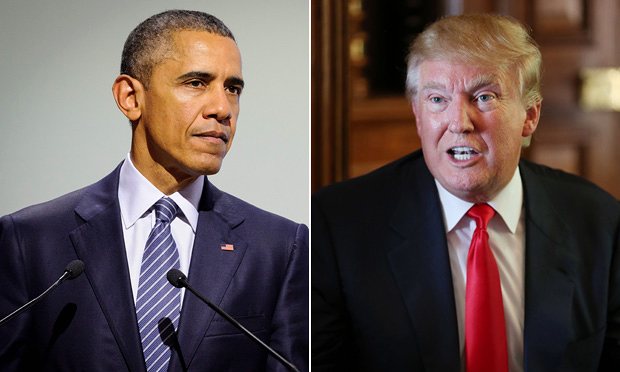
Such narratives flourish in periods of political polarization, when trust in institutions and official accounts is low. In that environment, emotionally satisfying stories can take on a life of their own, regardless of their grounding in fact. They offer moral clarity in a landscape that otherwise feels chaotic, providing imagined moments of reckoning where ambiguity persists in real life.
Media scholars note that these stories often borrow the language of journalism — confidential rooms, unnamed teams, documents and evidence — while dispensing with the verification that journalism requires. The effect is persuasive, even when the substance is speculative. Silence, in these accounts, becomes proof. Restraint becomes strategy. And the absence of denial is interpreted as confirmation.
The danger, critics argue, lies in how easily such narratives blur the line between metaphor and reality. When dramatic fiction is consumed as political truth, it can reinforce existing beliefs while hardening distrust of factual reporting. The story’s power rests not in what it proves, but in how convincingly it stages the idea that truth will inevitably surface — that it merely “waits.”
That belief is comforting, particularly to audiences frustrated by years of unresolved controversies and competing claims. But it also risks oversimplifying how accountability actually works, substituting imagined confrontations for the slow, often unsatisfying processes of investigation, law, and evidence.
Still, the story’s popularity underscores a deeper point about modern political culture. Voters are not only debating policies; they are searching for narratives that explain character and consequence. In that sense, the viral account functions less as an allegation than as a parable — about control lost, about the limits of bluster, and about a longing for moments when power appears to answer to something quieter and firmer than itself.
Whether believed, doubted, or dismissed, the story reveals a public appetite for restraint over rage, and for accountability that does not shout. In an era dominated by spectacle, even fictional silence can feel like a form of justice.






