Canada’s Quiet Decoupling: Why Washington Is Suddenly Saying It Doesn’t “Need” Ottawa
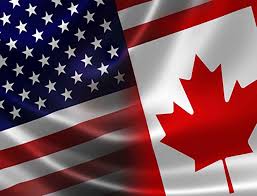
For decades, the economic relationship between the United States and Canada has been so deeply integrated that it rarely required public reaffirmation. Autos crossed the border multiple times before completion. Energy flowed north and south with little drama. Lumber disputes flared, cooled, and flared again. The assumption underlying it all was stability — and inevitability.
That assumption is now under strain.
In a radio interview that ricocheted quickly through Canadian and American political media, the U.S. ambassador to Canada stated flatly that the United States does not “need” Canada. The remark, notable less for its substance than its bluntness, arrived at a moment when Ottawa has been unusually active in diversifying its global economic relationships — and unusually willing to say so out loud.
The comment landed amid a week of headlines that have unsettled policymakers in Washington. Canada had just announced a reset in its economic engagement with China, touching electric vehicles, agricultural exports, and travel. Almost immediately afterward, Prime Minister Mark Carney traveled to Qatar, signaling a push to attract long-term Gulf capital into Canadian infrastructure, energy, and industrial projects.
To American audiences accustomed to viewing Canada as a reliably aligned economic extension of the U.S. market, the sequencing was striking.
From Assumption to Assertion
In Washington, the idea that the United States does not “need” Canada is not new. Variations of it have appeared before in campaign rhetoric, particularly during the Trump years, when trade deficits and tariffs dominated the conversation. What was different this time was the context — and the messenger.
Ambassadors rarely speak in absolutes. Their role is reassurance, calibration, and continuity. The directness of the remark suggested not confidence but irritation, a tone that U.S. political analysts on cable news and in policy newsletters were quick to note. Several commentators described it as a “tell,” an unguarded response to momentum that was moving beyond Washington’s immediate influence.
Canadian officials, for their part, did not respond in kind. There was no public rebuke, no counterstatement insisting on mutual dependence. Instead, Ottawa kept moving.
China Opened the Door. Capital Walked Through It.

Canada’s renewed engagement with China has been interpreted in Washington less as a single trade decision than as a signal. Analysts at U.S. think tanks and business publications noted that while Canada remains closely tied to the U.S. market, it has been quietly reducing its exposure to unilateral risk.
China, whatever its political complexities, offers scale. Qatar offers something different: capital.
Gulf sovereign wealth funds have become among the most influential long-term investors in the world, backing infrastructure, logistics, energy transitions, and advanced manufacturing across Europe and Asia. Their investments are typically patient, measured in decades rather than quarters.
By landing in Doha so soon after the China announcements, Carney appeared to be drawing a deliberate distinction. Trade provides access. Capital provides insulation.
As one former U.S. Treasury official remarked in a widely shared social-media thread, “Tariffs can be reversed. Capital commitments are harder to unwind.”
That distinction matters in Washington, where economic leverage has often depended on the assumption that Canada’s alternatives were limited, slower, or politically costly.
A Prime Minister Shaped by Markets, Not Slogans
Part of the unease may stem from the person leading the shift. Mark Carney is not a traditional retail politician. His credibility was built in central banks, not rallies — first in Canada, then in Britain, where he played a stabilizing role during the turbulence of Brexit.
That background resonates in global financial circles. It also changes the conversation. When Carney speaks to investors, he does not pitch ideology. He pitches systems: regulatory reliability, rule of law, institutional continuity.
American financial media has taken notice. Business-focused outlets have described Canada under Carney as positioning itself as a “safe jurisdiction in an unsafe world,” a phrase that has circulated widely on investor forums and professional networks.
This is not about abandoning the United States. It is about not depending on any single partner to remain predictable.
The Limits of Economic Coercion
For years, the implicit threat of tariffs or market access restrictions gave Washington leverage over Ottawa. That leverage depended on concentration. As Canada’s trade and capital sources diversify, that pressure weakens.
Political scientists writing in U.S. policy journals have pointed out that diversification does not require replacing the U.S. as Canada’s largest partner. It only requires making the cost of coercion higher.
Once global capital begins to view Canada as an independent hub — not merely a U.S.-adjacent one — the strategic equation shifts. Markets become less reactive to American political cycles. Diplomatic pressure yields diminishing returns.
This, more than any individual trade deal, may explain the sharpness of the ambassador’s remark.
Panic or Posturing?
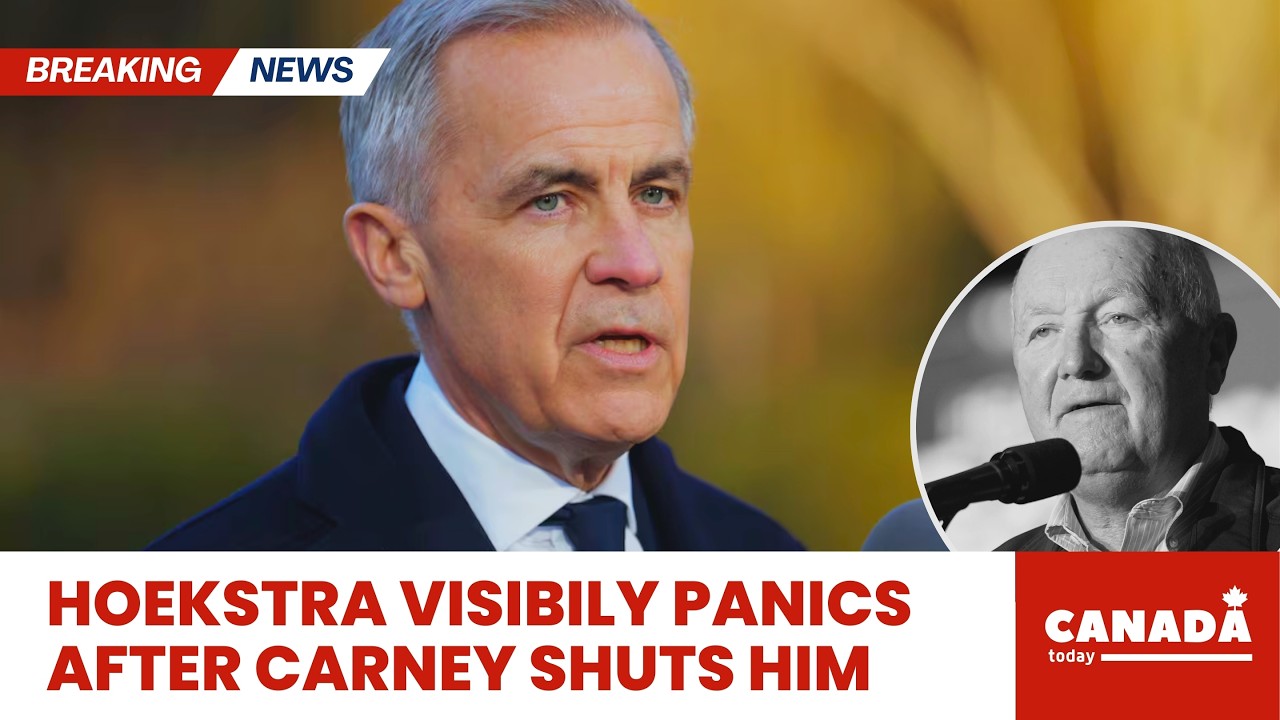
Was Washington “panicking”? That may be overstated. But it is clear that U.S. officials are recalibrating their language.
When leaders are confident in their leverage, they emphasize partnership. When they fear erosion, they emphasize independence. Saying “we don’t need Canada” is less a declaration of strength than an attempt to redefine expectations.
Canadian commentators across the political spectrum have noted the irony. For decades, the U.S. never needed to say it didn’t need Canada. The relationship was assumed. It is only now, as Canada demonstrates alternatives, that the assertion becomes necessary.
A Shift That Will Not Be Announced All at Once
There will be no single moment when Canada declares itself “decoupled.” The change will show up quietly: in investment flows, in supply-chain decisions, in where factories are built and financed.
American markets will continue to matter enormously to Canada. Geography guarantees that. But influence is no longer automatic.
The deeper truth — one acknowledged even by some U.S. analysts critical of Ottawa’s China engagement — is that Canada did not seek this shift out of defiance. It emerged from adaptation. Trade threats, unpredictability, and rhetorical hostility forced Ottawa to hedge.
In that sense, the current moment is less about Mark Carney outmaneuvering Washington than about Washington confronting the consequences of its own volatility.
The Question Washington Must Answer
The real question now is not whether the United States “needs” Canada. It is whether it still understands how to keep allies close without assuming they have nowhere else to go.
Because once a country demonstrates credible options — trade options, capital options, diplomatic options — it cannot be pushed back into dependency.
That, more than any radio interview, may be what truly unsettled Washington.
And it is a shift that, once underway, is rarely reversed.






