Canada and China Reset Ties With Visa-Free Travel, Reshaping North American Tourism and Diplomacy

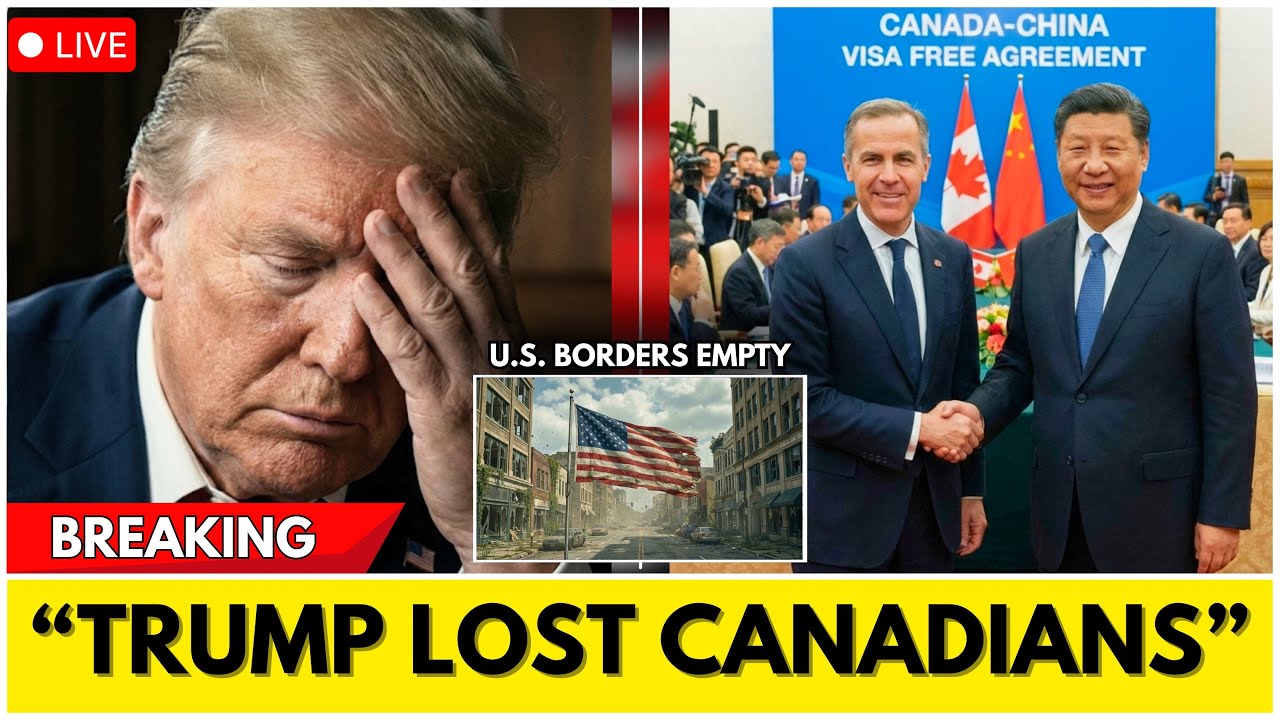
When Prime Minister Mark Carney stood at the Great Hall of the People in Beijing last week and announced visa-free travel for Canadians visiting China, the moment marked more than a breakthrough in bilateral tourism. It signaled a broader recalibration of Canada’s foreign and economic policy—and a shift with ripple effects across North America.
Under the new arrangement, Canadians will be able to travel to China for up to 30 days without a visa, joining more than 40 countries granted such access by Beijing in recent years. The policy, Chinese and Canadian officials said, is intended to strengthen people-to-people ties, tourism, education, and business exchanges after nearly a decade of strained relations.
But the announcement also landed amid heightened tensions between Washington and Ottawa over trade, industrial policy, and China itself. For some analysts, the visa-free agreement illustrates how U.S. pressure on allies—particularly under President Donald Trump’s second administration—has encouraged Canada to pursue deeper engagement with Beijing, even as Washington seeks to limit China’s global influence.
A Diplomatic Thaw After Years of Freeze
Canada-China relations have been deeply troubled since 2018, when Canadian authorities arrested Huawei executive Meng Wanzhou at the request of the United States, triggering retaliation from Beijing, including the detention of two Canadians and sweeping restrictions on Canadian agricultural exports.
High-level dialogue all but disappeared. Trade volumes fell. Public opinion in Canada toward China hardened sharply.
Mr. Carney’s visit—the first by a Canadian prime minister in eight years—was therefore closely watched in both capitals. By the end of the talks, the two governments announced a series of confidence-building measures: the easing of canola tariffs, expanded agricultural access, cooperation in energy and climate technology, and preferential terms for a limited number of Chinese electric vehicle imports into Canada.
The visa-free policy quickly became the most symbolically powerful outcome.
“People have always been at the core of this relationship,” Mr. Carney said in Beijing, noting that Canada is home to roughly two million people of Chinese descent. “Reconnecting families, students, and businesses is essential to rebuilding trust.”
Tourism, Diaspora, and Direct Flights
For Canada, the practical implications are significant. China is already one of the country’s largest overseas tourism markets, with roughly 300,000 Chinese visitors in 2024 as travel rebounded after the pandemic. Tourism economists estimate that visa-free access could double that number within several years by removing one of the most persistent barriers to travel.
The policy also simplifies travel for Chinese Canadians, many of whom maintain close ties to family, business, and cultural life in China. Previously, travel required time-consuming visa applications and fees. Now, spontaneous trips—once rare—become feasible.
Airlines have moved quickly. Industry officials say Air Canada and several Chinese carriers are preparing to expand direct routes between Vancouver, Toronto, and major Chinese cities, reflecting anticipated demand.
Those changes could quietly reshape North American travel patterns.
The U.S. Border Loses Its Gatekeeper Role

For decades, U.S. airports and border cities benefited from Canada-China travel flows. Chinese tourists often entered North America through hubs like Seattle, Los Angeles, or New York, combining U.S. and Canadian destinations in a single trip. Chinese Canadians, too, frequently transited through U.S. airports for flights to Asia, generating billions in indirect economic activity for American hotels, restaurants, airports, and retail outlets—particularly in border regions.
Visa-free access alters that calculus.
“Once travelers can fly directly from Vancouver or Toronto to China without paperwork, there’s far less incentive to route through the United States,” said one aviation analyst who advises major North American carriers. “That traffic doesn’t vanish—but it stays in Canada.”
Border cities like Seattle, Buffalo, and Detroit, long accustomed to Canadian-linked travel flows, may feel the effects most acutely. Local officials have already expressed concern privately, according to U.S. tourism industry sources, about declining transit traffic tied to Asia-bound travel.
A Stark Asymmetry With U.S. Policy
The contrast with U.S. visa policy is striking. American citizens must still obtain visas to travel to China, a process that can involve in-person interviews, fees exceeding $100, and lengthy waits. Chinese tourists to the United States face similarly restrictive procedures.
Canadian officials have not framed the visa-free deal as a rebuke to Washington. But the asymmetry is impossible to ignore.
“This gives Canada a competitive advantage as a Pacific gateway,” said a former U.S. trade official now at a Washington think tank. “It also reflects how far apart U.S. and allied approaches to China have drifted.”
Trade Pressure and Strategic Diversification
Since returning to office, President Trump has re-escalated trade confrontations with China, imposing steep tariffs on Chinese electric vehicles and signaling a willingness to pressure allies to align with U.S. industrial policy. Canada, heavily dependent on U.S. trade, has found itself vulnerable to sudden shifts in American policy.
Mr. Carney has responded by accelerating diversification—deepening ties with Europe, Asia, and, increasingly, China.
In Beijing, he described China as a “predictable” partner in recent months, a remark that raised eyebrows in Washington but resonated with Canadian business leaders frustrated by U.S. policy volatility.
“From Ottawa’s perspective, diversification is no longer theoretical,” said a senior Canadian economist. “It’s a political necessity.”
Long-Term Implications
Visa-free travel is unlikely to resolve the fundamental tensions between Canada and China, including concerns over human rights, security, and foreign interference. Nor does it signal a wholesale alignment with Beijing.
But it does lock in a degree of interdependence that will be difficult to unwind. Expanded air routes, tourism infrastructure, cultural exchanges, and business ties tend to create momentum of their own.
For the United States, the development poses an uncomfortable question: how much influence remains when allies find alternative pathways that reduce reliance on American markets, airports, and policies?
In the short term, the answer may be visible not in diplomatic communiqués, but in quieter places—fewer passengers in border-city hotels, fewer layovers at U.S. airports, and fewer opportunities for Washington to serve as the indispensable intermediary.
As Canada and China reopen doors once firmly shut, the architecture of North American travel—and diplomacy—is being subtly but decisively redrawn.