Canada’s Quiet Energy Pivot Leaves the United States on the Sidelines

For decades, North American energy geopolitics rested on a simple assumption: Canada had no alternative but to sell its oil and gas to the United States. Pipelines ran south. Refineries waited across the border. Washington held leverage not because it demanded it, but because geography and infrastructure made it inevitable.
That assumption no longer holds.
While political attention in Washington has focused on tariffs, trade threats, and increasingly volatile rhetoric, Canada has been executing a slower, more consequential shift—one measured not in press conferences or policy statements, but in steel, concrete, and long-term contracts. The result is a redirection of Canadian energy flows toward Asia that energy analysts now describe as structural, durable, and largely irreversible.
At the center of this shift is liquefied natural gas.
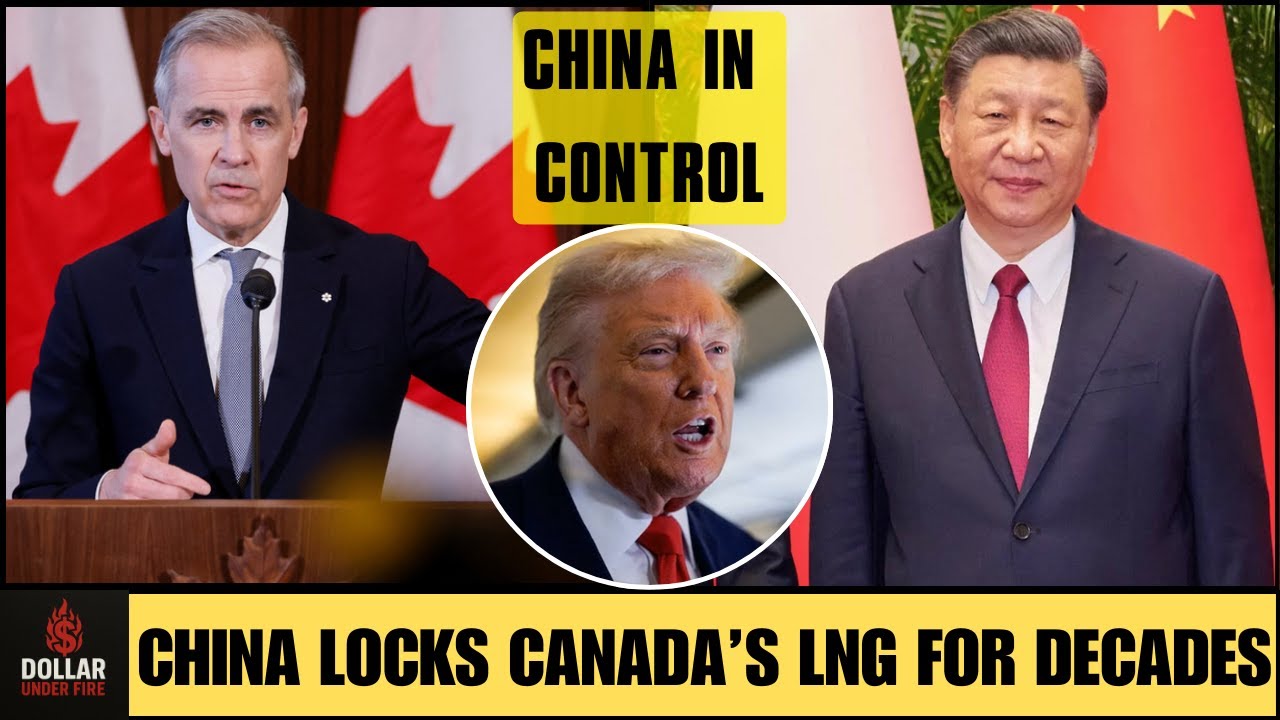
In Beijing earlier this year, Canada and China quietly formalized a framework that opens the door to more than $19 billion in LNG investment tied to Canada’s Pacific coast. On paper, the agreement appeared routine: a memorandum of understanding, diplomatic language, familiar gestures of cooperation. In practice, it marked a decisive reordering of Canada’s energy future.
The numbers tell the story. By 2030, Canadian LNG export capacity is projected to reach roughly 50 million metric tons annually—nearly all of it bound for Asian markets. None of it is reserved for the United States.
This is not diversification. It is separation.
Infrastructure Over Influence
Unlike oil shipments that can be rerouted or refined elsewhere, LNG infrastructure locks in trade relationships for decades. Liquefaction plants cost tens of billions of dollars, take years to build, and are designed to operate continuously for 30 to 40 years. Once completed, they do not pivot in response to political pressure.
Canada’s LNG expansion is concentrated almost entirely in British Columbia, anchored by the Kitimat terminal, which began limited operations in 2025. What critics initially dismissed as symbolic has rapidly evolved into a hub. Seven major LNG projects are now under development or expansion, all scheduled to come online between 2027 and 2030.
Their orientation is unmistakable. Pipelines run west. Ports face the Pacific. Shipping routes lead directly to East Asia.
Geography has done what politics could not.
From Canada’s Pacific coast, LNG tankers reach China, Japan, and South Korea via shorter, more predictable routes than U.S. exports from the Gulf Coast, which must navigate the Panama Canal or take longer passages around South America. For Asian buyers, reliability and cost certainty matter more than diplomatic alignment.
This advantage is now embedded in physical infrastructure.
Ownership Changes Everything
Perhaps more consequential than export volumes is who owns the system.
Chinese, Japanese, and South Korean companies are not merely buyers of Canadian LNG. They are investors. In several projects, Asian firms hold equity stakes in production facilities themselves. That distinction matters profoundly in global energy markets.
When buyers become owners, supply stops being political. Equity guarantees access regardless of shifting trade winds, tariffs, or diplomatic disputes. These arrangements are protected by international investment frameworks and designed to withstand political cycles in any one country.
For Canada, this model reduces risk and secures capital. For Asian partners, it delivers energy security without dependence on unstable transit routes or politically volatile suppliers.
For Washington, it removes leverage.
Energy analysts on U.S. social media have increasingly noted this shift with concern. In policy threads circulating on X and long-form analyses on Substack, the same conclusion appears repeatedly: once ownership is established and infrastructure is built, influence fades. Markets no longer respond to pressure; they respond to design.
A Climate Advantage That Matters
Canada’s LNG also carries an environmental distinction that has quietly boosted its appeal.
Most LNG facilities worldwide burn natural gas to power the liquefaction process, making them carbon-intensive. In contrast, British Columbia’s facilities rely heavily on hydroelectric power. The result is one of the lowest-carbon LNG supplies globally—an attribute that has become commercially valuable.
China is not abandoning fossil fuels. It is replacing coal with gas, particularly to address urban air pollution and meet climate targets. But carbon intensity increasingly shapes procurement decisions. Canadian LNG offers a rare combination: scale, stability, and lower emissions from a democratic producer.
Japan and South Korea, facing their own climate commitments, reached similar conclusions. Their participation in Canada’s LNG buildout reflects not ideology, but calculation.
Why the Shift Is Hard to Reverse
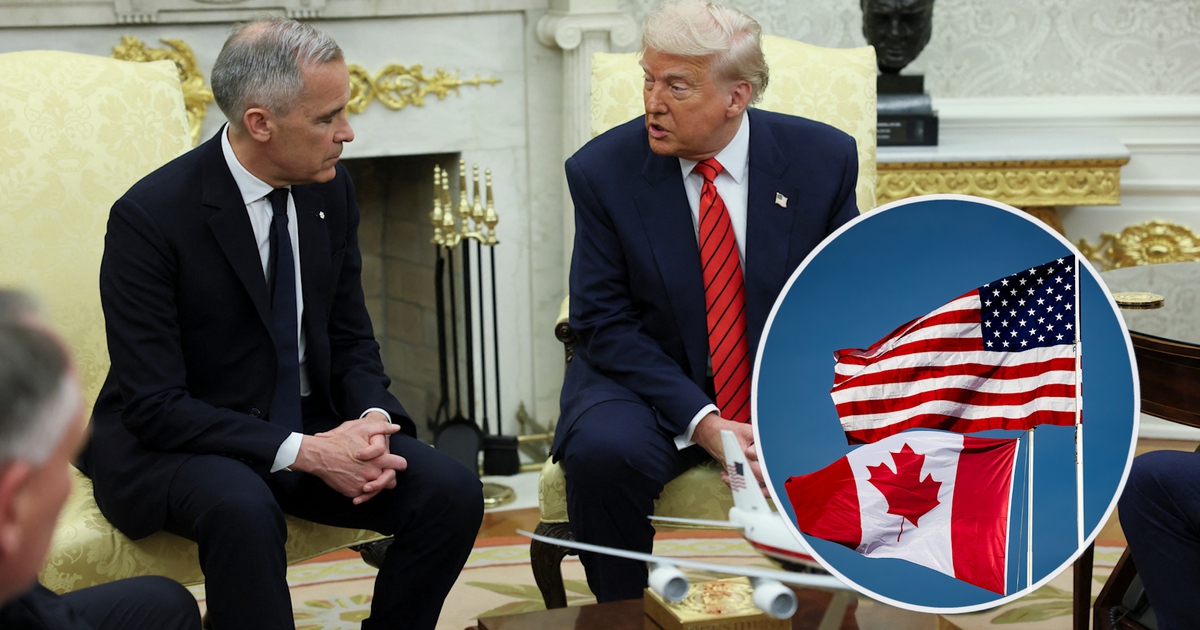
In Washington, there is a lingering assumption that energy relationships can be renegotiated, redirected, or reclaimed through diplomacy or pressure. That logic misunderstands how infrastructure works.
Liquefaction plants do not respond to elections. Pipelines do not read speeches. Contracts measured in decades do not dissolve under rhetorical strain.
Each year that passes locks in more capacity, more capital, and more long-term supply agreements. Momentum compounds. Reversal becomes not just politically costly, but economically irrational.
Even if future governments sought to reorient Canadian LNG toward the United States, ownership structures alone would make such a move nearly impossible. Breaking equity-backed supply arrangements would devastate Canada’s credibility as a trading nation—an outcome no government would risk.
This is why many energy economists describe the shift as permanent.
A Lesson in Power
From Canada’s perspective, the LNG pivot represents strategic liberation. Energy exports are no longer vulnerable to sudden tariff threats or political volatility south of the border. Markets are diversified. Capital is committed. Decisions can be made without first calculating Washington’s response.
For Asia, the benefits are equally clear: secure, long-term supply from a stable producer, with lower emissions and fewer geopolitical choke points.
For the United States, the loss is quieter but profound. Nothing was taken. Instead, something assumed—dependence—simply disappeared.
Energy power in the modern world is not enforced through pressure alone. It is constructed through infrastructure that quietly decides outcomes long after the headlines fade.
Canada understood that distinction. And by the time Washington fully grasped the shift, the steel was already poured, the contracts signed, and the gas committed.
The leverage once taken for granted did not collapse overnight. It was built out of relevance—westward, across the Pacific, and beyond reach.
And it is not coming back.






