As Grocery Bills Rise, Trump’s Gilded Politics Test Voters’ Patience
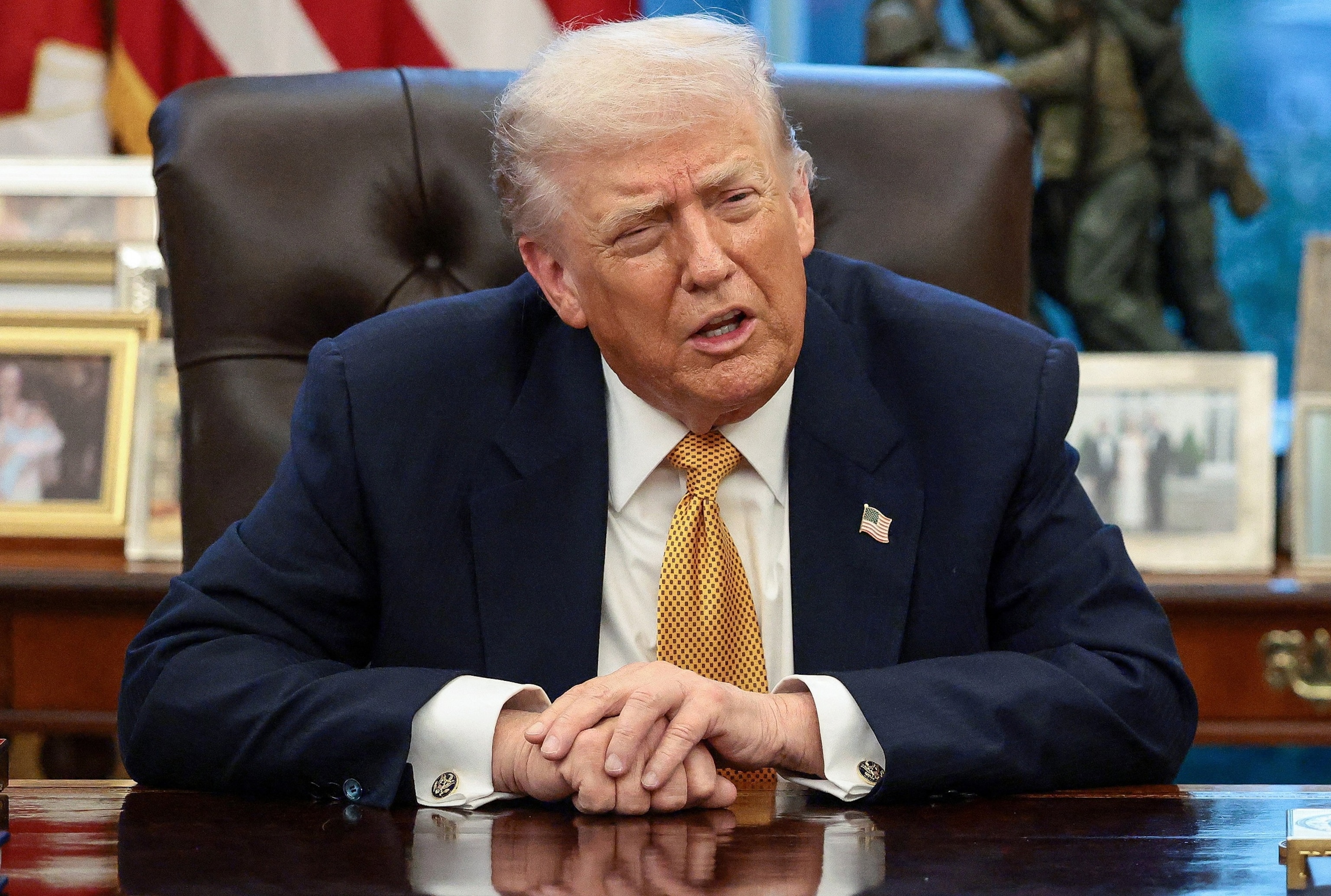
When President Trump says grocery prices are “going down,” many Americans respond not with applause, but with disbelief.
At checkout counters across the country, the numbers tell a different story. According to data from the Bureau of Labor Statistics, the price of beef has climbed more than 16 percent over the past year, while coffee prices have jumped nearly 20 percent. For families already stretched thin by rent, car payments, and health care costs, food inflation has become one of the most immediate and emotionally charged measures of economic well-being.
Public opinion appears to be catching up with the receipts. A recent Wall Street Journal poll found that more voters disapprove than approve of Mr. Trump’s handling of the economy by a margin of 10 percentage points — a notable erosion on an issue long considered one of his political strengths.
Yet at the highest levels of power and wealth, the president’s public posture has remained defiant — and, critics say, increasingly tone-deaf.
“Let Them Eat Cake” Politics
In recent months, the White House has leaned into a message that affordability is a matter of personal discipline rather than policy. Agriculture Secretary Brooke Rollins drew widespread attention after suggesting that Americans could manage with meals costing roughly $3 — citing simulations involving chicken, broccoli, tortillas, and corn.
The comment ricocheted across social media and cable news, quickly becoming shorthand for what many see as a disconnect between policymakers and everyday life. Economists were quick to point out that such calculations often exclude real-world costs like time, transportation, regional price differences, and access to fresh food — particularly in rural and low-income communities.
Natasha Sarin, a Yale Law School professor and president of the Budget Lab at Yale, has described the current economic framework as resembling a “reverse Robin Hood” system — one in which recent tax and tariff policies have disproportionately benefited high-income households while increasing costs for everyone else.
According to analyses by the Budget Lab, tariffs imposed during Trump’s second term have pushed the effective tariff rate to its highest level in more than a century, translating into an estimated $2,000 annual cost increase for the average American family. Many of the sharpest price increases — including coffee — are directly linked to imported goods.
“These are not abstract numbers,” Sarin has said in public appearances. “People feel this every time they go to the grocery store.”
The Optics of Excess
If rising food prices have heightened public sensitivity to economic inequality, the president’s social calendar has only amplified it.
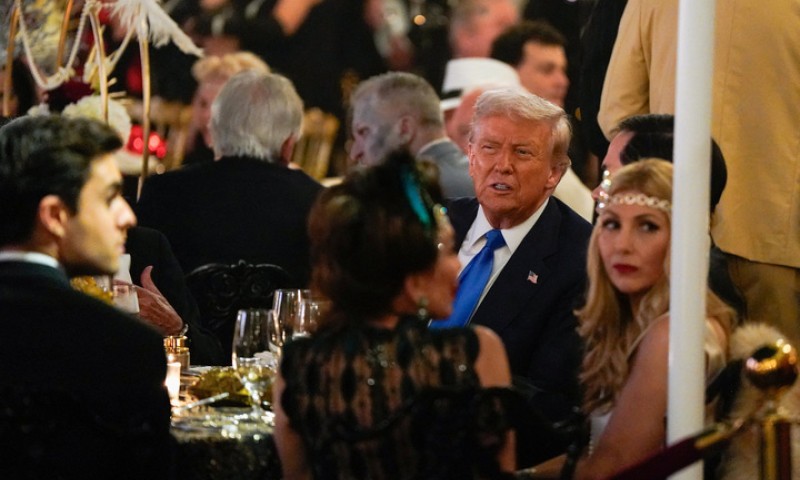
In November, Mr. Trump hosted a lavish, Great Gatsby–themed party at Mar-a-Lago just hours before millions of Americans lost access to enhanced SNAP benefits. More recently, the resort served as the venue for the American Humane Society’s Hero Dog Awards Gala — an extravagant affair featuring performers in 18th-century costumes and elaborate masks.
While the events were privately funded and tied to charitable causes, critics argue that the imagery — opulence, historical cosplay, exclusivity — clashes sharply with the financial realities facing many voters.
“These parties reinforce a perception,” said one Democratic strategist, “that the economy is working very well — just not for most people.”
That perception may be reinforced by reports that Trump-affiliated businesses have generated billions in new value during his presidency, fueled in part by increased visibility, foreign interest, and donor activity.
A Ballroom and a Backlash
Nothing has symbolized this tension more starkly than the proposed construction of a massive new ballroom at the White House — a project Mr. Trump has promoted as a privately funded improvement but which has drawn intense scrutiny.
A Washington Post–ABC News–Ipsos poll found that 56 percent of Americans oppose the project, compared with just 28 percent who support it. Among independents — a crucial voting bloc — opposition rose to more than 60 percent.
The controversy intensified after heavy machinery was photographed dismantling part of the East Wing, contradicting earlier assurances that the historic structure would remain untouched. Preservationists, historians, and former White House staffers have all voiced concern over the loss of a space many Americans associate with tours, portraits, and institutional memory.
Even among Republicans, support has shown signs of softness. While a majority back the project, the numbers are lower than typical approval ratings for Trump-backed initiatives — an unusual development in a party known for its loyalty to the president.
Behind the scenes, aides have reportedly discussed design details, including gold accents and the possibility of naming the space after Mr. Trump — something the president has publicly denied, though skeptics remain unconvinced.
Politics of Affordability

The broader political risk for the White House is not any single policy or project, but the cumulative narrative they create.
At a time when Americans are being told to accept fewer Christmas gifts, cheaper meals, and tighter household budgets, images of chandeliers, gold trim, and black-tie galas carry a symbolic weight that is difficult to manage.
Trump has long thrived on portraying himself as an outsider fighting elite institutions. But critics argue that his presidency increasingly resembles the very culture of excess he once claimed to oppose.
“The contradiction is becoming harder to ignore,” said one progressive organizer. “Working-class voters are being asked to sacrifice, while billionaires get tax cuts and invitations to the ballroom.”
Whether that contradiction translates into electoral consequences remains uncertain. Trump’s base has proven remarkably resilient, and many supporters continue to credit him with economic growth and cultural defiance.
But as food prices rise and polling among independents softens, the question facing the White House is no longer just about messaging — it is about credibility.
For millions of Americans, the economy is not a slogan or a simulation. It is a grocery bill, a credit card balance, and a growing sense that the people in charge may be living in a very different world.






