In a stunning political rupture that has sent shockwaves across the Western Hemisphere, former President Donald J. Trump’s audacious bid to seize control of Venezuela following the dramatic capture of Nicolás Maduro has spectacularly collapsed overnight. What began as a high-stakes Delta Force operation to apprehend the Venezuelan leader on narco-terrorism charges swiftly morphed into an unprecedented American declaration: the United States would “temporarily run” Venezuela until a new regime could be installed. The move, framed by Trump as essential for restoring oil production and securing American energy interests, has instead ignited a full-blown international crisis, isolating Washington and galvanizing Canada into an aggressive, unapologetic defense of its own sovereignty.
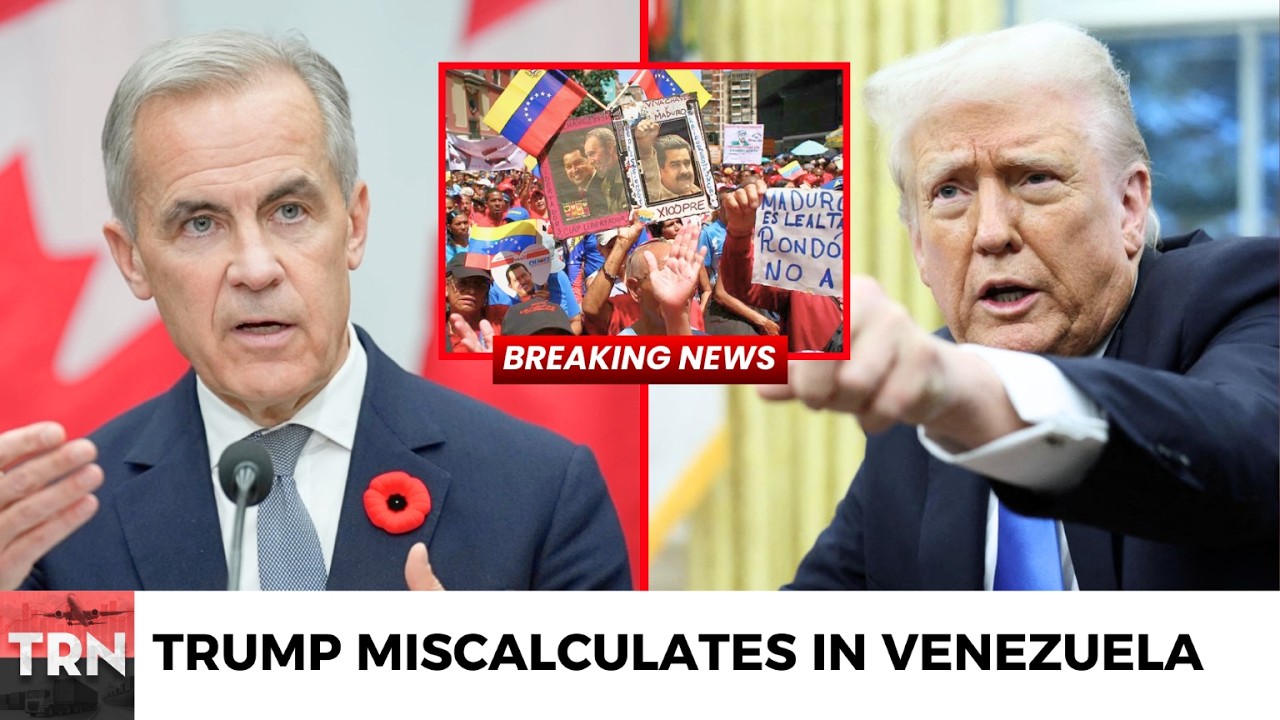
The operation unfolded with breathtaking speed. Elite American units stormed Caracas, extracted Maduro, and flew him to face federal charges in the United States. Within hours, Trump stepped to the podium and reframed the entire mission. No longer merely a law-enforcement action, it became a unilateral regime-change project led from Washington. He spoke repeatedly of Venezuela’s vast oil reserves—estimated at over 300 billion barrels—as a strategic asset vital to American security. The word “oil” dominated his remarks far more than “democracy” or “Venezuela” itself. Allies watched in stunned silence; adversaries pounced. Brazil, Mexico, Spain, Chile, and Uruguay issued blistering condemnations, branding the intervention a naked violation of sovereignty. Russia and China accused the United States of resurrecting the Monroe Doctrine in its most aggressive form.
For Canada, however, the implications cut far deeper—and far closer to home. Ottawa has spent the past year navigating an increasingly volatile bilateral relationship with Washington under Trump’s second term. Sweeping tariffs, canceled trade talks, and repeated threats to upend the USMCA have already strained the world’s longest undefended border. Now, the Venezuela precedent has transformed abstract concerns into urgent reality. If the United States is willing to bypass multilateral institutions, dismiss regional partners, and justify unilateral action through the lens of resource control, then Canada—America’s largest foreign supplier of oil, a dominant player in critical minerals, and a key provider of uranium—suddenly finds itself squarely in the crosshairs.

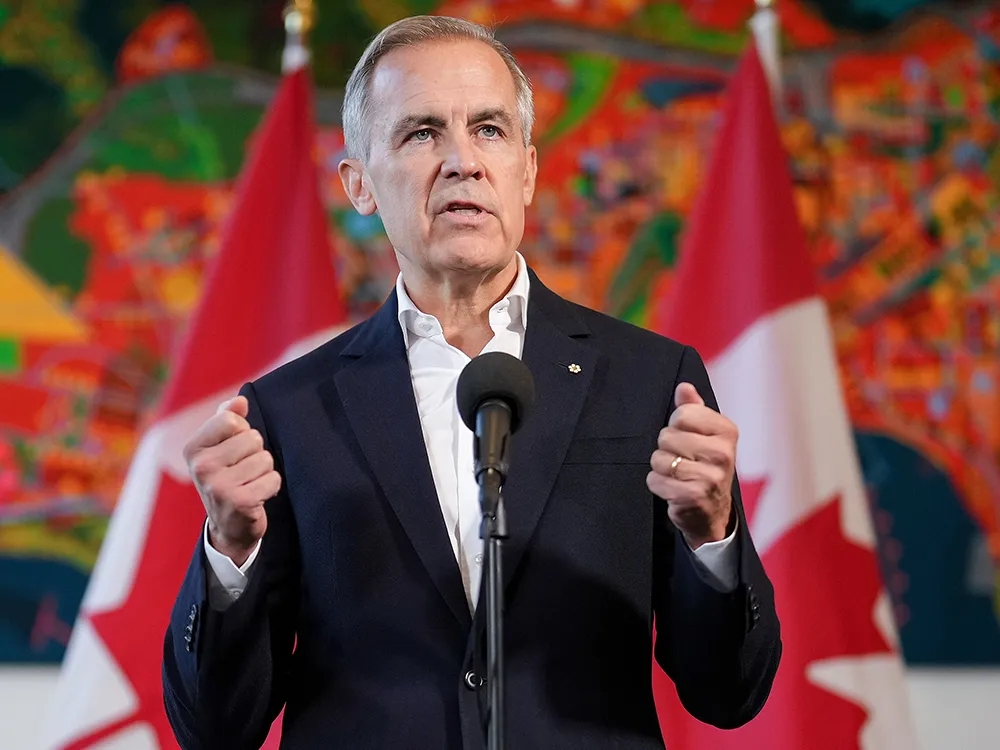
Prime Minister Mark Carney, in a series of calculated moves, has accelerated Canada’s long-term diversification strategy. Billions in trade and investment are being redirected toward Europe, Asia, and emerging NATO defense partnerships. Canadian manufacturers, battered by collapsing U.S. auto orders—General Motors and Nissan volumes down roughly 25 percent—are pivoting hard into aerospace, battery technology, robotics, and high-precision engineering for global markets. Federal procurement policies now prioritize domestic production, ensuring taxpayer dollars strengthen Canadian factories rather than subsidize an unpredictable American partner. Ontario Premier Doug Ford, once known for pragmatic business ties south of the border, delivered a blistering public rebuke: “Don’t let this guy Trump ruin your lives,” he declared, branding the former president a “tyrant” and vowing never to apologize. The words echoed nationwide, reflecting a profound shift in the Canadian psyche—no longer tiptoeing around Washington, no longer waiting for approval.

A Precedent That Threatens the Rules-Based Order
The Venezuela debacle has exposed the fragility of the post-war international system that Canada helped build. Trump’s formula—identify a strategic resource, declare it essential to national security, then act decisively regardless of objections—creates a dangerous template. Middle powers like Canada now confront a world where old assumptions of predictability and consultation no longer hold. The 2026 USMCA review looms as a potential flashpoint; Trump has already hinted at abandoning the agreement unless Canada meets sweeping demands. In response, Ottawa is fortifying alliances: deepening economic ties with the European Union, securing landmark AI and clean-energy investments from Microsoft and Germany, expanding electricity exports to power American data centers while simultaneously reducing reliance on them.
Canada Rises as America Reels
While U.S. energy firms scramble amid global backlash and diplomatic isolation, Canada is emerging stronger and more assertive. Border towns once bustling with Canadian snowbirds now sit quieter; organic boycotts of American travel and shopping have become a grassroots expression of dignity and independence. Investors worldwide increasingly view Canada as an anchor of stability—rule of law intact, policy predictable, governance dependable—in contrast to Washington’s tariff-driven volatility and self-inflicted industrial wounds.
The implosion of Trump’s Venezuela takeover is more than a foreign-policy miscalculation. It is a vivid illustration of how unilateral resource grabs can backfire catastrophically, eroding alliances, accelerating diversification among partners, and awakening a new era of Canadian confidence. As the hemisphere watches, one truth stands clear: the old rules are being rewritten, and Canada is no longer content to follow someone else’s script.






