Senate Rebuke of Trump’s Canada Tariffs Signals Rare Republican Break—and Reignites a Long-Simmering Fight Over Taxes
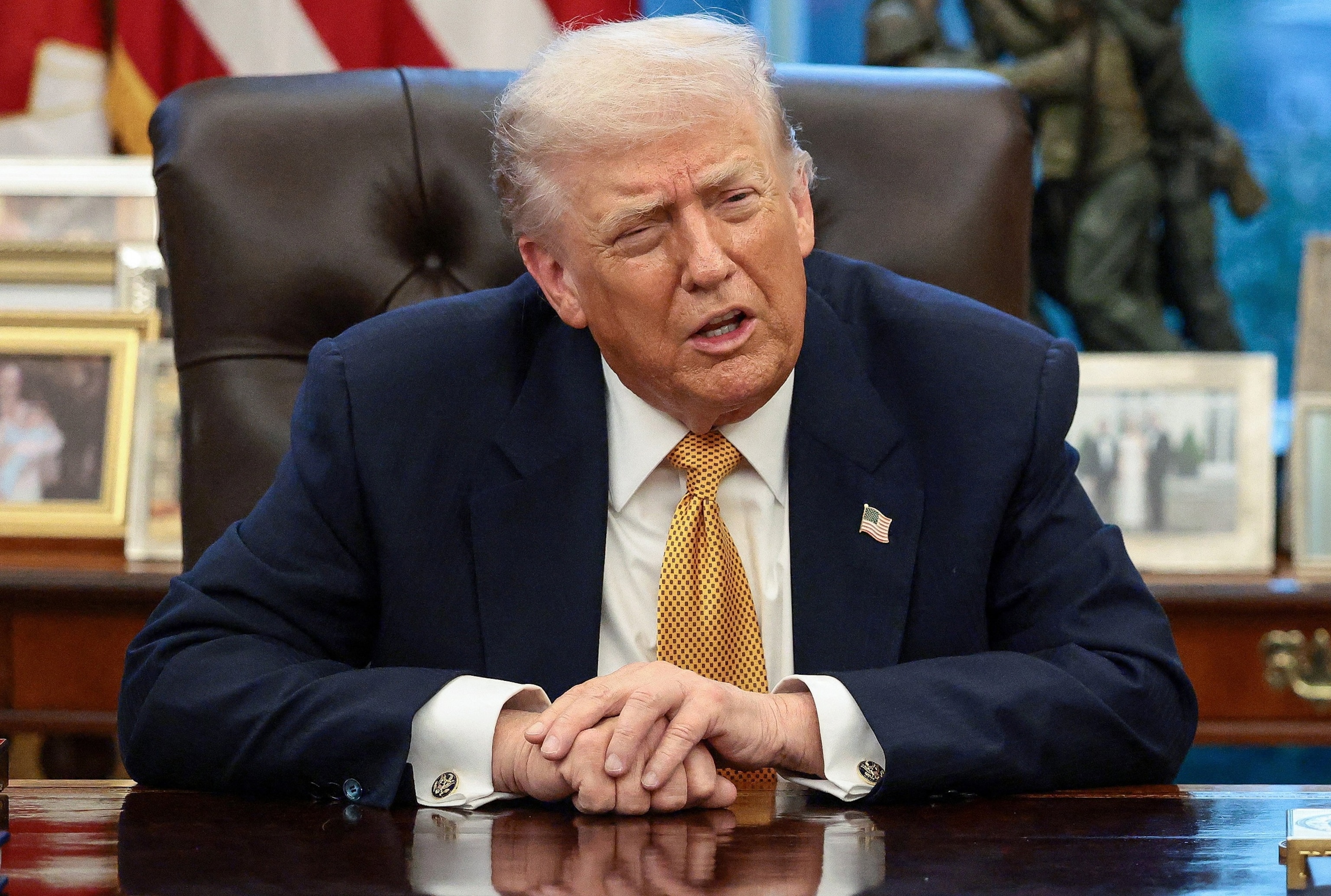
Washington — For the second night in a row, President Donald J. Trump found himself on the losing side of a consequential vote, underscoring growing political headwinds and exposing fractures within the Republican Party that have long been concealed by party discipline and fear of retribution.
On Wednesday evening, the Republican-controlled United States Senate voted 51–48 to approve a resolution nullifying President Trump’s claimed authority to impose sweeping tariffs on Canada under the guise of a national emergency. Four Republican senators — Mitch McConnell of Kentucky, Susan Collins of Maine, Lisa Murkowski of Alaska, and Rand Paul of Kentucky — joined all Senate Democrats in what amounted to the first successful bipartisan rebuke of Mr. Trump’s trade agenda during his current term.
The vote marked the first time since Mr. Trump’s return to the White House that the Senate formally rejected a major presidential initiative, and it did so on an issue that strikes at the core of his economic and political identity: tariffs.
The outcome followed another stinging political defeat just 24 hours earlier, when voters in Wisconsin elected Susan Crawford, the Democratic-backed candidate, to the state’s Supreme Court, rejecting a conservative contender supported by Mr. Trump and the billionaire entrepreneur Elon Musk. Taken together, the two losses rattled Republican strategists and fueled renewed debate on cable news and across social media about whether the aura of inevitability surrounding Mr. Trump’s power was beginning to fade.
“Tariffs Are Taxes”
At the heart of the Senate vote was a deceptively simple proposition: tariffs are taxes, and under the Constitution, Congress — not the president — has the power to levy them.
That argument, once considered political heresy in Republican circles, was stated plainly by Senator Paul, a libertarian-leaning conservative who has long opposed protectionist trade policies.
“Tariffs are taxes,” Mr. Paul said, echoing remarks he has made for years. “They don’t punish foreign countries. They punish American consumers.”
His words were amplified far beyond the Senate chamber. Financial networks such as CNBC repeated the phrase throughout the day, while the Wall Street Journal, in a sharply worded editorial responding to Mr. Trump’s tariff announcement, declared: “Tariffs are taxes, pure and simple.”
The message resonated not only with economists but also with voters facing stubborn inflation and rising prices for food, fuel, and consumer goods.
Trump Attacks, Senators Defy
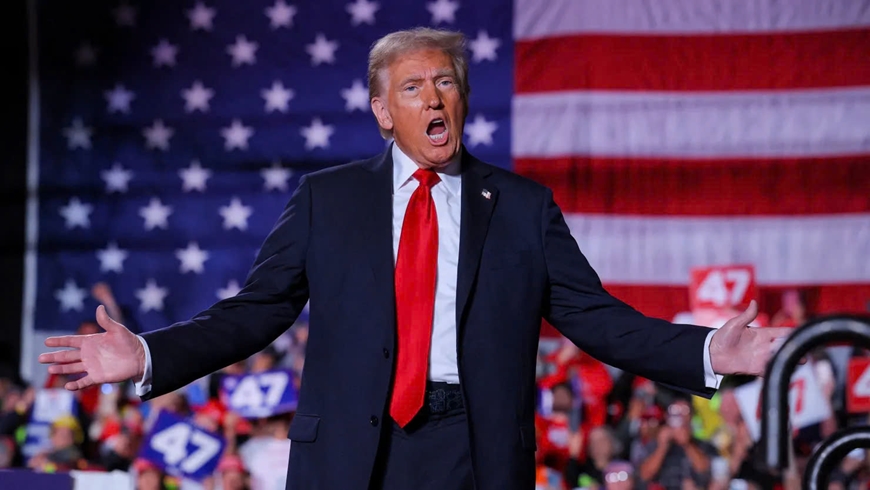
Mr. Trump had attempted to head off the rebellion with a preemptive strike, attacking the four Republican dissenters in a morning post on social media. He accused them of abandoning “Republican values and ideals” and urged voters in Kentucky, Maine, and Alaska to pressure their senators into compliance.
Instead, the senators held firm.
For Senator Collins, whose state maintains deep economic ties with Canada, the issue was intensely local. On the Senate floor, she outlined how Maine’s blueberry and lobster industries depend on cross-border processing, particularly in Prince Edward Island and other parts of Atlantic Canada.
Maine exports between $200 million and $400 million worth of lobster to Canada annually for processing, she noted, because Canada has roughly 240 lobster processing facilities compared with just 15 in the United States. Tariffs on Canadian processing, she warned, would not revive American manufacturing overnight but would immediately raise costs for fishermen and consumers alike.
“As price hikes always do,” Ms. Collins said, “they hurt those who can afford them the least.”
A Republican Reckoning on Taxes
The vote also reopened an uncomfortable chapter in Republican history — the party’s decades-long absolutist stance against tax increases, enforced by the once-feared anti-tax activist Grover Norquist.
In the 1990s and early 2000s, nearly every Republican lawmaker signed Mr. Norquist’s pledge never to support a tax increase of any kind. The pledge became a litmus test for Republican legitimacy, shaping primaries, legislation, and presidential campaigns.
That legacy now stands in stark contrast to the Trump-era embrace of tariffs — effectively national sales taxes imposed on imported goods and paid entirely by Americans.
In 1993, when Democrats raised the federal gasoline tax by 4.3 cents per gallon as part of a deficit-reduction package under President Bill Clinton, Republicans denounced the move as an assault on working families. That increase amounted to roughly a 2 percent rise in gasoline prices.
Today, Mr. Trump’s tariffs range from 10 percent to as high as 54 percent on certain imported goods.
Even former Vice President Mike Pence, who once signed the Norquist pledge himself, broke ranks on Wednesday night. In a post shared widely on X, Mr. Pence called the new tariffs “the largest peacetime tax hike in U.S. history,” estimating they would cost American families more than $3,500 a year.
Markets React, Quietly at First
Mr. Trump announced the latest round of tariffs after U.S. markets had closed, a timing that did not go unnoticed on Wall Street. In after-hours trading, stock futures fell sharply, signaling fears of a broader selloff when markets reopen.
Economists warned that tariffs on Canadian imports — particularly energy, autos, and agricultural products — could ripple quickly through supply chains, raising prices on everything from gasoline to groceries.
Even before the announcement, the Wall Street Journal had labeled Mr. Trump’s plan “the dumbest trade war in history,” reflecting growing unease within the business community that once viewed tariffs as a negotiating tactic rather than a governing philosophy.
Emergency Powers Under Scrutiny
Legally, the Senate resolution targeted the president’s use of emergency powers to justify the tariffs. While Congress has delegated limited authority to presidents to adjust tariffs during genuine national emergencies, critics argue that applying that framework to Canada — one of America’s closest allies and largest trading partners — stretches the law beyond recognition.
“There is no emergency,” Senator Paul said. “Taxes should not be enacted by one person.”
Though the resolution now faces an uncertain future in the House of Representatives and is likely to be vetoed by Mr. Trump, the symbolic damage is already done.
A Crack in the Wall

For years, Republican lawmakers have privately criticized Mr. Trump’s trade policies while publicly defending them. Wednesday night marked the first time that dissent translated into a legislative defeat.
Democrats were quick to frame the vote as a turning point. Progressive activists on social media hailed it as “Liberation Day,” borrowing — and mocking — the term Mr. Trump himself used to describe his tariff announcement.
Whether the vote represents the beginning of a sustained Republican rebellion or merely a narrow, issue-specific exception remains an open question. But for the first time in years, Mr. Trump’s claim of total control over his party has been visibly, unmistakably challenged.
As the Senate adjourned and markets braced for the next day’s opening bell, one reality had become clear: the political spell surrounding Donald Trump, at least on tariffs, is no longer unbreakable.






