Canada’s sudden economic pivot toward China may mark the most consequential shift in North American trade since NAFTA. While Washington focused on domestic battles, a landmark agreement was signed in Beijing that could redraw global supply chains. Prime Minister Mark Carney’s deal with President Xi Jinping signals a historic break from the assumption that Canada will always align with the United States. For 75 years, deeply integrated cross-border supply chains formed the backbone of North American prosperity. That foundation is now under strain.
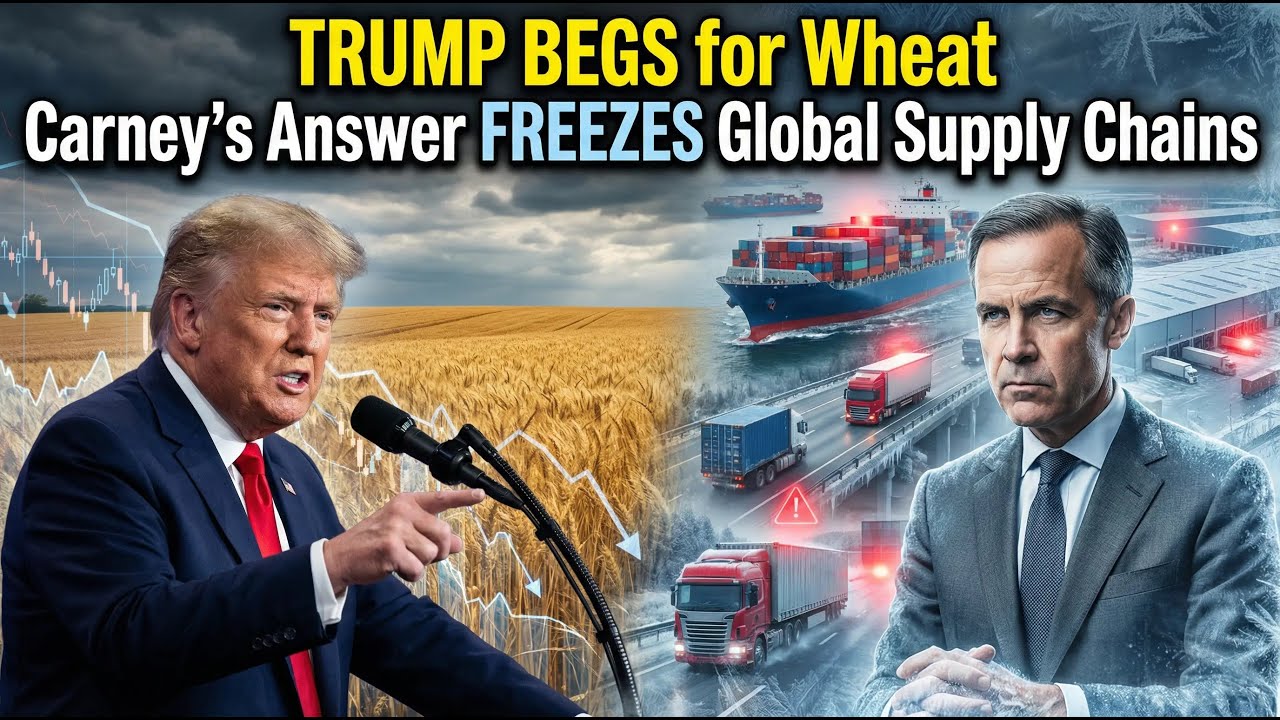
At the heart of the agreement is agriculture, a sector that reveals why Ottawa acted. China had imposed crushing tariffs of up to 84% on Canadian canola, effectively cutting off a market vital to tens of thousands of farmers. With rural communities facing financial collapse and little relief from Washington, Carney sought alternatives. The Beijing deal slashes Chinese tariffs on Canadian canola to about 15%, instantly restoring billions of dollars in potential exports. Wheat and other grains benefit indirectly, as Canada reorients its entire agricultural export strategy toward Asia.
In return, Canada dramatically reduced tariffs on Chinese electric vehicles from 100% to just over 6%, allowing nearly 49,000 Chinese EVs annually into its market. This move directly contradicts U.S. policy, which seeks to block Chinese vehicles from North America altogether. The fear in Washington is that Canada could become a backdoor for Chinese manufacturers, destabilizing an auto industry built on seamless cross-border production. With $30 billion in annual U.S.–Canada auto trade at stake, even minor disruptions could ripple through millions of jobs.
The timing could not be worse. The USMCA trade pact faces mandatory review in July 2026, and former President Donald Trump has already called the agreement “irrelevant.” His administration’s tariffs and threats to abandon multilateral deals have injected deep uncertainty into investment decisions across manufacturing and agriculture. Companies delay expansion, farmers hesitate on planting, and suppliers stockpile inventory. This is how supply chain paralysis begins—not with a single collapse, but with thousands of frozen decisions.

Carney’s China deal reflects a broader global trend. As U.S. trade policy grows unpredictable, allies are building alternative partnerships. Europe is expanding ties with South America, and emerging economies are diversifying away from U.S. markets. Once supply chains are reconfigured, they rarely snap back. Infrastructure is built, contracts are signed, and new dependencies form. American economic dominance, long sustained by trust and stability, risks erosion.
This is why Canada’s move matters far beyond canola or electric vehicles. It signals a fracture in the postwar trade order that underpinned North American prosperity. If the USMCA unravels, the impact would reach grocery prices, factory floors, and farm communities alike. The question is no longer whether global commerce is changing, but whether the United States can restore confidence before the reordering becomes permanent. The July review may determine whether North America stabilizes—or slips past the point of no return.






