A Federal Court’s Unanimous Ruling Brings the Question of Presidential Accountability to a Historic Crossroads
Washington —
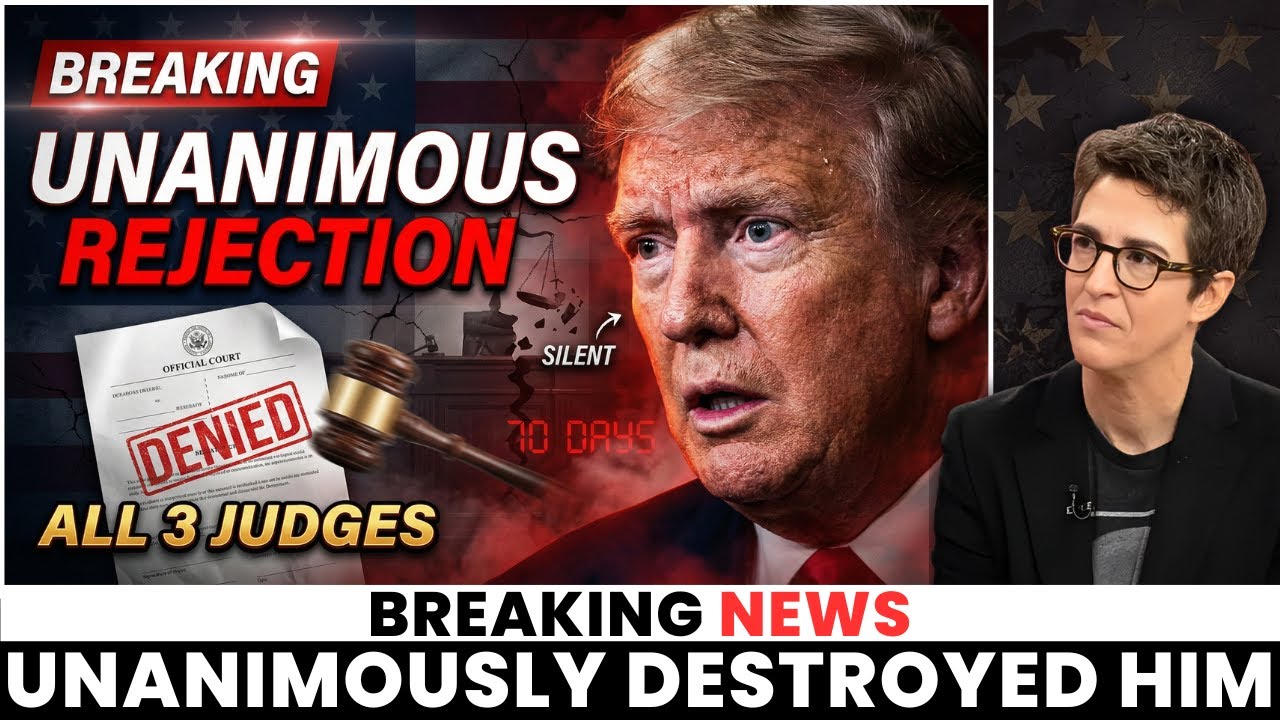
In a ruling that could redefine the boundaries of presidential power for generations, the United States Court of Appeals for the District of Columbia Circuit delivered a unanimous rejection of former President Donald J. Trump’s claim that he is immune from criminal prosecution for actions taken while in office. The decision, issued swiftly and without oral argument, marks one of the most consequential moments in modern constitutional law — and sets the stage for an unprecedented criminal trial of a former American president.
The three-judge panel’s order, issued per curiam — meaning by the court as a whole — dismissed Mr. Trump’s emergency request to halt proceedings in his federal election interference case. The language was strikingly direct. The court described Mr. Trump’s alleged conduct surrounding the 2020 election as “unprecedented in our nation’s history,” signaling not only legal clarity but moral gravity.
Legal scholars and former Justice Department officials quickly characterized the ruling as a decisive repudiation of the idea that a former president can place himself beyond the reach of criminal law. On social media, constitutional law professors and former federal prosecutors noted that the court did not merely reject Mr. Trump’s argument — it dismantled it.
A Swift and Unusual Response
Mr. Trump’s legal team filed its emergency application late at night. By early morning, the court had responded. There were no requests for supplemental briefing, no oral arguments scheduled, no indication of hesitation. To veteran court watchers, the speed itself was revealing.
“This is what courts do when they believe the law is settled,” one former federal appellate clerk wrote on X. “They don’t slow-walk. They don’t hedge. They close the door.”
The ruling addressed four core issues. First, the court rejected the concept of absolute presidential immunity from criminal prosecution. Second, it concluded that the conduct alleged in the indictment — efforts to overturn the results of the 2020 election — constituted private actions, not official acts of the presidency. Third, it affirmed that the charges against Mr. Trump could proceed without delay. And fourth, it established a framework likely to apply across all pending criminal cases involving the former president.
A Break From Historical Practice
The United States has never before prosecuted a former president for crimes committed while in office. Past scandals ended differently. President Richard Nixon resigned and was pardoned. President Ronald Reagan avoided prosecution as Iran-Contra defendants lower in the chain of command were charged. President Bill Clinton was impeached but never criminally indicted.
This case breaks that pattern.
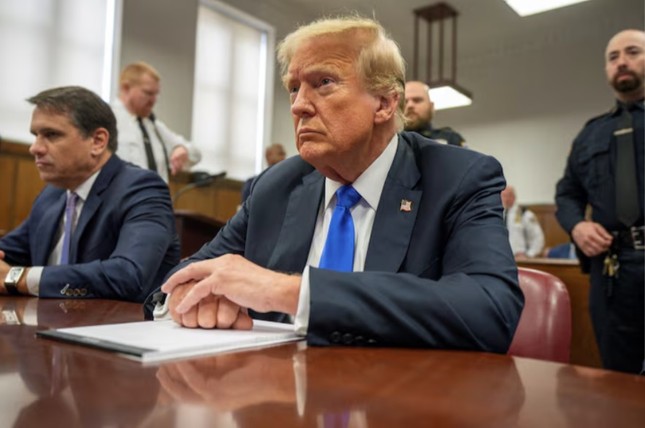
Mr. Trump faces federal charges in Washington related to election interference, state charges in Georgia under a sweeping racketeering indictment, and federal charges in Florida tied to the retention of classified documents. In New York, he has already been convicted in a separate criminal matter related to falsifying business records.
What makes the Washington case distinct is its constitutional weight. Prosecutors allege that Mr. Trump conspired to defraud the United States, obstruct an official proceeding, and deprive voters of their rights — charges that go to the core of democratic governance and the peaceful transfer of power.
The Supreme Court’s Silence
Mr. Trump’s attorneys are expected to seek emergency relief from the Supreme Court. But as of now, the Court has remained silent. That silence has drawn attention.
Several conservative justices were appointed by Mr. Trump himself. Chief Justice John G. Roberts Jr. has repeatedly emphasized the Court’s institutional legitimacy. Yet no justice has publicly indicated urgency or concern sufficient to justify immediate intervention.
On cable news and social media alike, former clerks and appellate lawyers observed that unanimous appellate rulings are rarely overturned, particularly on emergency review. The Supreme Court has already declined to block related proceedings once before.
A Speedy Trial Clock Begins
The appeals court’s decision clears the way for Judge Tanya S. Chutkan, who is presiding over the federal case in Washington, to move forward under the Speedy Trial Act. Once the immunity issue is definitively resolved, the statute requires a trial to begin within 70 days.
Judge Chutkan had previously set a trial date for early March before the appeals process intervened. If higher courts decline to step in, prosecutors are expected to press for a swift resumption.
Escalating Rhetoric and Rising Security Concerns
As the legal pressure has mounted, Mr. Trump’s public rhetoric has grown more incendiary. On his social media platform, Truth Social, he has attacked judges, prosecutors, and potential witnesses by name, warning that continued prosecutions could lead to unrest.
Law enforcement agencies are taking those statements seriously. Federal officials have quietly increased security around courthouses, judges, and prosecutors involved in the cases. Capitol Police, U.S. Marshals, and Joint Terrorism Task Forces are monitoring online threats and extremist chatter, according to officials familiar with the matter.
The memory of January 6, 2021 — when weeks of false election claims culminated in a violent attack on the Capitol — looms large.
Witnesses From the Inner Circle
Perhaps most damaging for Mr. Trump is the roster of potential witnesses. Prosecutors are expected to rely heavily on testimony from former Vice President Mike Pence, former White House Chief of Staff Mark Meadows, former Attorney General William P. Barr, and former White House Counsel Pat Cipollone — all individuals appointed by or closely allied with Mr. Trump.
In Georgia, the evidence includes recorded phone calls, forged elector certificates submitted to federal authorities, and cooperation from some of Mr. Trump’s former co-defendants. In Florida, prosecutors allege the retention of highly sensitive national defense information and potential obstruction involving surveillance footage.
Political Fallout Inside the Republican Party
The legal developments are already reshaping Republican politics. Public polling shows a significant portion of Republican voters say they would not support Mr. Trump if he were convicted. Senate Republicans in competitive states have begun distancing themselves, while party leaders privately debate the consequences of a nominee facing possible incarceration.
At the same time, constitutional scholars are revisiting Section 3 of the 14th Amendment — the insurrection clause — which bars individuals who engaged in insurrection from holding office. State-level decisions in Colorado and Maine have already tested this provision, with Supreme Court review expected.
A Defining Test for American Democracy
Beyond the immediate fate of one man, the case raises a deeper question: whether the American system can enforce accountability at the highest level of power without destabilizing itself.
For decades, informal norms — restraint, tradition, deference — served as guardrails on presidential behavior. The appeals court’s ruling suggests that those norms, standing alone, are no longer sufficient. Law, not custom, is now being asked to fill the gap.
As one former federal judge wrote online, “This is what accountability looks like in a constitutional system. It is slow. It is procedural. And it applies even when the defendant once occupied the Oval Office.”
The coming weeks will determine whether that principle holds — and what it will mean for the future of the presidency, the rule of law, and American democracy itself.






