From the Kennedy Center to the Nobel Peace Prize Committee, Donald Trump’s attempts to insert himself into elite institutions are being met with resistance—raising questions about power, legacy, and legitimacy.
Donald Trump has long treated prestige as something that can be claimed by force of will. But in recent weeks, two very different institutions—one cultural, one international—have sent unmistakable signals that prestige cannot simply be taken.
At home, the John F. Kennedy Center for the Performing Arts is facing a growing cultural backlash following governance changes tied to Trump-aligned leadership. Abroad, the Norwegian Nobel Committee issued a rare and pointed clarification after Trump became associated with a controversial attempt to claim symbolic proximity to the Nobel Peace Prize.
Individually, the developments might seem unrelated. Together, they reveal a consistent pattern: Trump’s efforts to attach himself to established institutions are increasingly being rejected—sometimes quietly, sometimes publicly, and sometimes with historical implications he likely did not intend.

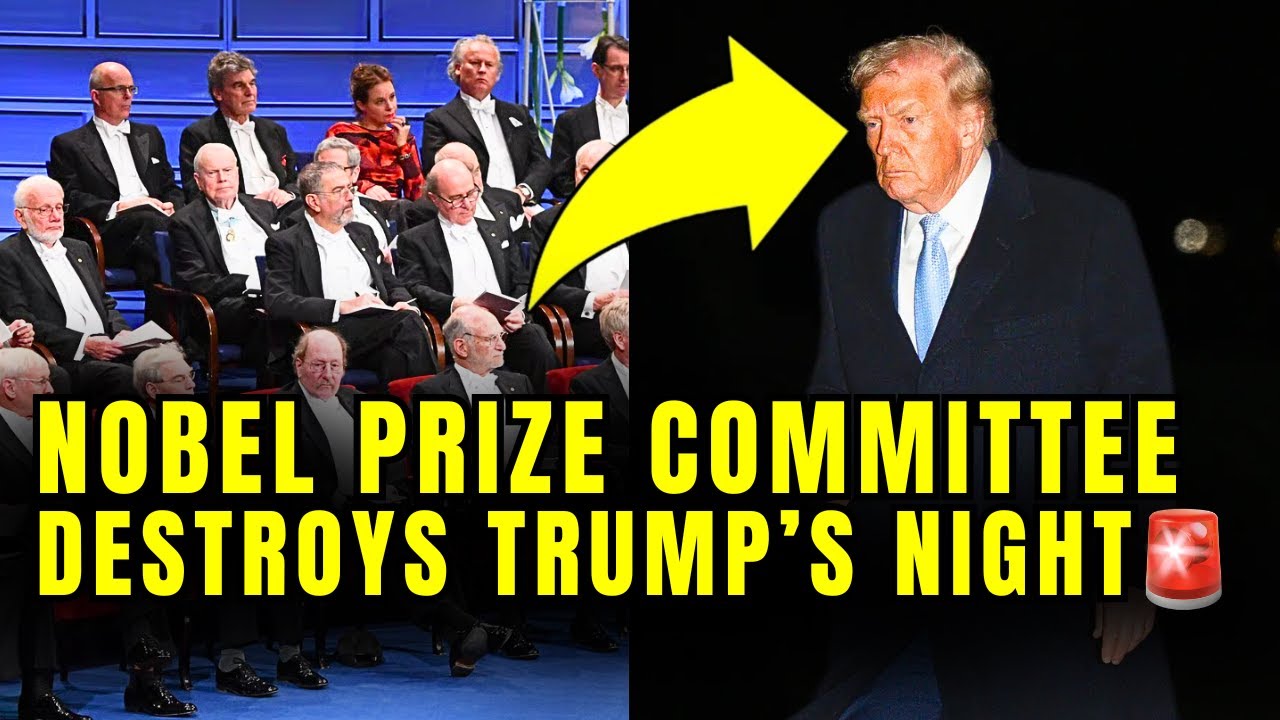
A Cultural Rebellion at the Kennedy Center
The most immediate blow came from the American arts community.
According to The New York Times, the Martha Graham Dance Company announced it would not perform at the Kennedy Center this spring as part of its national centennial tour. The company cited no explicit reason, but its withdrawal follows a string of similar decisions by artists distancing themselves from the institution after recent changes to its leadership and direction.
“The Martha Graham Dance Company regrets that we are unable to perform at the Kennedy Center in April,” the company said in a statement, adding that it hoped to return in the future.
The timing is significant. Several artists and organizations have pulled out of Kennedy Center events since its board of trustees voted last month to add Donald Trump’s name to the building—an act critics argue politicized a traditionally nonpartisan cultural landmark.
The Kennedy Center, long regarded as America’s premier performing arts institution, regularly hosts major touring companies such as American Ballet Theatre and New York City Ballet. Its reputation has historically rested on artistic excellence rather than ideological alignment.
That balance now appears under strain.
A Shift in Leadership—and in Values
In August, the Kennedy Center appointed Steven Nakagawa, a former Washington Ballet dancer, as director of dance and programming following the dismissal of previous leadership. Several former employees said that Richard Grenell, the center’s president, had encouraged programming he believed would appeal to broader audiences—at one point referencing the television show So You Think You Can Dance.
Critics viewed the suggestion as emblematic of a deeper shift: an effort to reshape elite cultural spaces through a populist, entertainment-driven lens.
In a letter written before his hiring, Nakagawa expressed concern about what he described as the rise of “woke culture” in ballet institutions. He wrote of wanting to end the dominance of leftist ideologies in the arts and return ballet to what he called its “purity and timeless beauty.”
That language has alarmed artists who see it as a political framing of artistic expression.
The Martha Graham Dance Company is not alone. Béla Fleck, an 18-time Grammy Award winner, withdrew from performances with the National Symphony Orchestra. Jazz musicians canceled Christmas Eve and New Year’s Eve concerts. Most strikingly, the Washington National Opera—resident at the Kennedy Center since 1971—announced it would permanently relocate.
The Absence That Spoke Loudly
One detail from The New York Times coverage stood out to many observers: while the article referenced the Kennedy Center repeatedly, it did not once use the phrase “Trump Kennedy Center.”
The omission was notable. For critics, it suggested institutional reluctance to normalize Trump’s name as part of the center’s identity—an editorial choice reflecting the broader resistance unfolding behind the scenes.
If the arts community was pushing back quietly but firmly, the response from the Nobel Peace Prize Committee was far more explicit.
A Nobel Clarification With Historical Weight
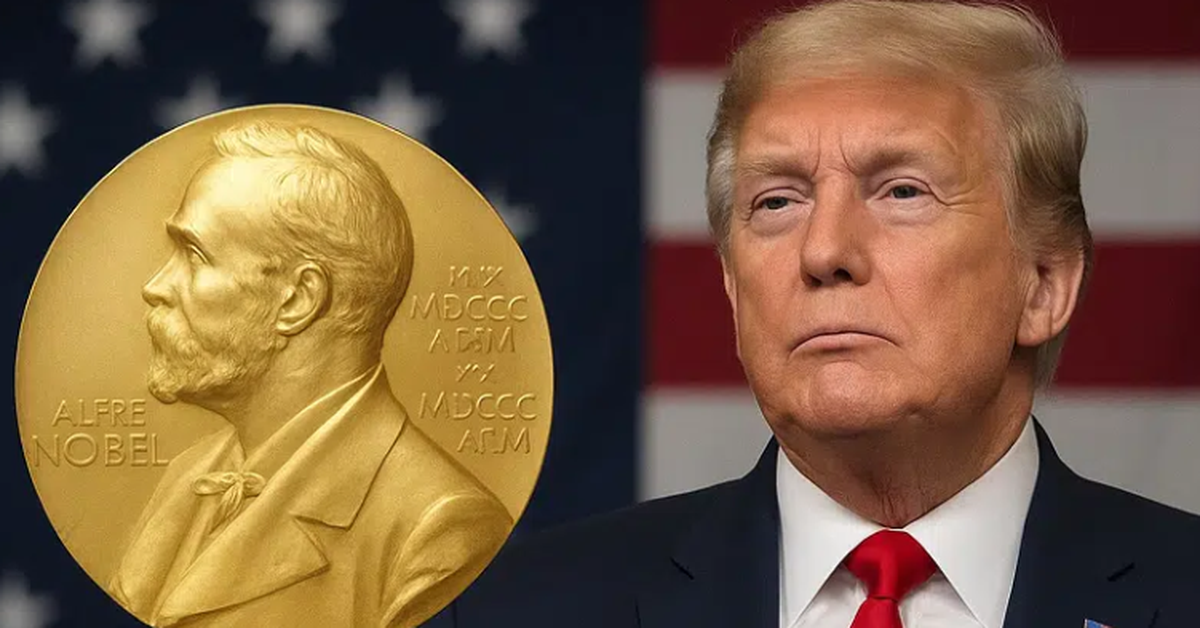
The controversy began when Venezuelan opposition figure María Corina Machado reportedly sought to symbolically gift her Nobel Peace Prize medal to Trump—an act Trump allies portrayed as an indirect endorsement or transfer of honor.
The Norwegian Nobel Committee responded with a rare public statement.
“The Nobel Prize and the laureate are inseparable,” the committee wrote. “The medal and the diploma are the physical symbols confirming that an individual or organization has been awarded the Nobel Peace Prize.”
The statement emphasized that a Nobel Prize cannot be shared, transferred, revoked, or reassigned—ever. The honor, the committee stressed, remains permanently linked to the original laureate.
Then came a historical reference that immediately drew attention.
The committee cited the case of Knut Hamsun, the Norwegian author who won the Nobel Prize in Literature in 1920. In 1943, Hamsun traveled to Nazi Germany, met with propaganda minister Joseph Goebbels, and later sent his Nobel medal to Goebbels as a gesture of admiration.
The committee noted that Goebbels was “honored by the gift,” though the medal’s current whereabouts are unknown.
The implication was unmistakable: symbolic gestures involving Nobel medals do not confer legitimacy—and history judges such acts harshly.
Silence, Clarified
The Nobel Committee added that it does not engage in day-to-day political commentary. Yet by including the Hamsun example, it effectively invited global audiences to draw their own conclusions.
For Trump, who has repeatedly expressed frustration at not receiving a Nobel Peace Prize, the clarification represented a significant ego blow. Not only was the idea of secondhand recognition rejected outright, but the historical analogy ensured the episode would be remembered.
A Pattern of Institutional Resistance
Taken together, the Kennedy Center withdrawals and the Nobel Committee’s statement point to a larger pattern.
Trump continues to pursue validation from institutions built on tradition, credibility, and long-term legacy. But those institutions—arts organizations, cultural landmarks, and international bodies—are increasingly signaling that association with him comes at a cost they are unwilling to pay.
He may succeed in forcing his name onto buildings or into headlines. But legitimacy, it turns out, cannot be compelled.
Institutions can be occupied. Respect cannot.
And as these episodes show, the more aggressively Trump seeks symbolic acceptance, the more clearly the rejection is documented—by artists who walk away, by committees that clarify the rules, and by history that keeps its own records.






