Trump, Television, and the Limits of Power: A Presidency Tested by Media, Meltdowns, and Misinformation
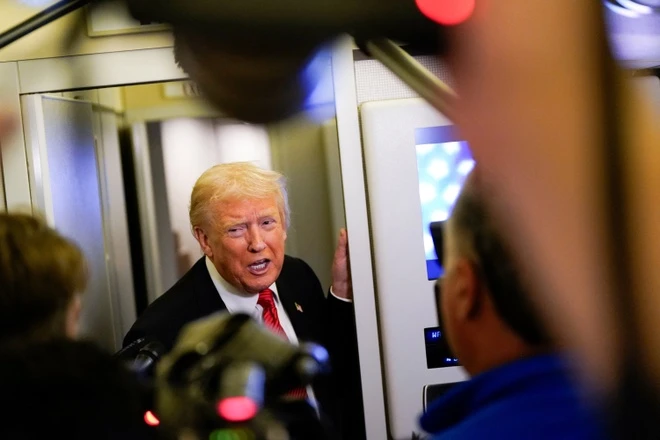
In the closing days of the year, President Donald Trump’s relationship with the media — never calm, rarely subtle — entered a new and volatile phase. What unfolded was not a single controversy but a convergence of events: a late-night television suspension, a series of incendiary social media posts, and a growing body of evidence suggesting that the boundary between political power and media independence may be under unprecedented strain.
At the center of the storm was Jimmy Kimmel, the long-running late-night host whose sharp monologues have made him one of Trump’s most persistent critics. When ABC abruptly suspended Kimmel’s show following public threats from the Federal Communications Commission chairman, social media erupted. Within hours, the White House press secretary, Caroline Leavitt, appeared on Fox News to deny any pressure from the administration. The decision, she insisted, had been made independently by network executives.
That claim did not survive the news cycle.
A Paper Trail in Plain Sight
Long before Kimmel’s suspension, Trump had repeatedly targeted him on Truth Social, describing the host as “untalented,” “next to go,” and “a disaster for television.” After the suspension was announced, Trump posted simply: “Great news for America,” before calling on other networks to fire Jimmy Fallon and Seth Meyers.
Such posts proved difficult to reconcile with Leavitt’s assertion that the president “had no idea” what was happening.
More damaging still were comments from FCC Chairman Brendan Carr, a Trump appointee, who warned publicly that networks could either “take action” against certain hosts or face “additional work for the FCC ahead.” Media law experts across the political spectrum described the remarks as extraordinary — and potentially coercive.
Even Senator Ted Cruz, no ally of late-night comedy, acknowledged that such statements raised serious concerns about government pressure on broadcasters.
The Role of the Press Secretary
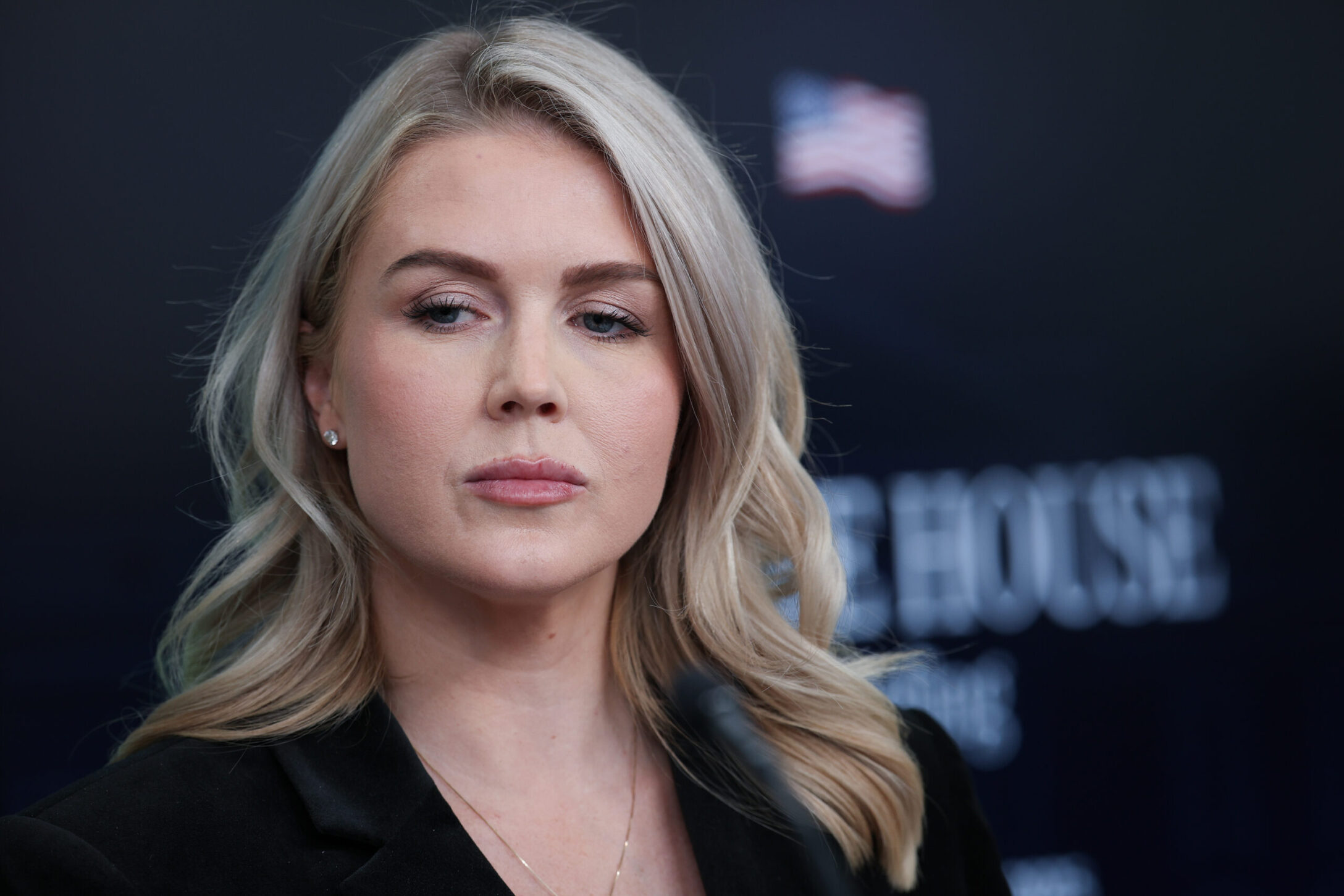
Leavitt, at 28 the youngest press secretary in U.S. history, has quickly become one of the most polarizing figures in the administration. Admirers praise her combative style and loyalty to the president; critics argue she has repeatedly blurred the line between advocacy and misinformation.
In recent weeks, she has faced scrutiny over multiple statements later challenged by reporters and fact-checkers, including claims about inflation, crime rates in major cities, and the federal government’s role in California’s wildfire response.
During one press briefing, Leavitt stated that inflation had fallen to an average of 2.5 percent. When pressed, reporters noted that the most recent Consumer Price Index showed inflation at 3 percent — the same level as when Trump took office earlier in the year. Analysts later confirmed that Leavitt had cited an average across selectively chosen months, a statistical framing that obscured current conditions.
CNN’s fact-checking team described the exchange as emblematic of a broader pattern: data presented in ways that favored the administration’s narrative, even when technically misleading.
A President Online, Unfiltered
If Leavitt has become the administration’s most visible defender, Trump himself remains its most unpredictable voice. Over the New Year holiday, the president posted dozens of messages attacking political opponents, celebrities, and even governors from his own party. Among his targets were George and Amal Clooney, whom he told to “rot in hell,” and several Democratic governors, whom he accused — without evidence — of presiding over cities that would have “fallen” without federal intervention.
Media psychologists and political analysts have increasingly described the president’s online behavior as erratic. While Trump has always used social media aggressively, the frequency and tone of recent posts — often late at night, laced with personal grievances — have raised alarms even among some Republicans.
“How about just saying ‘Happy New Year’?” one conservative commentator asked on X.
Late-Night Comedy as Political Battlefield
Late-night television has long served as a cultural pressure valve, but under Trump it has become something closer to a frontline. Kimmel, Stephen Colbert, and others have devoted significant airtime to scrutinizing the administration, often with a mix of satire and detailed factual rebuttals.

Kimmel, in particular, has focused on Leavitt’s statements, playing clips of her briefings alongside documentary evidence and expert commentary. When Leavitt claimed the U.S. military had “turned on the water” to resolve California’s wildfires, Kimmel dismissed the assertion bluntly: “This is not liberal versus conservative. It didn’t happen.”
The audience reaction was swift, and viral.
Power, Pressure, and Precedent
The larger question now confronting Washington is not about one television host or one press secretary, but about precedent. Can a sitting president publicly call for the firing of media figures while regulatory officials hint at consequences — and still claim no pressure was applied?
Legal scholars warn that the appearance of coercion alone can have a chilling effect. “When the government regulates speech and simultaneously criticizes specific speakers,” one former FCC official noted, “the First Amendment problem is not hypothetical. It’s immediate.”
The White House has dismissed such concerns as partisan hysteria. Leavitt has repeatedly described Trump as “the most transparent and accessible president in American history,” arguing that critics simply oppose his willingness to “use economic and political leverage” to defend American interests.
An Unsettled Moment
As Congress prepares for a contentious legislative year — and as investigations into unrelated matters, including the delayed release of Epstein-related documents, continue — the media battles show no sign of easing. Trump’s presidency has always thrived on confrontation, but the current moment feels different to many observers: louder, less disciplined, and more openly contemptuous of institutional norms.
Whether this period will be remembered as another episode in Trump’s long war with the press or as a turning point for media independence remains unclear. What is certain is that the struggle between political power and public accountability — once mediated quietly through back channels — is now playing out in real time, on social media feeds, late-night monologues, and White House podiums.
And the country is watching.






