How a Quiet Rail Merger Undercut Washington’s Leverage Over Canadian Grain
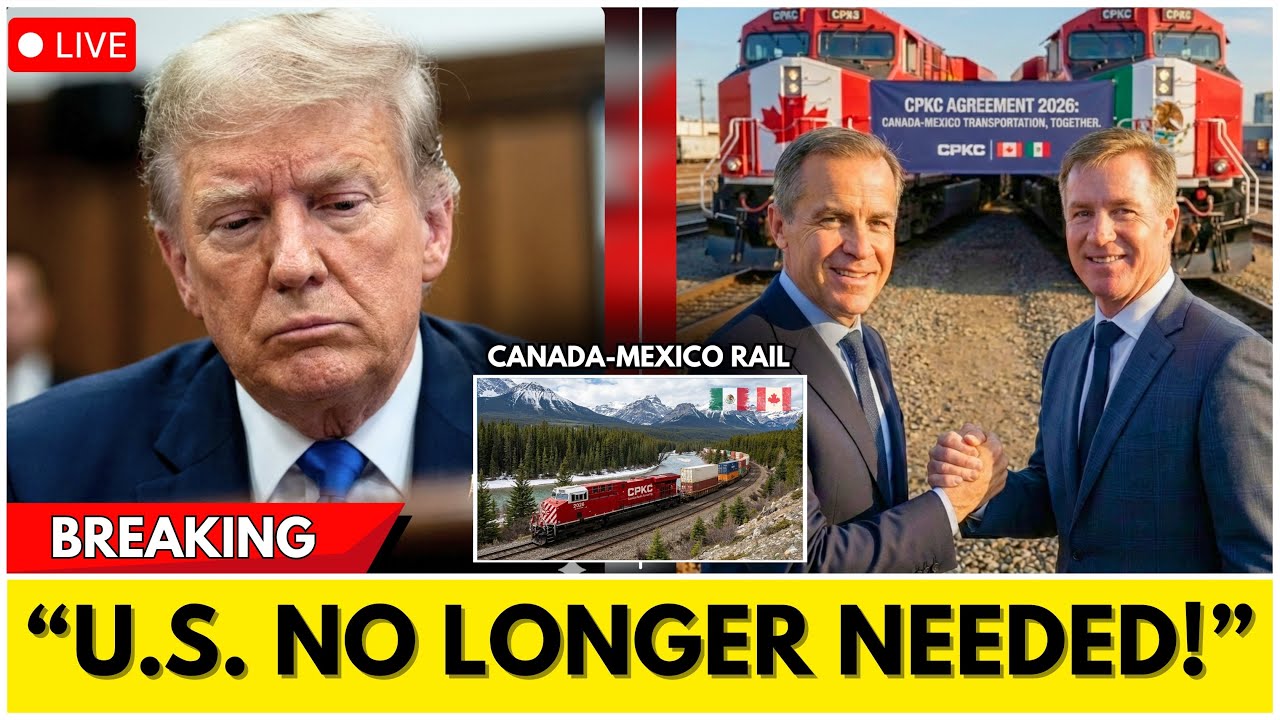
When a unit train loaded with Canadian wheat rolled into a grain terminal outside Mexico City earlier this year, it carried more than 10,000 tons of grain. It carried a message.
The wheat had been harvested in Manitoba, loaded onto Canadian-built hopper cars, and hauled more than 3,000 miles on a single railroad without once touching a U.S. port, a U.S. export terminal, or a U.S. inspection regime. It crossed the United States only in transit, like an aircraft passing overhead—legally, quietly, and beyond Washington’s control.
Standing trackside, Canadian Prime Minister Mark Carney broke bread made from flour milled with Canadian wheat and called the shipment “a direct connection between Canadian farmers and Mexican consumers.” Beside him was Keith Creel, the president and chief executive of Canadian Pacific Kansas City, or CPKC, the only railroad that directly links Canada, the United States and Mexico on a single line.
In an era defined by tariff threats, trade disputes and economic nationalism, the scene captured something Washington had largely missed: leverage, once assumed permanent, had quietly eroded.
A Merger That Changed the Map
The origins of this shift date back to April 2023, when Canadian Pacific Railway completed its $31 billion acquisition of Kansas City Southern after years of regulatory review. The merger—opposed by rivals and scrutinized by U.S. regulators—created the first single-line freight railroad spanning all three North American economies.
At the time, the deal was framed as a logistics efficiency play. But in hindsight, it looks increasingly like strategic infrastructure.
The combined CPKC network stretches roughly 32,000 kilometers, linking Canada’s Prairie grain belt to industrial centers in central Mexico. Wheat loaded in Saskatchewan or Manitoba can now travel directly to Monterrey, Guadalajara or Mexico City without being handed off between railroads at borders—handoffs that historically added cost, delay and vulnerability.
“No interchange” may sound technical. In practice, it is decisive.
Each interchange between railroads requires inspections, scheduling coordination, billing transfers and regulatory compliance. Each is a potential chokepoint. CPKC eliminated them.
“One railroad, one bill of lading, one operating system,” Mr. Creel has said repeatedly in investor calls and interviews. “That changes everything.”
Trade Policy Meets Physical Reality

The timing proved consequential.
As President Donald Trump renewed tariff threats against Canada and floated increasingly erratic trade measures—some announced on social media, others reversed within days—Canadian grain exporters began looking for ways to reduce exposure to U.S. policy risk.
Traditionally, large volumes of Canadian grain destined for Latin America moved through U.S. ports in the Pacific Northwest or along the Gulf Coast. American ports, inspectors, shippers and service providers captured significant economic value along the way.
That model depended on stability.
But as U.S. border enforcement grew less predictable, inspections more politicized, and port congestion worsened—trends widely documented by U.S. freight analysts and covered extensively by outlets like FreightWaves and Bloomberg—Canadian exporters faced a problem: crops cannot wait.
“Grain logistics is unforgiving,” one Canadian grain executive wrote recently on X. “Miss a window, lose a buyer.”
Mexico emerged as the alternative.
With a population of roughly 130 million and a rapidly expanding middle class, Mexico is one of the world’s largest grain importers. It produces corn and wheat domestically but not enough to meet demand. Historically, the United States dominated supply.
But reliability matters as much as price.
Mexican millers and bakers prize Canada Western Red Spring wheat for its high protein content and consistent baking quality. And now, thanks to CPKC, that wheat could arrive by rail—faster, cheaper, and without exposure to U.S. trade disruptions.
$500 Million on Steel, Not Rhetoric
CPKC did not rely on speeches or policy promises. It invested.
For the 2025–26 crop year, the company committed more than 500 million Canadian dollars to grain capacity: nearly 6,000 new high-capacity hopper cars, 100 Tier 4 diesel-electric locomotives, expanded yards and upgraded track.
Rail assets are not short-term bets. Hopper cars and locomotives last decades. Track lasts generations.
By its own projections, CPKC expects to move up to 27 million metric tons of Canadian grain annually, with weekly capacity approaching 685,000 metric tons when seasonal conditions allow. Analysts note that this volume rivals peak years when Canadian grain exports were heavily dependent on U.S. ports.
The difference now is routing.
Much of that grain can move south—straight through the continent’s interior—to Mexico, bypassing U.S. export infrastructure entirely.
A Legal Corridor Washington Cannot Close
Under the United States-Mexico-Canada Agreement (USMCA), cross-border rail transit is protected. Goods moving from Canada to Mexico through the United States cannot be subjected to tariffs, blocked at ports, or halted without violating treaty obligations.
This distinction has become central.
While trains traverse U.S. territory, they do not stop to serve U.S. export markets. They generate limited transit fees and wages for U.S. crews, but the high-value services—ports, inspections, shipping—are gone.
As one former U.S. trade official noted on CNBC, “You can threaten tariffs on ports you don’t control, but you can’t tariff a train that doesn’t stop.”
Winners and Losers
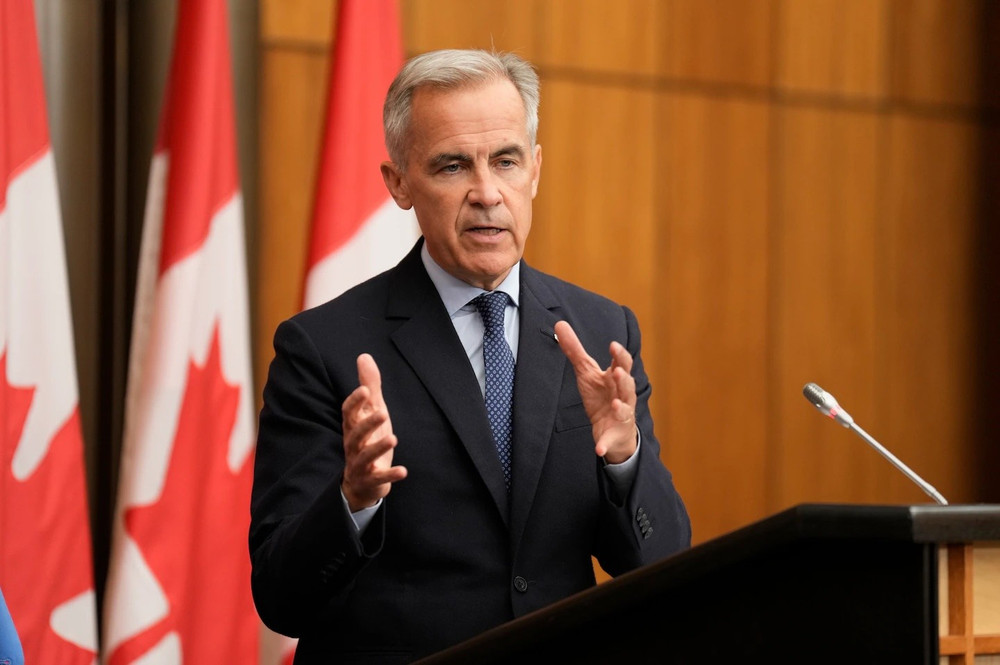
For Canada, the benefits are clear: diversification, predictability and autonomy.
For Mexico, the appeal is equally strong: a stable, high-quality grain supplier insulated from U.S. political volatility.
For CPKC, the railroad has become what Mr. Creel calls a “land bridge”—a phrase increasingly echoed by logistics analysts and freight commentators across U.S. media.
The losses, however, are concentrated south of the border.
Ports in the Pacific Northwest and Gulf Coast stand to lose billions in handling fees and related economic activity. Jobs tied to grain exports—from longshore labor to inspection services—face gradual erosion.
“This is the kind of shift that doesn’t come back,” one U.S. port authority official said privately. “Once customers reroute and trust the new system, inertia works against you.”
Infrastructure Outlasts Politics
Perhaps the most striking aspect of the CPKC corridor is its durability.
Presidents change. Tariffs expire. Rhetoric fades.
Steel does not.
The tracks linking Winnipeg to Mexico City will still be there in 2050. The hopper cars will still roll. The relationships between Canadian farmers and Mexican buyers will deepen with each successful harvest.
What was once assumed—that Canada would always need U.S. ports to reach the world—has been disproven not by policy, but by infrastructure.
In trying to reassert leverage through pressure, Washington may have accelerated its loss.
And the train has already left the station.






