Canada Breaks With Washington as Trump’s Greenland Gambit Unites Europe in Defiance

The transatlantic alliance faced one of its most severe stress tests in decades this weekend, after President Donald Trump escalated his long-running interest in Greenland into a campaign of economic coercion against America’s closest allies — and was met not with compliance, but with unified resistance.
In an announcement that stunned European capitals, Mr. Trump declared that the United States would impose immediate tariffs of 10 percent on imports from eight NATO allies — Denmark, Norway, Sweden, France, Germany, the United Kingdom, the Netherlands and Finland — with rates rising to 25 percent by June 1 unless Washington reached an agreement to purchase Greenland.
The move, unprecedented in modern alliance politics, amounted to an explicit attempt to pressure sovereign democracies into facilitating the transfer of territory. European leaders responded swiftly and collectively, warning that such threats risked undermining the foundations of NATO itself.
But perhaps the most striking rebuke came not from Europe, but from Canada.
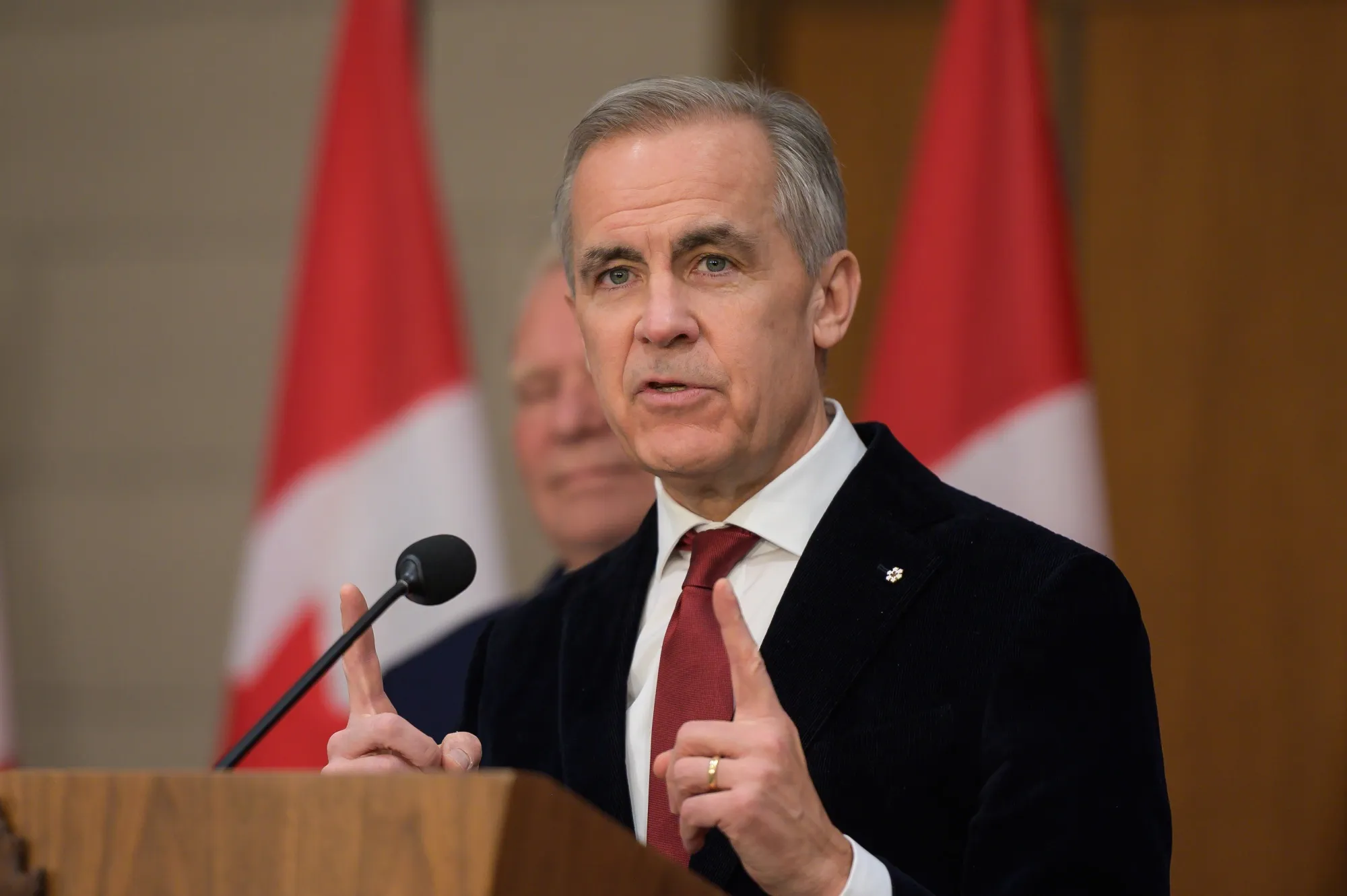
Speaking Sunday morning in Doha, Qatar, where he was concluding a high-profile diplomatic visit focused on infrastructure, energy and defense cooperation, Prime Minister Mark Carney delivered a measured but unmistakable message.
“We’re concerned about this escalation,” Mr. Carney said. “We always will support sovereignty and territorial integrity of countries, wherever their geographic location is. Decisions about the future of Greenland are for Greenland and Denmark to decide.”
In the language of diplomacy, it was a clear refusal to endorse Washington’s strategy — and a signal that Canada, America’s closest ally, was drawing firm boundaries.
A Strategy That Backfired
Mr. Trump’s interest in Greenland is not new. During his first term, he floated the idea of purchasing the vast Arctic territory, a suggestion widely dismissed at the time as implausible. What is new is the willingness to pair that ambition with direct economic pressure — and the implicit suggestion that military force could follow if economic leverage failed.
The White House framed the tariffs as a matter of national security, citing Arctic shipping routes, rare earth minerals and competition with Russia and China. Yet many analysts noted that the administration’s language departed sharply from traditional alliance consultation.
“This is not negotiation,” wrote several former U.S. diplomats on social media platforms over the weekend. “It’s coercion.”
Financial markets had initially assumed Denmark would be forced to the table. Defense experts predicted that NATO partners would seek quiet compromises to avoid a trade war. Instead, the eight European governments issued a joint statement reaffirming solidarity with Greenland and warning that tariff threats could trigger “a dangerous downward spiral” in transatlantic relations.
Diplomats noted that such phrasing is typically reserved for moments when alliances themselves are at risk.
Canada’s Calculated Distance
Mr. Carney’s response stood out not for its volume, but for its precision.
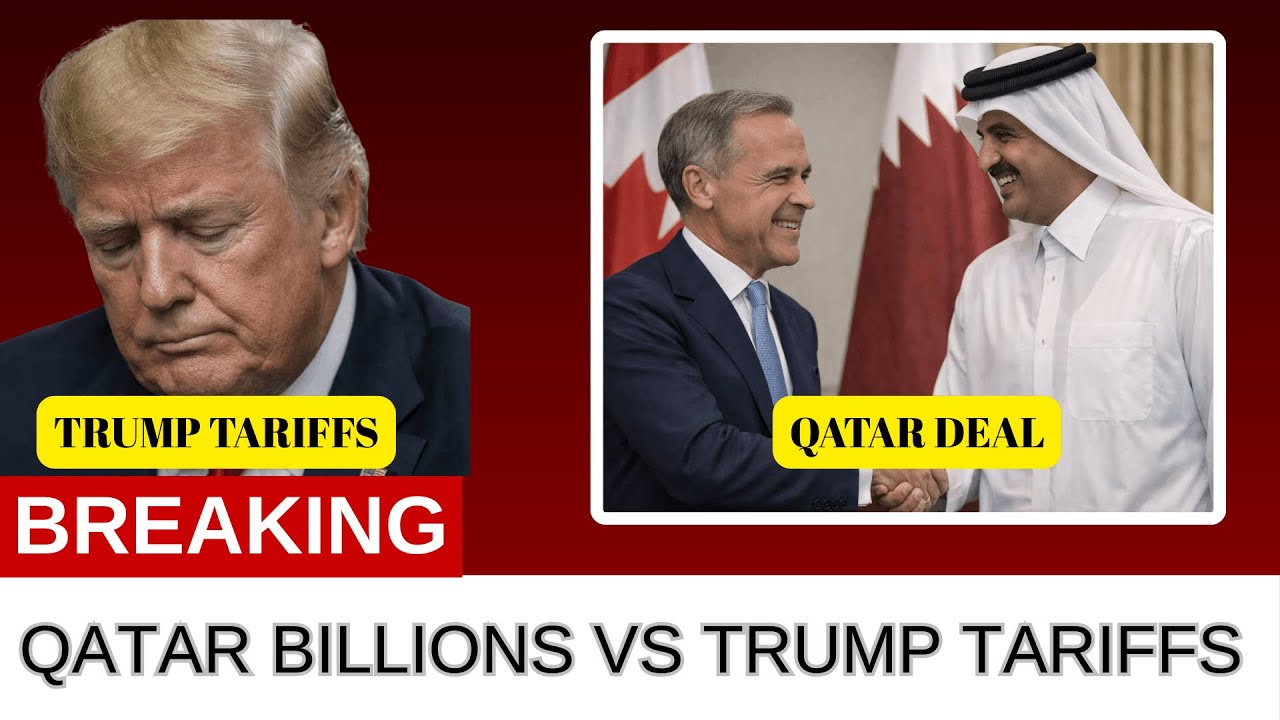
He neither attacked Mr. Trump personally nor invoked international law in confrontational terms. Instead, he articulated Canada’s position, reaffirmed alliance principles, and returned immediately to the business at hand: finalizing billions of dollars in Qatari investment tied to Canadian infrastructure projects, energy development and aviation links.
Canadian officials confirmed that Ottawa expects to conclude an investment promotion and protection agreement with Qatar by the summer of 2026, while also expanding defense cooperation, including the placement of a Canadian defense attaché in Doha.
The contrast with Washington’s approach was difficult to miss.
While the Trump administration was threatening tariffs and hinting at territorial acquisition, Canada was presenting itself as a stable, predictable partner — a country whose foreign policy, allies say privately, remains governed by consistent principles rather than transactional leverage.
“This is what middle-power diplomacy looks like when it works,” said one European official, speaking on condition of anonymity to discuss alliance dynamics. “Canada isn’t trying to dominate the conversation. It’s trying to stabilize it.”
Arctic Security Without Coercion
The Greenland episode has already had tangible security consequences.
Denmark announced this week that it would bolster troop, naval and air deployments in Greenland, in coordination with NATO allies. Canadian defense officials confirmed that Ottawa is in close discussions with Copenhagen regarding Arctic security cooperation.
General Jennie Carignan, Canada’s chief of the defense staff, addressed the issue in a televised interview, emphasizing the need to keep communication channels open within NATO even amid heightened tensions.
Observers noted that Arctic security — once dominated by U.S.-Russian rivalry — is increasingly shaped by cooperation among Canada and Nordic states, a development that may limit Washington’s ability to act unilaterally in the region.
A Broader Pattern
The Greenland confrontation is unfolding alongside other episodes that have raised questions about the administration’s approach to alliances.
Earlier this month, Mr. Trump invited dozens of countries, including Canada, to participate in a proposed “peace governance board” overseeing post-conflict administration in Gaza. Subsequent reporting revealed that participation would require a $1 billion financial commitment, with membership subject to renewal at the discretion of the board’s chair.
Canada’s response was cautious. Officials signaled interest in shaping the process but declined to commit funds without clarity, effectively rejecting what critics described online as a “pay-to-play” structure.
Once again, Ottawa managed to engage without endorsing the underlying framework.
Influence Through Predictability
Mr. Carney’s defenders argue that his approach reflects a deliberate theory of influence: that economic partnerships, respect for sovereignty and institutional continuity create leverage over time.
That theory appears to be gaining traction.
European diplomats, alarmed by Washington’s unpredictability, have increasingly turned to Ottawa for coordination. Gulf states, including Qatar, have deepened economic ties with Canada amid uncertainty about U.S. policy direction. And in global forums such as the World Economic Forum in Davos, where Mr. Carney is scheduled to appear later this week, Canada’s reputation for reliability has become a quiet asset.
By contrast, critics warn that Mr. Trump’s strategy risks isolating the United States from the very alliances that have underpinned its global influence since World War II.
Threats, they argue, may compel short-term concessions — but they also generate resistance, unity among targets, and long-term erosion of trust.
An Alliance at a Crossroads
Whether Mr. Trump ultimately follows through on the tariffs remains uncertain. If he does, Europe is expected to retaliate. If he does not, the episode may still leave lasting damage.
Either way, the Greenland gambit has already clarified a central divide within the Western alliance: between coercion and consent, domination and partnership.
When Mr. Carney said Canada would support sovereignty “wherever their geographic location is,” he was articulating more than a position on Greenland. He was signaling a foreign policy rooted in constraint — even when restraint is inconvenient.
For allies watching closely, that distinction may matter more than any tariff schedule.
And in an era of mounting global instability, predictability, it seems, has become its own form of power.






