LONDON — For more than a millennium, the spiritual and cultural identity of England was anchored by the spires of its parish churches and the rhythmic stability of its Christian traditions. But in the spring of 2026, a new reality has solidified. England is undergoing a metamorphosis in the literal biological sense—a revolution occurring not with a sudden bang, but through the relentless, cold precision of actuarial tables. According to recent data from the Office for National Statistics (ONS), the Muslim community in England surged by 44 percent in the decade leading up to 2021, reaching 3.9 million people. Simultaneously, for the first time in recorded history, the number of people identifying as Christian has fallen below the 50 percent mark.
The most profound shift is found in the “age gap” that separates the two Englands. The average age of a Christian in this country is now 51—a generation looking toward retirement and the tranquility of the past. In stark contrast, the average age of a British Muslim is 27—the most vigorous stage of life, characterized by a fervent drive to redefine the public square. This “youth quake” ensures that while the old guard calculates the costs of a quiet life, a younger, more numerous, and more determined demographic is quietly building an army of successors.
The Economics of a Fractured Social Contract
This demographic whirlwind is placing an unprecedented strain on the British social structure. While the Muslim community contributes an estimated £25 billion annually to the economy, the social cracks are widening. Data reveals that 46 percent of the community lives in the country’s most deprived areas, with an unemployment rate of 6.7 percent—nearly double that of the native population. This creates a “double burden” on a welfare system already gasping for breath under the weight of an aging population and a struggling NHS.
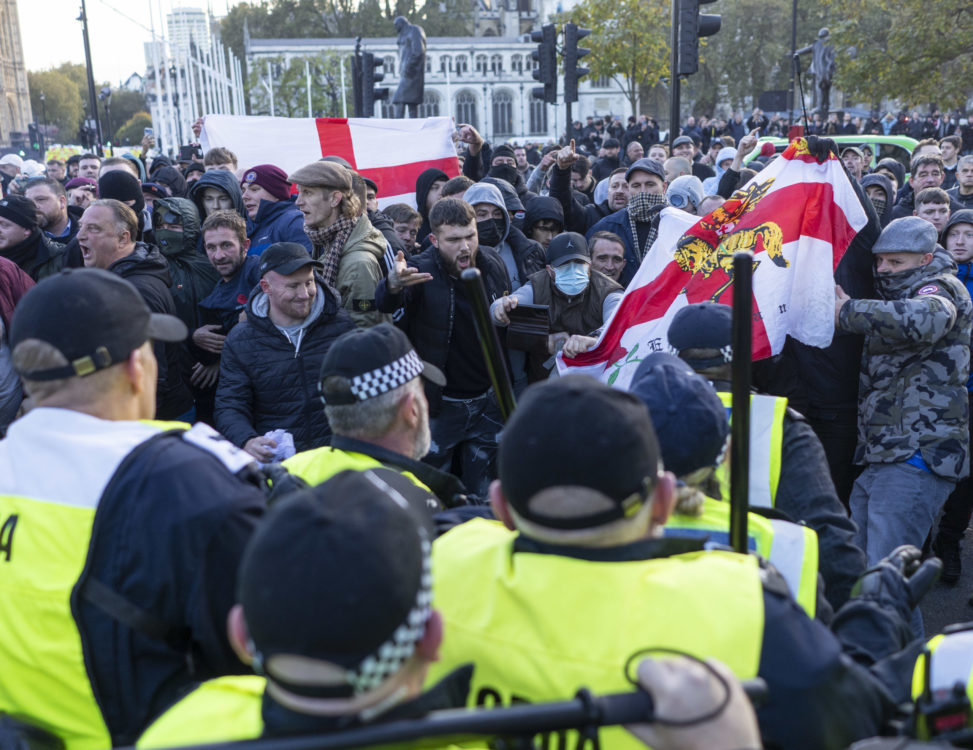
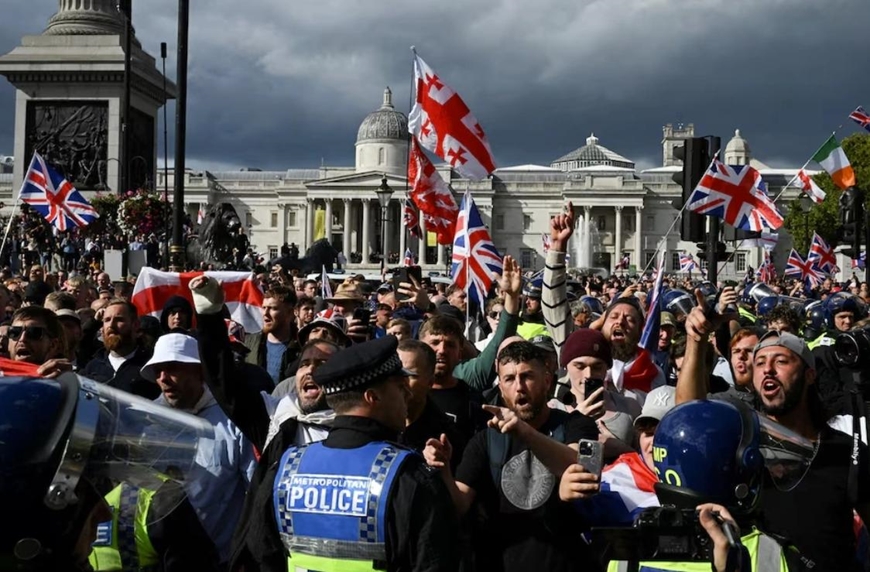
The tension reached a breaking point during the summer of 2024, characterized by the “red haze” of fiery protests in Southport and Manchester. For the white working class, the conversion of local landmarks into social housing for asylum seekers, while they face endless waiting lists for basic services, has fostered a profound sense of displacement. The government’s response, increasingly referred to as “two-tier policing,” has only deepened the sense of betrayal. When Elon Musk predicts an “inevitable civil war,” he is giving voice to a fear that the “old brain” of Westminster can no longer control the “new body” of the nation.
Spiritual Fortresses and Parallel Lives
The result is a phenomenon sociologists call “parallel lives.” England today resembles a segregated food tray where communities share a postal code but never touch each other’s souls. In neighborhoods like Tower Hamlets or Bradford, the traditional English pub—once the “living room” of the community—has been replaced by shisha houses and halal butcheries. Statistics suggest that 50 percent of Britons do not have a close friend from a different ethnic background, turning bustling urban centers into a collection of “isolated spiritual fortresses” where customs of dress and behavior carry more weight than state law.
This division is not merely cultural; it is institutional. Over 1,500 mosques now stand like new, sturdy pieces on the English chessboard. In cities like Stoke-on-Trent, 200-year-old red-brick churches are being “spiritually recycled” into Islamic centers. The exterior remains quintessentially English, but the breath inside is now the word of the Quran. From the Trocadero in the West End to the historic streets of Piccadilly Circus, symbols of Western indulgence are being transformed into solemn prayer spaces, marking a decisive transfer of ownership.
The Shift in the Seat of Power
The shift in power has also reached the highest levels of political life. Sadiq Khan’s third term as Mayor of London and the presence of 25 Muslim MPs in Parliament signal that faith has moved from the prayer mat to the boardroom. The “Muslim Vote” movement has fundamentally changed the game; traditional politicians now find themselves memorizing Islamic holidays and halal rules faster than their own voter lists. To keep their seats, they must satisfy a tightly knit and disciplined voting block that increasingly views domestic policy through the lens of religious discipline and foreign issues thousands of miles away.
While native Britons pursue an undefined personal freedom to the point of exhaustion, the rising community brings a strict discipline and family cohesion that many feel the West has lost since the Victorian era. However, this resurgence poses a direct challenge to liberal values. The battle is no longer theoretical; it is played out in public schools and city squares, a collision between declining personal freedom and vibrant religious discipline. England is being rebuilt with conviction and capital that carry the scent of a new era.
The Final Pages of an Old Empire?
As 2026 progresses, England is facing a tough question: Is this community a new pillar shouldering the future, or an entity replacing the original owners of the house? The chimes of Big Ben now share the air with the resonant calls to prayer from the minarets, a reality that feels like an overexposed photograph to those who remember a different time. By 2030, England will no longer be a singular nation, but a colossal experiment in parallel existence.
The “Great Turnover” of British culture is well underway. The metamorphosis is irreversible, and the “rightful owners” are finding themselves sharing their home with a younger, more determined guest. The title deed of the nation is being rewritten in real-time, and the story of England as the world once knew it is retreating into the mists of history.
Conclusion: A Kingdom Recoded
The rise of Islam in Britain is a response of the era to a society that has lost its own identity. Demographics are a cruel fate when a nation becomes too weak or too tired to defend what it once believed in.
As the old churches change hands and the neighborhoods change their colors, the final pages of the old empire are being turned. The new body of England is here, and the world is waiting to see if its heart can survive the transition.






