Few figures in American pop culture dissect Donald Trump as relentlessly—or as effectively—as late-night television hosts. Among them, Jimmy Kimmel has emerged as one of Trump’s sharpest cultural critics, often capturing something deeper than a punchline: Trump’s obsession with status, validation, and symbolic power.
That fixation was on full display this week following reports that Venezuelan opposition leader María Corina Machado presented Trump with a Nobel Peace Prize medal that had been awarded to her. Trump, according to his own statement, accepted the medal and described it as a “gesture of mutual respect,” despite the fact that the prize was not awarded to him and bears another person’s name.
The Nobel Foundation, for its part, has not recognized Trump as a laureate. Nor has it indicated any intention to do so.
Yet symbolism has always mattered more to Trump than formal legitimacy.
Awards as Currency

Trump’s fascination with awards is not new. Throughout his career, public praise and trophies have functioned as a kind of political currency—tools for validation and leverage rather than recognition of achievement. Kimmel’s satire underscored this dynamic by mockingly offering Trump various entertainment awards in exchange for policy concessions, highlighting the idea that flattery is often the most effective way to capture Trump’s attention.
The joke resonated because it reflected a broader truth: Trump has long equated prestige with power. The Nobel Peace Prize, in particular, has loomed large in his public rhetoric—often framed as evidence of a global establishment conspiring to deny him the recognition he believes he deserves, especially in comparison to Barack Obama.
The Obama Shadow

At the center of Trump’s Nobel fixation lies a familiar rivalry. Obama’s 2009 Nobel Peace Prize has remained a point of fixation for Trump, symbolizing not just international recognition, but personal inferiority in Trump’s eyes. Critics argue that Trump’s eagerness to display a Nobel medal—regardless of its provenance—reflects an attempt to visually and psychologically “catch up” to his predecessor.
But symbolic gestures cannot erase substantive records.
Trump’s tenure has been marked by aggressive immigration enforcement, threats of military action against multiple countries, and the expansion of executive power at the expense of institutional norms. These actions sit uneasily alongside the ideals traditionally associated with the Nobel Peace Prize.
Declining Public Support
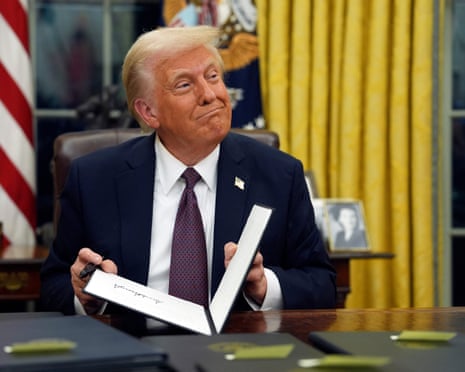
Public opinion data suggests that Trump’s performance-driven approach is failing to resonate with voters. Recent polling shows his net approval rating underwater across nearly every major issue area, including immigration, foreign policy, the economy, and healthcare. Even on issues once considered his strengths, Trump now faces double-digit negative ratings.
This erosion extends beyond Democratic voters. Surveys indicate growing dissatisfaction among independents and even segments of his own political base. Proposals lacking detail—such as healthcare plans announced without policy substance—have reinforced perceptions of unserious governance.
Policy by Assertion, Not Evidence

Trump’s governing style has increasingly relied on declarations rather than detail. Claims about slashing drug prices by “300 or 400 percent,” for example, reveal either a fundamental misunderstanding of basic economics or a disregard for factual coherence. These moments are often dismissed as rhetorical excess, but critics argue they reflect a deeper pattern: policy framed as branding rather than governance.
Healthcare remains a particularly stark example. While Trump continues to pledge the repeal of the Affordable Care Act, millions of Americans still rely on it for coverage. Polling consistently shows that, regardless of partisan identity, voters favor preserving access to affordable healthcare over ideological battles.
Performance Without Power
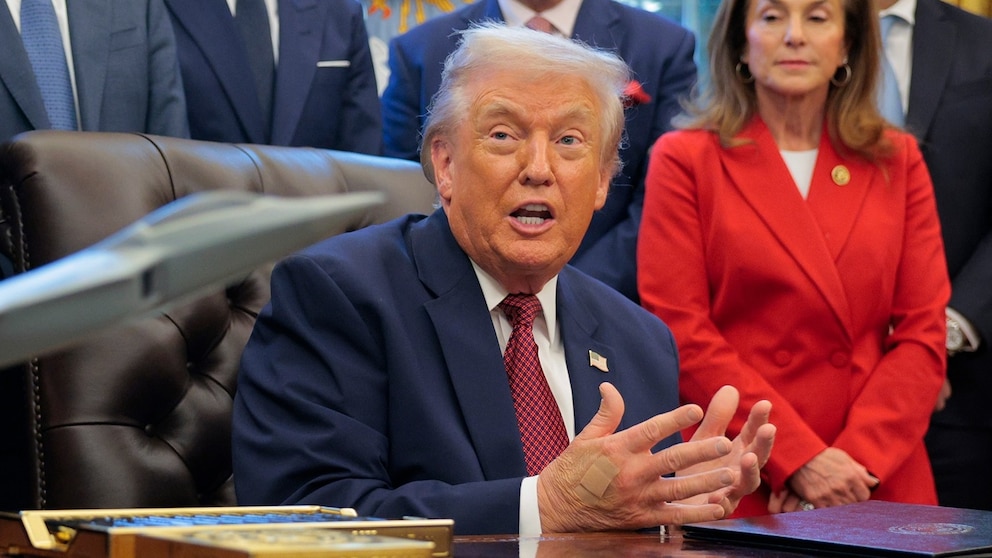
The Nobel episode, stripped of satire, reveals a central tension in Trump’s political identity. He continues to project dominance and authority, yet increasingly lacks institutional leverage. Courts, Congress, and public opinion constrain him in ways that symbolic gestures cannot overcome.
In that vacuum, performance fills the gap. Displaying a medal, invoking prestige, and cultivating grievance narratives become substitutes for concrete achievement.
But symbols only work when people believe in them.
As Trump’s approval ratings slide and legal pressures mount, the gap between performance and reality continues to widen. The Nobel Peace Prize—real or imagined—cannot bridge that divide.