Former U.S. President Donald Trump is facing renewed political and economic turbulence as America’s dairy heartland is hit by a sudden trade shock. Wisconsin dairy farms, already struggling with rising costs and falling margins, are now under intense pressure after Canada announced tough new trade barriers on U.S. milk exports. The move targets what Ottawa calls a “flood” of American dairy products worth nearly $4 billion, sending ripples through rural communities and reigniting cross-border trade tensions.
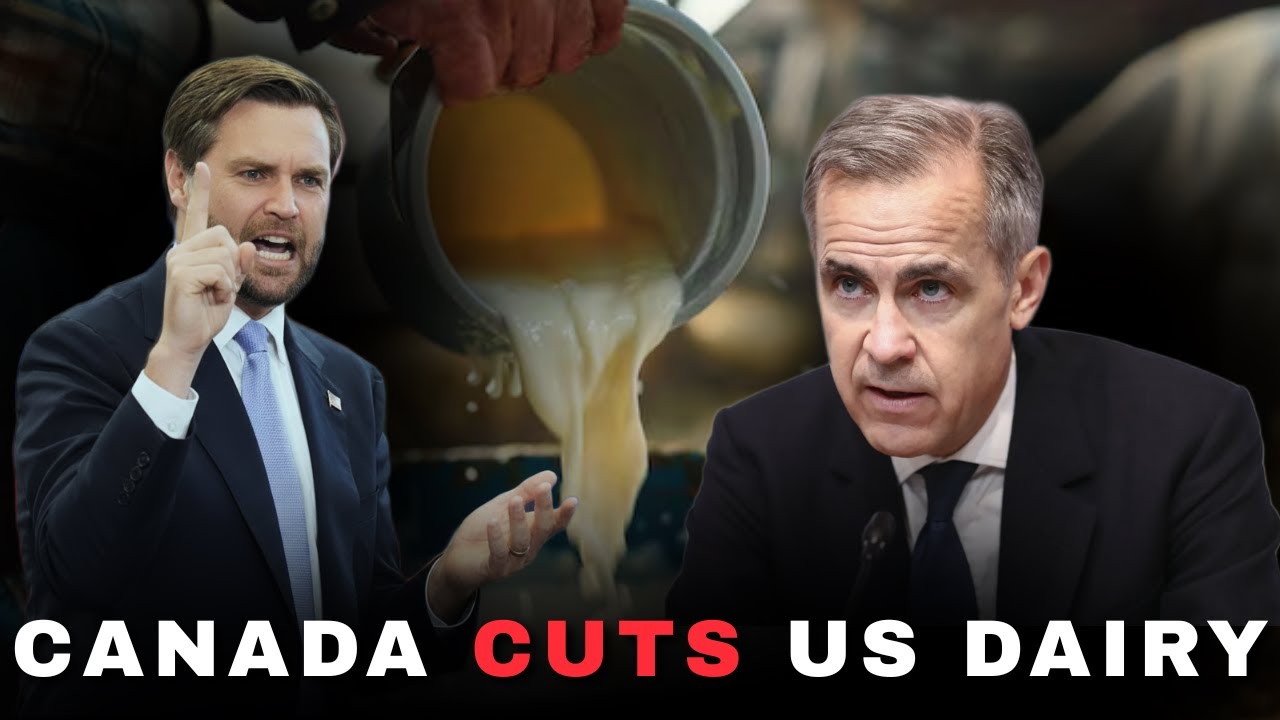
The new Canadian measures sharply restrict access for U.S. milk, cheese, and dairy ingredients, tightening quotas and introducing stricter import rules. Canadian officials argue that American producers have been exploiting loopholes in existing trade agreements, allowing large volumes of subsidized U.S. dairy to undercut local farmers. By closing these gaps, Ottawa aims to protect its domestic industry — but the immediate effect is a severe blow to U.S. exporters, especially in dairy-heavy states like Wisconsin.
Wisconsin, often called “America’s Dairyland,” stands at the center of the storm. The state exports hundreds of millions of dollars in dairy products to Canada each year, making it one of the most vulnerable to the new restrictions. Farm groups warn that prices could collapse if surplus milk floods the U.S. market instead. For family-owned farms already operating on thin margins, the sudden loss of a major export destination could be financially devastating.
The political implications are just as explosive. Trump, who built much of his support on promises to protect American farmers and renegotiate trade deals, now finds himself under fire from rural voters. Critics argue that years of aggressive trade tactics and unresolved disputes have weakened trust with key allies like Canada. Supporters counter that Canada’s supply-managed dairy system has long been unfair, and that a hard line is necessary to defend U.S. agriculture.

Trade experts say this clash exposes deeper structural problems in North American dairy trade. Despite updated agreements, fundamental conflicts remain between the open U.S. market and Canada’s tightly controlled system. Without a negotiated settlement, retaliatory measures could escalate, pulling both countries into another round of trade confrontation at a time when global food prices and inflation are already high.
For Wisconsin farmers, the crisis is immediate and personal. Every day that exports remain blocked increases the risk of falling prices, rising debt, and farm closures. As barns fill with unsold milk and processors face shrinking overseas orders, pressure is mounting on Washington to act fast. Whether through diplomacy or legal challenges, the outcome will shape the future of U.S.-Canada dairy trade — and determine whether America’s Dairyland can weather yet another economic shock.






