When Calm Becomes the Sharpest Weapon on Late Night
It was supposed to be easy.
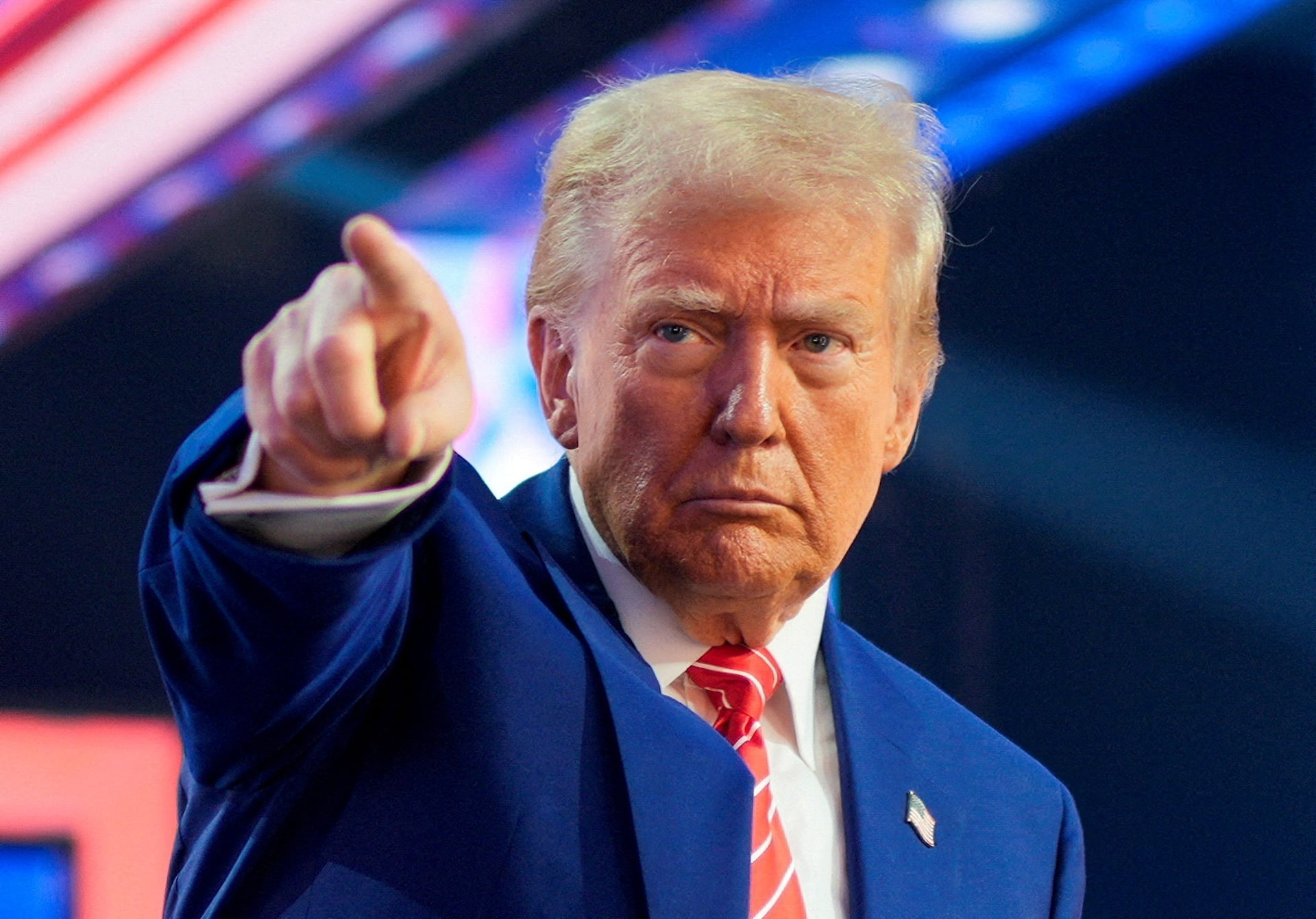
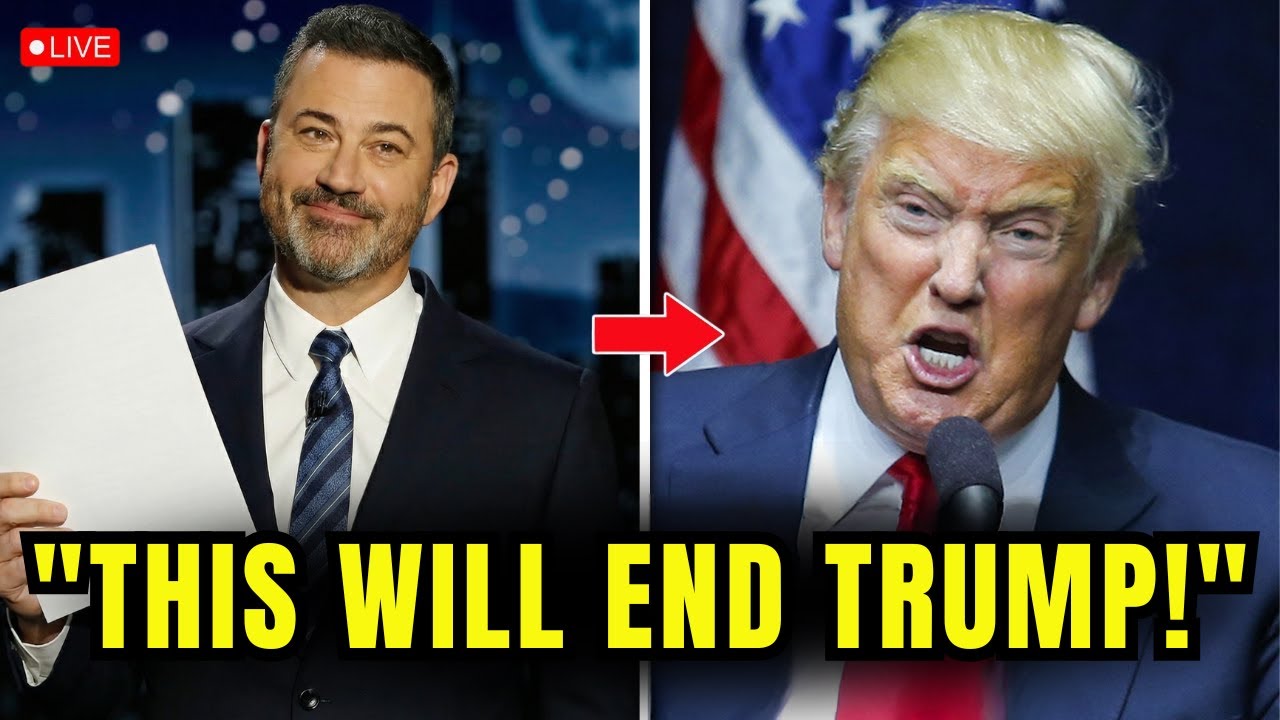
Donald Trump, never one to resist a late-night provocation, took aim once again at Jimmy Kimmel, dismissing the ABC host as “horrible,” “terrible,” and emblematic of what he often calls the decline of television comedy. The insult followed a familiar script: a jab at talent, a swipe at ratings, and the implication that if Trump could not outshine a late-night comedian, he had no business being president.
In previous years, such remarks might have sparked a predictable cycle—outrage, counter-outrage, a viral clip fueled by raised voices and sharper insults. But this time, the exchange unfolded differently. And that difference is why the moment resonated far beyond its original broadcast, ricocheting across social media platforms from X to TikTok to YouTube, where clips of the segment amassed millions of views within hours.
Kimmel did not respond with fury. He did not escalate. Instead, he did something far more disarming: he slowed everything down.
When Kimmel walked onto his stage that night, he thanked the audience, smiled, and held up a printed screenshot of Trump’s comment—an almost quaint gesture in an era dominated by digital receipts. He read the words slowly, without inflection, like a weather forecast. The audience laughed, then quieted. The insult, stripped of Trump’s characteristic bombast, sounded smaller somehow. More revealing.
“I want to respond in the most presidential way possible,” Kimmel said, before reading the post verbatim.
Media scholars have long noted that Trump’s rhetorical power often relies on speed, repetition, and spectacle. By decelerating the exchange, Kimmel disrupted that rhythm. As Jay Rosen, a journalism professor at New York University, has observed in other contexts, slowing down is often a way of reclaiming narrative control. “You take away the adrenaline,” Rosen once wrote, “and what’s left has to stand on its own.”
What followed was not a rant, but an argument—built not on mockery alone, but on pattern.
Kimmel gestured to a simple timeline displayed behind him. No dramatic graphics, no ominous music. Just dates and quotes. Trump had said he didn’t watch late-night television, then posted repeatedly about it. He had dismissed comedians as irrelevant, then spent his evenings reacting to them online. He had claimed to be focused on “real issues,” while typing out insults in the early hours of the morning.
“Every time he tries to clown me,” Kimmel said, “he ends up writing my next monologue for free.”
The joke landed not because it was loud, but because it felt earned. The audience responded not with shock, but with recognition—the collective laughter of people who had seen this cycle before but hadn’t quite seen it laid out so plainly.
On social media, viewers echoed that sentiment. “He didn’t dunk,” one widely shared post on X read. “He documented.” Another user on TikTok described the segment as “weaponized calm,” a phrase that would be repeated across commentary videos and media think pieces over the next 48 hours.
Late-night television has long occupied an uneasy space between comedy and commentary. From Johnny Carson’s sly asides to Jon Stewart’s sharp-edged satire during the Iraq War, hosts have oscillated between entertainer and informal civic actor. But the Trump era has intensified that tension. Trump himself has frequently treated late-night hosts not as comedians, but as political opponents—targets worthy of rebuttal and retaliation.
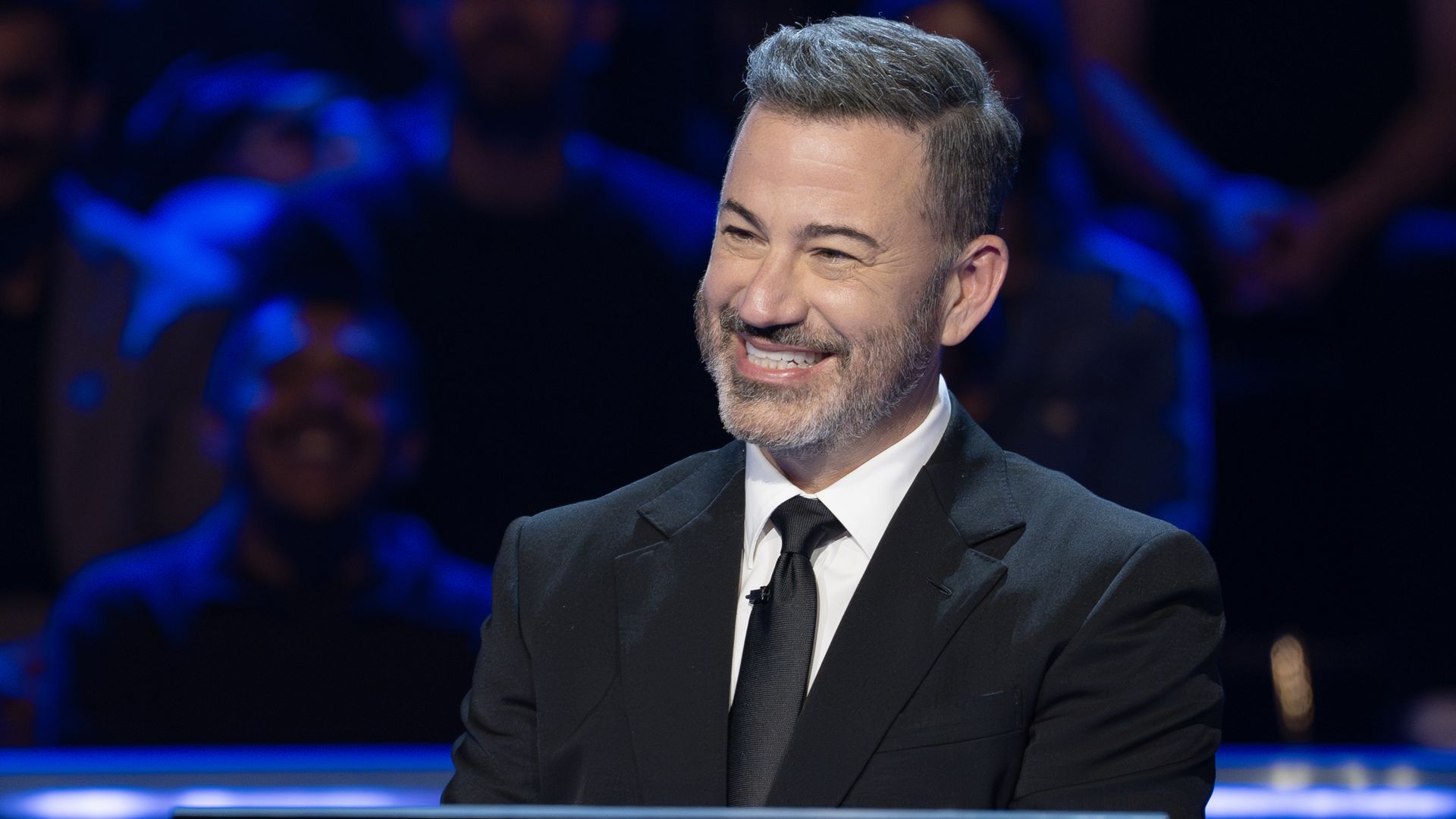
What made Kimmel’s response notable was not just its tone, but its refusal to participate in that framing.
“I’m not being mean,” Kimmel said at one point. “Mean is trying to humiliate people. This is just math.”
That line, clipped and almost throwaway, became one of the most quoted moments of the night. Screenshots circulated on Instagram. Commentary channels on YouTube replayed it alongside clips of Trump’s original posts. The contrast did the work. Kimmel didn’t need to declare victory; the structure of the exchange suggested it.
Then came the question that crystallized the entire segment: “If I’m so untalented,” Kimmel asked, “why do you keep watching?”
It was not a punchline so much as a pause. The laughter that followed was louder, less manic, and more sustained. The question didn’t demand an answer, because the evidence had already been presented.
By morning, Trump had responded again—more loudly, more personally. And in doing so, he completed the arc Kimmel had sketched the night before. The reply did not address the timeline. It did not contradict the record. It attacked the messenger. Exactly as predicted.
For many viewers, that follow-up sealed the moment. “The response was the proof,” one media analyst wrote on Threads. “He showed the pattern, then the pattern showed itself.”
The clip’s virality owed much to its restraint. In a media ecosystem primed for outrage, calm can feel radical. The segment spread not as ammunition for argument, but as a demonstration. “Watch this,” people wrote when sharing it. “This is how you handle a bully without becoming one.”
That framing matters. In recent years, public discourse has often rewarded the loudest voice in the room. Kimmel’s approach suggested an alternative: that credibility can be built not through domination, but through documentation; not through escalation, but through clarity.
The moment also underscored a broader shift in how audiences engage with political comedy. Viewers are increasingly fluent in media patterns. They recognize loops, contradictions, and performative outrage. What they seem to crave now is not just laughter, but coherence.
Kimmel did not claim moral superiority. He did not ask viewers to take his side. He showed his work and stopped talking.
That, perhaps, is why the segment lingered.
It wasn’t about winning an argument. It was about refusing to have one on someone else’s terms. In doing so, Kimmel offered something rarer than a punchline: a model of response that felt adult, patient, and unexpectedly powerful.
In the end, the most striking part of the exchange may not have been anything Kimmel said, but what he chose not to do. He didn’t shout. He didn’t sneer. He didn’t chase the insult.
He let the record speak—and trusted the audience to hear it.






