When a Joke Becomes a Test of Power

In the long history of American political satire, comedians have insulted presidents, mocked institutions, and punctured official narratives with impunity. From Mark Twain to Jon Stewart, humor has often served as a safety valve for democracy — a way to speak uncomfortable truths without the formal weight of power.
That unwritten rule appeared to fracture this month, when a single metaphor delivered on late-night television triggered a chain reaction involving federal regulators, broadcast conglomerates, and the White House itself.
On September 15, Jimmy Kimmel stepped onto the stage of Jimmy Kimmel Live! at Hollywood’s El Capitan Theatre and addressed the FBI’s handling of a politically sensitive murder investigation. Referring to FBI Director Kash Patel, Kimmel said Patel had handled the case “like a kid who didn’t read the book, BS-ing his way through an oral report.”
Twenty-seven words. Within 48 hours, the show was suspended indefinitely.
A Metaphor That Landed Too Hard
The remark came amid intense national scrutiny following the assassination of conservative activist Charlie Kirk, a killing that immediately became politicized across cable news and social media. Competing narratives about the suspect’s ideology circulated before investigators had completed basic forensic work.
Critics accused the FBI of issuing contradictory statements, appearing more focused on narrative management than transparency. Supporters of the administration dismissed those claims as partisan attacks.
Kimmel’s metaphor crystallized what many critics had been arguing online: that the investigation felt improvised, defensive, and opaque. Clips of the monologue spread rapidly on X, TikTok, and YouTube, drawing millions of views within hours.
What followed was unprecedented.
From Criticism to Consequences
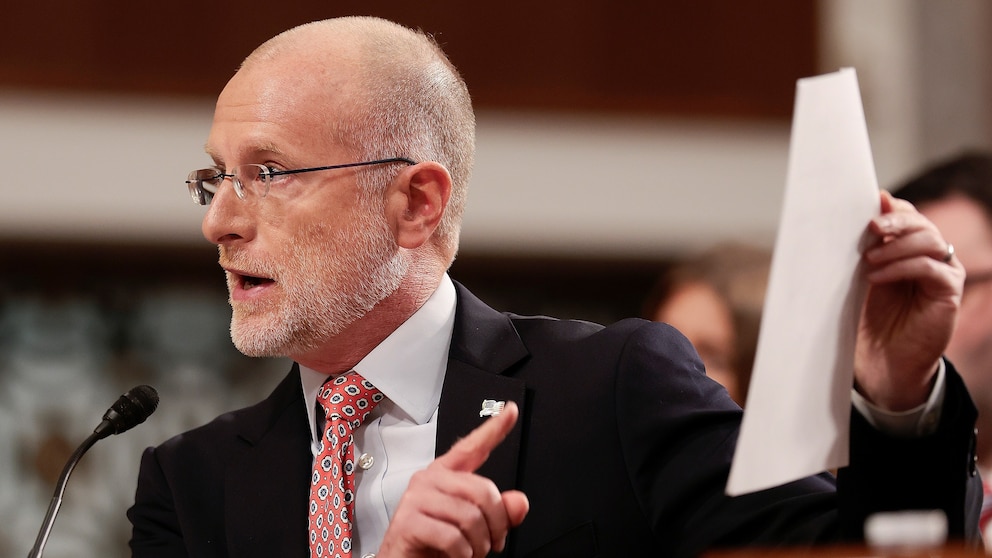
By the next morning, FCC Chairman Brendan Carr, a Trump appointee and contributor to the conservative policy blueprint known as Project 2025, publicly condemned Kimmel’s comments as “truly sick.” Carr did not dispute their accuracy. Instead, he framed them as morally unacceptable during a period of national grief.
Later that day, Carr warned broadcast license holders that “there will be additional work for the FCC ahead” if networks failed to act responsibly — language media law experts immediately described as a regulatory threat.
Within hours, Nexstar Media Group and Sinclair Broadcast Group, which together operate dozens of ABC affiliates, announced they would no longer air Jimmy Kimmel Live! Both cited the segment criticizing the FBI director, not criticism of President Trump himself.
On September 17, ABC confirmed that Jimmy Kimmel Live! — on the air continuously since 2003 — had been suspended indefinitely.
Disney executives Bob Iger and Dana Walden declined to comment beyond a brief statement emphasizing the network’s commitment to “responsible discourse.”
A Pattern, Not an Isolated Incident

To press-freedom advocates, the episode felt disturbingly familiar.
“This is textbook retaliatory governance,” said Jameel Jaffer, executive director of the Knight First Amendment Institute at Columbia University. “When regulators threaten consequences for speech critical of government officials, it crosses a constitutional line — whether the threat is explicit or implied.”
The Kimmel controversy unfolded alongside several other high-profile confrontations between the Trump administration and the press. Just days earlier, the former president announced a $15 billion defamation lawsuit against The New York Times, accusing the paper of decades-long bias. Legal scholars widely dismissed the suit as frivolous, but acknowledged its chilling effect.
Meanwhile, FBI Director Patel faced contentious oversight hearings in Congress, where senators from both parties pressed him on travel spending, personnel dismissals, and the continued refusal to release long-promised Epstein-related files. Patel denied wrongdoing, insisting that all actions were taken in the interest of efficiency and national security.
When asked directly whether FBI employees had been fired for political reasons, Patel repeatedly declined to give a yes-or-no answer.
The Politics of Retaliation
The administration’s defenders argue that critics are overstating the case.
“Free speech does not mean freedom from consequences,” said one senior White House official, speaking on background. “Major networks have a responsibility not to inflame tensions or undermine public trust in law enforcement.”
Yet the distinction between corporate discretion and government coercion has become increasingly blurred. Carr’s remarks, followed by swift action from regulated entities, raised alarms precisely because they suggested coordination without written orders.
On social media, even some conservative commentators expressed discomfort. “If the FBI director can’t be criticized by a comedian without federal regulators stepping in, that’s not strength,” wrote one right-leaning legal analyst on X. “That’s fragility.”
Why Satire Matters
Historically, the Supreme Court has afforded satire extraordinary protection. In Hustler Magazine v. Falwell (1988), the Court ruled unanimously that even deeply offensive parody of public figures is constitutionally protected.
“What’s different now,” said constitutional scholar Laurence Tribe, “is not the law but the environment. Power no longer needs to prosecute speech outright. It just needs to make examples.”
That, critics argue, is exactly what happened with Kimmel.
The metaphor was not a call to violence. It did not accuse Patel of a crime. It did what satire has always done: reduced authority to something human, fallible, and visible.
And for that, an institution with more than two decades of uninterrupted airtime vanished overnight.
The Broader Stakes
At stake is more than one television show. The episode has reignited debates about the independence of federal agencies, the politicization of regulators, and the vulnerability of corporate media to government pressure.
It has also raised uncomfortable questions for Democrats, some of whom have remained conspicuously quiet. Privately, several lawmakers acknowledged concerns that aggressive mid-decade redistricting fights in states like Virginia and California could make principled defenses of free speech appear selective.
Still, public opinion appears unsettled. A YouGov poll conducted after the suspension found that while Americans were divided on Kimmel personally, a majority opposed government involvement in decisions about broadcast content.
Twenty-Seven Words
In the end, what makes the episode remarkable is its scale. No classified documents were leaked. No criminal allegations were made. There was no call for protest or unrest.
There was only a metaphor — a familiar one — about a student who didn’t do the reading and hoped confidence would substitute for competence.
In 2025, that was enough.
Whether history remembers this moment as a warning sign or an aberration may depend on what happens next: whether institutions push back, or whether silence becomes the safer option.
For now, one thing is clear. In an era of heightened power and shrinking tolerance for dissent, even a joke can reveal how fragile the boundaries of American free speech have become.






