Canada Quietly Redraws the Gulf Map, Leaving Washington on the Sidelines
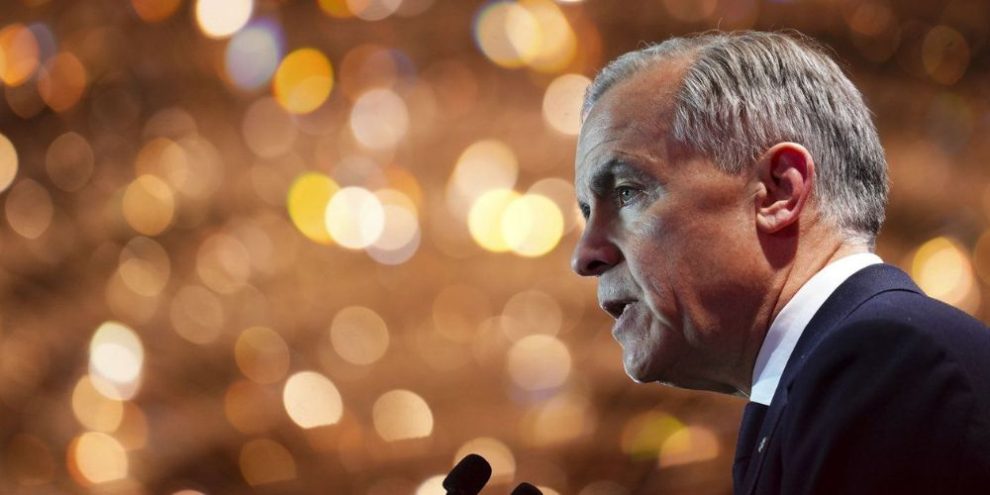
Doha, Qatar — January 18, 2026.
When Prime Minister Mark Carney stepped off his aircraft onto the tarmac in Doha, he was not just arriving in the capital of one of the world’s wealthiest energy states. He was crossing a diplomatic threshold no Canadian leader had crossed before.
Carney is the first sitting Canadian prime minister to visit Qatar. The symbolism was unmistakable. Full state honors, a ceremonial welcome, and joint announcements with Sheikh Tamim bin Hamad Al Thani, the Emir of Qatar, signaled something more than a routine bilateral visit. Canada and Qatar were elevating their ties into a comprehensive strategic partnership — one that spans trade, defense cooperation, artificial intelligence, aerospace, and sovereign wealth investment — and one that notably bypasses the United States as an intermediary.
In Washington, the visit barely registered on the same day President Trump was escalating his trade war with China and renewing tariff threats against allies. But among diplomats, defense analysts, and investors following the Gulf on platforms like X, Bloomberg TV, and policy-focused podcasts, the message was clear: Canada is deliberately reshaping its global relationships in response to an era of American unpredictability.
A Visit That Broke a Pattern
Canada has maintained diplomatic relations with Qatar for decades. Trade has flowed, embassies have operated, and nearly 10,000 Canadians live and work in the country. Yet no Canadian prime minister had previously deemed the relationship worthy of a top-level visit.
That changed under Carney.
The timing was not accidental. Since President Trump’s return to office, Canada has faced renewed tariff threats, repeated remarks about annexation, and an increasingly transactional American approach to alliances. In Ottawa, the lesson drawn has been blunt: dependence on a single partner is a strategic vulnerability.
Qatar, with a roughly $290 billion economy and one of the world’s largest sovereign wealth funds, represents a compelling alternative. The Qatar Investment Authority manages hundreds of billions of dollars and is actively seeking long-term, politically stable partners beyond its traditional relationships.
Canada, facing massive infrastructure needs, defense modernization costs, and a rapidly expanding technology sector, fits that profile.
Defense Cooperation Without the Pentagon
Perhaps the most consequential element of the partnership is defense.
Canada announced it will establish a defense attaché office in Doha — the first permanent Canadian military diplomatic presence in Qatar. Framework talks have begun on military training exchanges, defense technology cooperation, and security consultations.
For decades, Gulf defense relationships have been dominated by the United States, whose weapons sales and basing agreements have shaped regional security. American defense firms have long assumed the Gulf to be a captive market.
Canada is offering something different.
Rather than large-scale arms packages tied to political conditions, Canadian officials are emphasizing training excellence, advanced simulation systems, cybersecurity tools, aerospace components, and communications technology — areas where Canadian firms such as CAE, Bombardier, and niche defense technology companies are globally competitive.
For Qatar, diversification is not ideological; it is strategic. Reducing dependence on any single supplier limits political exposure. For Canada, the opening represents access to a market worth billions — without requiring approval from Washington.
An AI Partnership That Sidesteps Silicon Valley

The agreement’s technology pillar has drawn particular attention in policy circles.
Canada and Qatar committed to cooperation in artificial intelligence, quantum computing, and advanced research — areas with growing national security and economic implications. Canada is already a recognized leader in AI research, with major hubs in Montreal, Toronto, Edmonton, and Waterloo’s quantum corridor.
What is striking is who is not at the center of this arrangement.
American technology giants — Google, Microsoft, Amazon, Meta — are absent. Instead, the partnership emphasizes direct investment, joint research, and institutional collaboration between Canadian firms and Qatari entities.
For Qatar, which has watched U.S.-China technology tensions disrupt global supply chains, Canada offers advanced capability without geopolitical volatility. For Canadian firms, Qatari capital provides scale and speed that domestic funding often cannot.
Capital, Protection, and Permanence
A critical element underpinning the partnership is the decision to finalize a Foreign Investment Promotion and Protection Agreement by mid-2026. Such agreements provide legal certainty for investors, covering dispute resolution, capital movement, and regulatory transparency.
Qatari investment in Canada has already been growing at roughly 20 percent annually. Officials expect that pace to accelerate once the agreement is in place, particularly in infrastructure, energy, technology, and real estate.
Canadian businesses, meanwhile, gain stronger protections as they expand in Qatar — a significant consideration for aerospace, defense, and health technology firms.
Negotiations are also underway on a double taxation agreement, which would eliminate tax duplication for Canadian professionals working in Qatar, making long-term assignments more attractive and further deepening the human bridge between the two countries.
A Diplomatic Style That Resonates
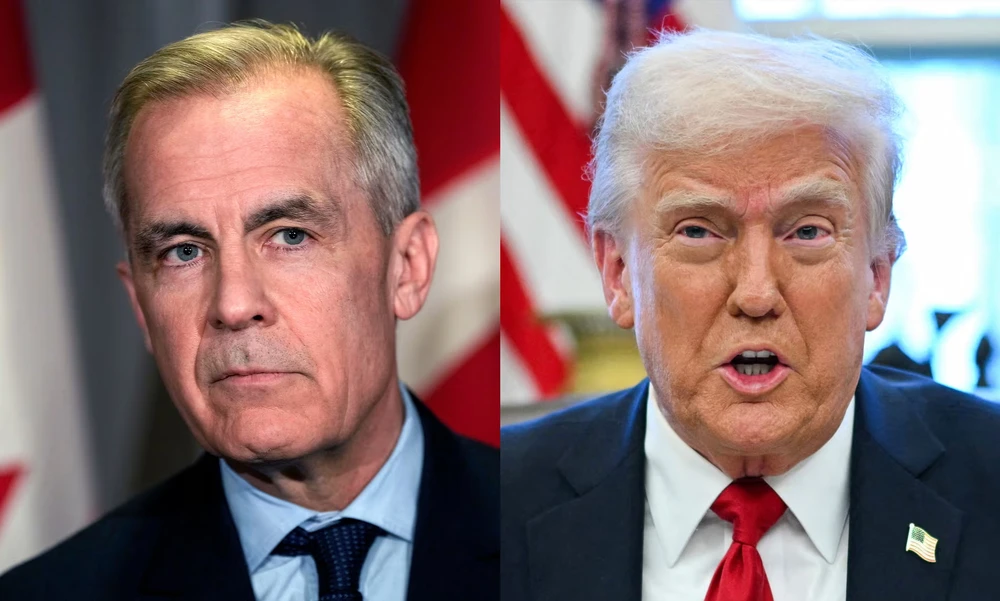
Carney’s approach contrasts sharply with Washington’s current posture.
Where the United States has leaned on threats and leverage, Canada is offering partnership and predictability. Where American diplomacy in the Gulf is often filtered through military imperatives, Canada is pursuing a comprehensive model that includes culture, education, healthcare, and economic institutions.
Qatar’s role in evacuating more than 200 Canadians from Afghanistan in 2021 was explicitly acknowledged during the visit — a reminder that trust between states is often built in moments of crisis, not press conferences.
Canada also signaled support for Qatar’s diplomatic role in global conflict mediation, from the Middle East to Ukraine, recognizing Doha as a serious international actor rather than a secondary player.
A Shift Washington Cannot Easily Undo
The Canada–Qatar partnership does not end U.S. influence in the Gulf. But it does complicate assumptions that Washington remains the unavoidable hub for allied relationships.
For Canada, the message is clear: sovereignty in the modern era is built through options. For Qatar, diversification enhances autonomy. And for Washington, the episode is a quiet warning that pressure tactics can produce the opposite of submission.
By the time American officials fully grasp the scope of what was agreed in Doha, the structures — defense offices, investment agreements, joint commissions — will already be in place.
These are not gestures. They are facts.






