Canada Steps Forward as Trump Revives Greenland Threats
By late January, as global leaders gathered in Davos for the World Economic Forum, one question hung heavily over private meetings and public panels alike: What happens when economic pressure and territorial ambition collide inside the NATO alliance itself?
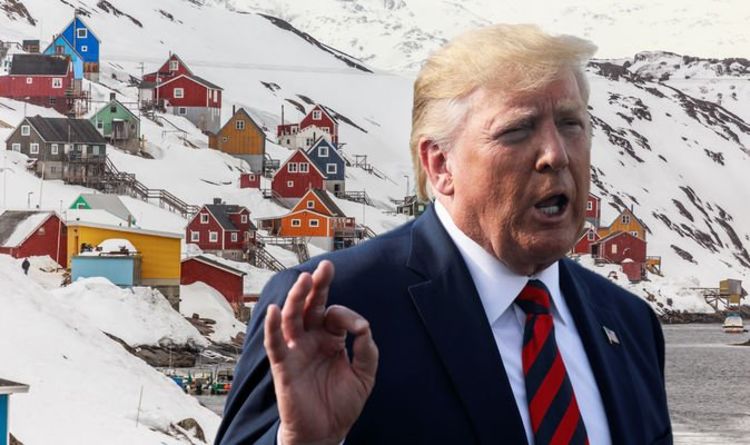
That question has sharpened rapidly as former President Donald Trump has once again revived the idea of acquiring Greenland—this time not as a speculative real estate deal, but as a strategic objective pursued through tariffs, coercion, and the implicit threat of force. While most Western leaders have responded cautiously, choosing silence or procedural language, one government has moved in the opposite direction. Canada.
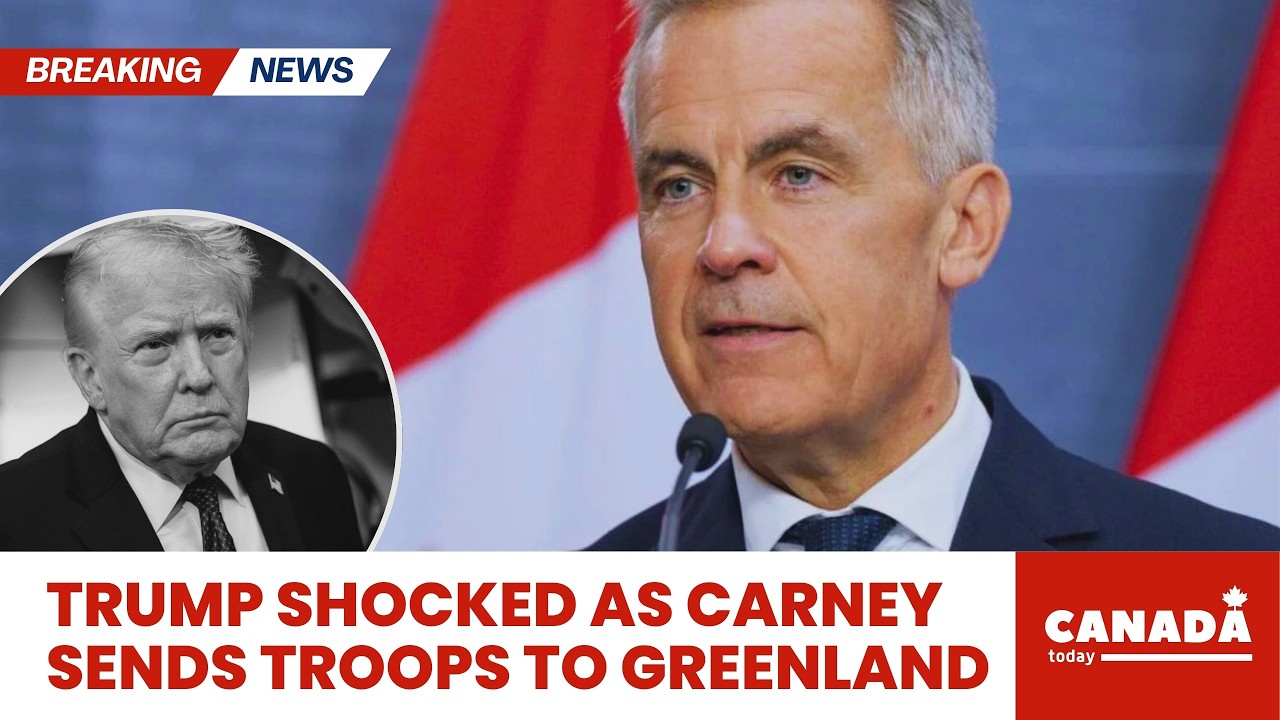
Under Prime Minister Mark Carney, Ottawa is now weighing contingency plans that could place Canadian soldiers in Greenland for NATO exercises—an action that would mark one of Canada’s most consequential Arctic security moves in a generation. Two Canadian officials confirmed to CBC News that the government is actively considering a small deployment as part of alliance sovereignty and infrastructure protection drills.
The move, still under discussion, reflects a deeper shift in Canada’s posture: from quiet middle power to visible stabilizer at a moment when the rules-based order is under open strain.
Greenland as Leverage, Not Geography
For decades, Greenland occupied a peripheral place in global politics—strategically important, but diplomatically settled. That equilibrium is now gone. As Arctic ice retreats, Greenland has emerged as a linchpin of future shipping lanes, missile early-warning systems, and NATO’s northern defense architecture.
Trump understands this. His renewed focus on Greenland has been framed by his allies as transactional and economic, but critics across the United States and Europe increasingly describe it as coercive. The strategy—threatening tariffs on European allies, pressuring Denmark, and framing resistance as economically punishable—has alarmed diplomats who see echoes of power politics NATO was built to prevent.
“This isn’t negotiation,” one former U.S. defense official wrote on X. “It’s leverage through punishment.”
Public opinion data in the United States suggests limited appetite for such escalation. Polling shared widely across American media indicates that a strong majority of Americans, including most Republicans, oppose the idea of territorial pressure against Greenland. Yet Trump’s rhetoric has continued, placing allies in a dilemma: respond too forcefully and risk escalation, or remain quiet and risk normalization.
Canada Breaks the Pattern of Hesitation
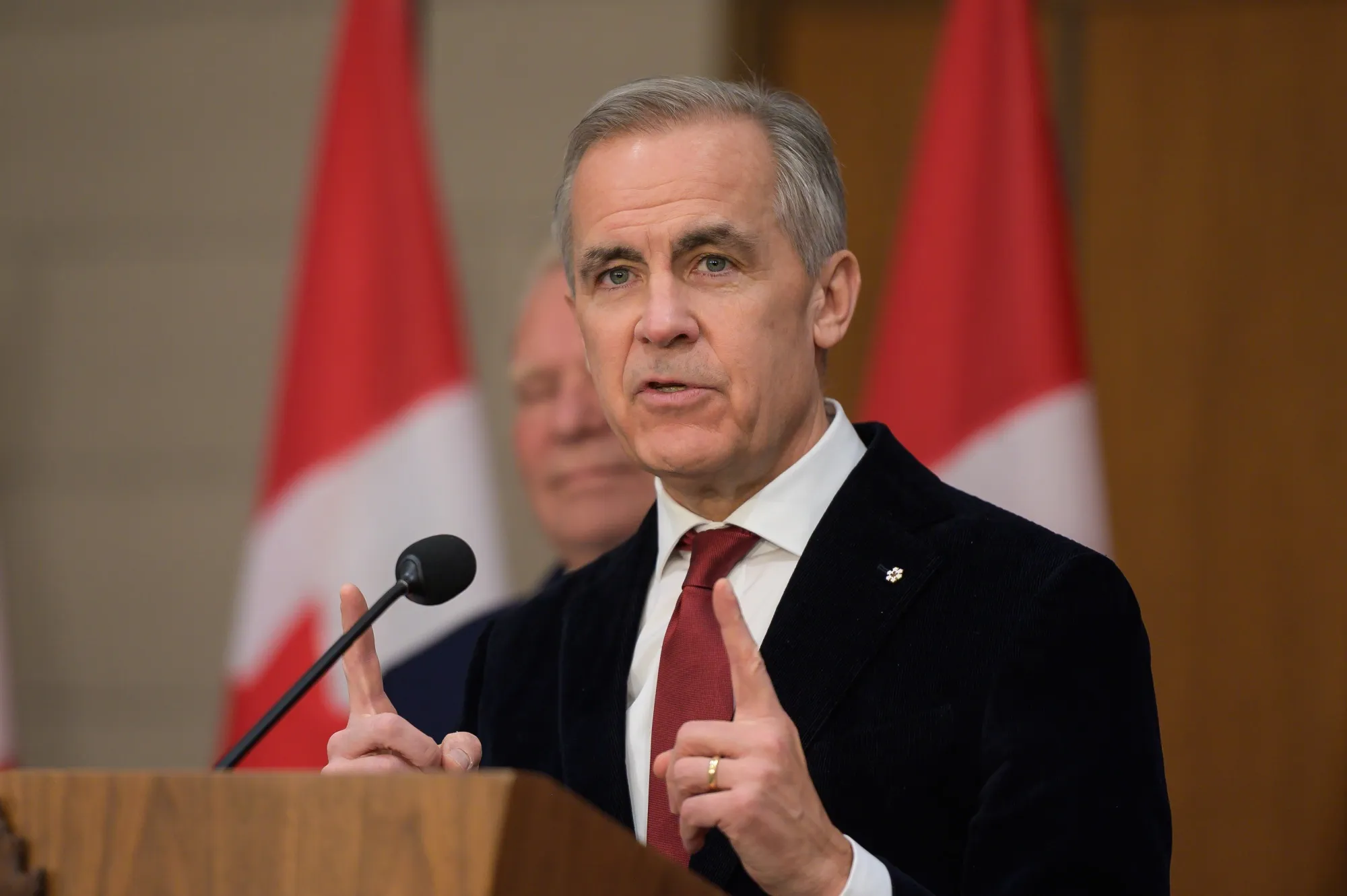
Canada’s response has been different.
Speaking in Doha earlier this month, Carney publicly characterized Trump’s tariff threats and territorial pressure as “escalation,” not diplomacy. He rejected the notion that economic coercion could justify challenges to sovereignty, framing the issue not as anti-American, but as pro-stability.
At the time, the comments were widely interpreted as unusually direct for a Canadian prime minister. Now, in light of possible troop deployments, they appear preparatory.
Defense analysts note that NATO exercises in Greenland are explicitly designed for scenarios where deterrence must be visible rather than rhetorical. A Canadian presence would not signal confrontation, but alignment—standing with Denmark, Greenland, and the alliance as a whole.
“This is what alliance credibility looks like,” a former NATO official told Politico in a recent interview. “Not speeches, but posture.”
Why This Moment Matters Beyond Greenland
The stakes extend far beyond the Arctic.
If a NATO member can openly threaten territorial acquisition without a coordinated response, the alliance’s credibility fractures. That fracture would reverberate across Europe, weakening deterrence against Russia and complicating security guarantees for Ukraine and Eastern Europe.
In that sense, Canada’s actions are less about Greenland than about precedent. Mid-sized powers rarely shape alliance behavior alone, but they can anchor it. Canada’s signal is that sovereignty is not negotiable, and silence is no longer neutral.
That position has elevated Carney’s standing abroad. The World Economic Forum issued a special invitation to him this year, reflecting a broader recognition that leadership vacuum is itself destabilizing.
Davos as a Test of Alignment
Davos, typically associated with abstract discussions of globalization, has taken on a sharper edge this year. Trump is expected to attend. So are leaders increasingly concerned about the weaponization of tariffs and the erosion of alliance norms.
Carney’s role in Davos is not ceremonial. According to diplomats familiar with the meetings, he is working behind closed doors to align European and North American partners around a shared message: escalation will not be rewarded.
Markets, too, are watching. Investors have grown sensitive to geopolitical shocks, particularly those originating inside Western alliances. Confidence depends not on unanimity, but on coherence.
Two visions of global order now occupy the same space: one driven by pressure and intimidation, the other by coordination and deterrence.
The Preparation Behind the Posture
Canada’s confidence has not emerged overnight.
In recent months, Carney has quietly moved to reduce Canada’s exposure to U.S. economic retaliation. Expanded trade engagement with China, though controversial, has diversified export markets. Strategic investment commitments from Qatar have strengthened Canada’s energy and infrastructure resilience.
These moves were not disconnected diplomacy. They were groundwork.
Standing up to Washington carries costs. Carney has worked to ensure Canada can absorb them. That preparation distinguishes Canada from leaders who criticize Trump rhetorically but lack economic or strategic insulation.
“Deterrence only works if you can sustain it,” a senior Canadian analyst noted on CNN. “Carney is building sustainability.”
Leadership in a Fractured Moment
Greenland is likely only the beginning. As climate change, resource competition, and great-power rivalry intensify, pressure points will multiply. The real question is whether rules still constrain behavior—or whether power alone decides outcomes.
Canada is choosing not to sit out that test.
By aligning words with posture, and diplomacy with preparation, Mark Carney has positioned Canada as an anchor rather than an observer. Not a provocateur, but a stabilizing force at a moment when stability cannot be assumed.
In a world increasingly shaped by escalation, Canada’s message is simple: borders matter, alliances matter, and deterrence works best before crisis becomes conflict.
History often turns not on the loudest actors, but on those willing to stand early, clearly, and together. This time, Canada has chosen to step forward.






