Canada, the Gripen, and the Quiet Challenge to American Air Power
For more than half a century, Canada’s military aviation choices have followed a predictable trajectory: buy American, integrate with U.S. systems, and accept the trade-offs that come with proximity to the world’s largest defense power. That tradition may now be approaching a breaking point.
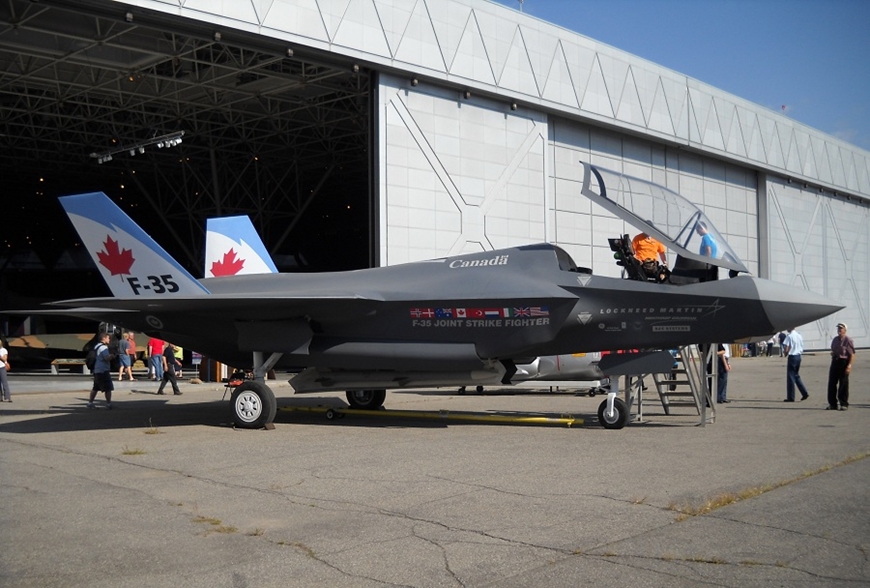
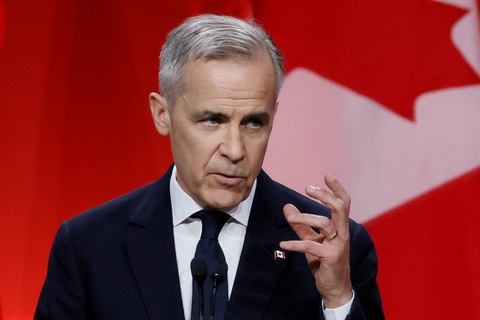
Behind closed doors in Ottawa, officials in Prime Minister Mark Carney’s government are reexamining one of the largest procurement decisions in Canadian history: the planned purchase of 88 F-35 fighter jets from Lockheed Martin. Once framed as a routine modernization of the Royal Canadian Air Force, the program has become a lightning rod for deeper questions about sovereignty, cost, and control.
Into that uncertainty has stepped an unexpected contender. Saab, Sweden’s flagship defense contractor, is offering not just its Gripen E fighter jet, but something far more consequential: the possibility that Canada could build, sustain, and even export advanced fighter aircraft for NATO allies.
If realized, such a shift would do more than cancel a multibillion-dollar contract. It would challenge long-standing assumptions about U.S. dominance within NATO’s defense-industrial ecosystem and recast Canada’s role inside the alliance.
A Costly Commitment, a Shrinking Margin of Control
The numbers driving Ottawa’s reassessment are stark. According to a June 2025 report from Canada’s Auditor General, the projected cost of the F-35 program has risen from an original estimate of 19 billion Canadian dollars to 27.7 billion, with long-term sustainment and infrastructure costs pushing total exposure toward 33 billion.
In Washington, cost overruns in the F-35 program are hardly new. But in Canada, the scale of the increase has sharpened political debate. Defense analysts describe the issue not simply as affordability, but authority.
The F-35 operates as a tightly controlled global system. Software updates, mission data files, maintenance protocols, and even diagnostic access are governed through U.S. approval channels. Canada would own the aircraft, but not the underlying architecture that defines how they operate.
“Canada pays, but Washington holds the keys,” one former Canadian defense official wrote recently on X, echoing a sentiment that has gained traction across Canadian political media.
The Gripen Alternative
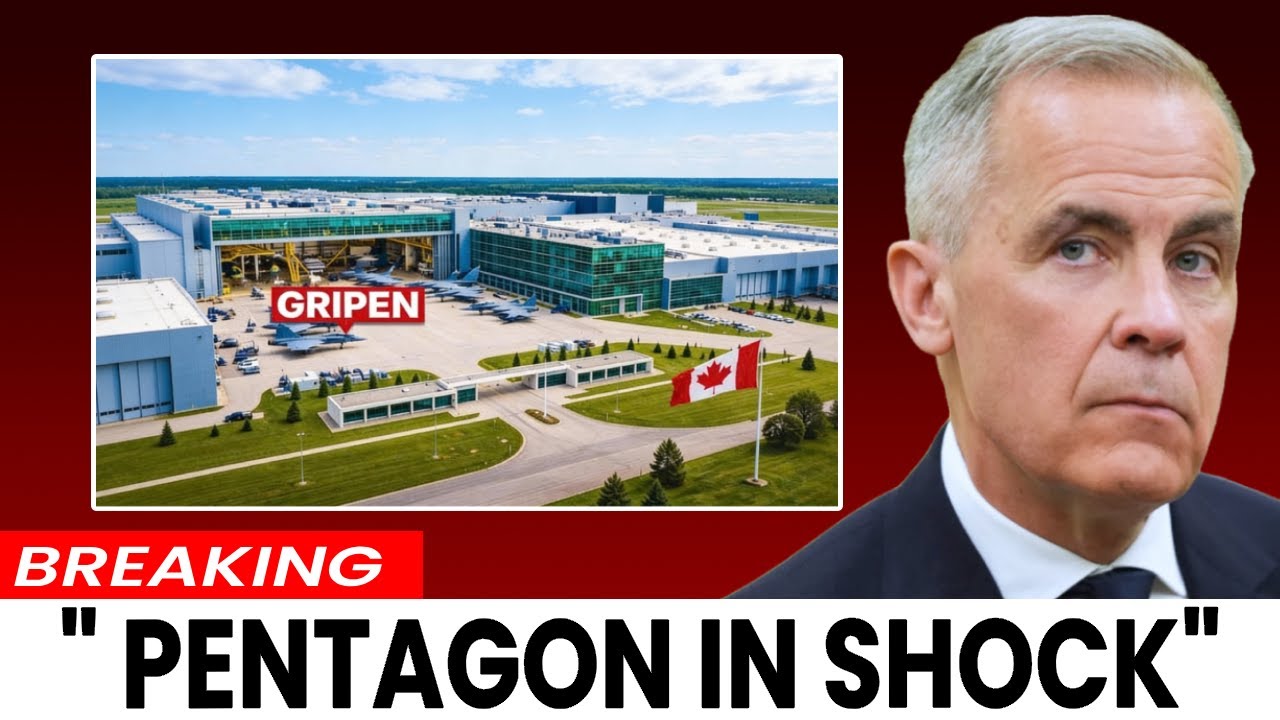
Saab’s pitch, by contrast, emphasizes openness and autonomy. The Gripen E was designed around modular software and an open architecture, allowing operators to modify systems without external approval. Saab has gone further in its discussions with Ottawa, offering full technology transfer and domestic production rather than limited final assembly.
Under such an arrangement, Gripen fighters would be built in Canada—most likely in Ontario—using a supply chain anchored by Canadian firms such as Bombardier and CAE. Swedish engineers would partner with Canadian teams, but long-term sustainment and upgrades would remain under Canadian control.
The symbolism is difficult to miss. Canada has not produced its own fighter aircraft since the cancellation of the CF-105 Arrow in 1959, a decision that remains a national trauma in aerospace circles. A domestic Gripen line would mark a return to capabilities abandoned generations ago.
From Buyer to Exporter
The most provocative element of the scenario is export authority. Saab has indicated openness to allowing Canada to sell Canadian-built Gripens to other NATO members, subject to alliance export rules.
Defense analysts see immediate interest from Eastern and Central Europe. Poland and Romania are expanding air forces under direct security pressure from Russia but face budget constraints that make the F-35 difficult to sustain. Operating costs for the Gripen—estimated at roughly $8,000 per flight hour—are dramatically lower than the F-35’s reported $35,000 to $47,000.
Several NATO countries still flying aging F-16s are also watching closely. On U.S. defense forums and Reddit communities frequented by military analysts, the idea of a “third path” between legacy American jets and the F-35 has sparked lively debate.
“Gripen isn’t stealth-first,” one former U.S. Air Force officer wrote on LinkedIn, “but for many NATO missions, affordability and availability matter more than exquisite capability.”
Economic Upside, Strategic Weight
Economists estimate that a Canadian Gripen production line could create between 15,000 and 20,000 direct jobs, while supporting hundreds of smaller suppliers nationwide. Over two decades, exports to NATO partners could generate 25 to 30 billion Canadian dollars in revenue.
That scale of industrial activity would reshape Canada’s trade relationship with the United States, reducing dependence on imported defense systems while anchoring high-tech employment at home. It could also slow the steady migration of Canadian aerospace talent south of the border.
But such gains come with responsibility. Exporting fighter jets places a country squarely in the realm of hard power politics. Decisions about who receives advanced weapons—and under what conditions—become unavoidable. When aircraft built in Canada appear in active conflict zones, Ottawa would own not just the profits, but the consequences.
Washington’s Dilemma
In the United States, reactions would be mixed. Lockheed Martin would face the loss of a marquee contract and the emergence of a European competitor gaining ground inside NATO. Lobbying efforts, already intense, would likely escalate.
The Pentagon, too, could raise concerns about interoperability. NATO’s command-and-control systems have long been optimized around U.S. platforms. A broader mix of aircraft introduces complexity.
Yet some American strategists see potential benefits. As U.S. defense planning pivots toward the Indo-Pacific and competition with China, burden-sharing within NATO has become a recurring theme in Washington policy circles. A Canada that shoulders greater responsibility for alliance air power could free U.S. resources for other theaters.
This tension—between industrial dominance and strategic flexibility—underscores how difficult the choice may be for American policymakers.
A Different Canada
For Canada, the shift would mark a profound change in identity. Long known as a middle power emphasizing diplomacy and peacekeeping, the country would step into a role that carries greater influence and greater risk.
Producing and exporting advanced fighters would not guarantee independence overnight. True technological sovereignty requires decades of sustained investment, research, and political commitment. But the direction would be unmistakable.
What began as a procurement review now looks like something larger: a reconsideration of where Canada fits in a world defined by fractured alliances, economic coercion, and renewed great-power competition.
Whether Ottawa ultimately chooses the Gripen or remains with the F-35, the debate itself signals that old assumptions are no longer holding. Canada is asking not just what aircraft it should fly, but what kind of power it intends to be.






