Canada Builds a Fortress Around Steel as Trade War With U.S. Escalates
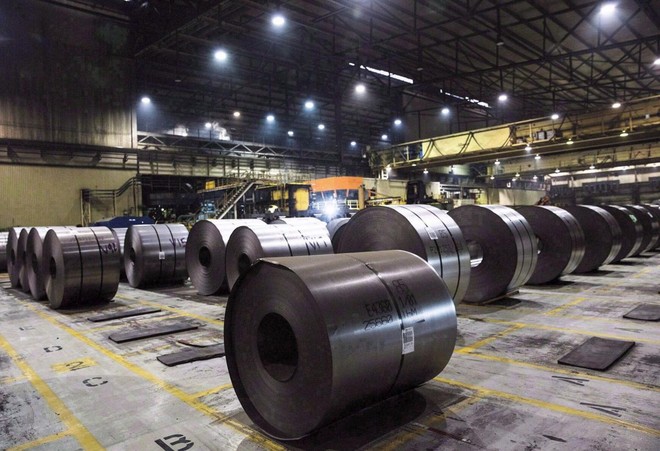
Late in November, as phones rang across steel plants in Ontario and Quebec, the calls were not from new customers but from old partners. American buyers, some with relationships stretching back decades, were cancelling contracts. Their message was apologetic but blunt: Canadian steel had become too expensive to justify.
The reason was a single number — 50 percent.
That was the tariff now imposed on Canadian steel entering the United States, a market that had absorbed nearly all of Canada’s steel exports just a year earlier. What began in March as a revival of U.S. “national security” tariffs under Section 232 had doubled by summer, transforming what had once been a seamless North American supply chain into a barrier-ridden border.
On November 26, Prime Minister Mark Carney announced that Canada would no longer absorb the damage quietly. Standing before cameras in Ottawa, he unveiled what trade lawyers and economists described as the most aggressive set of protectionist measures Canada has enacted in modern history — a sweeping response designed not just to retaliate against Washington, but to wall off Canada’s steel market from the global fallout of America’s trade policy.
“This is not escalation for its own sake,” a senior Canadian official said privately. “This is survival.”
A Tariff Shock With Immediate Consequences
The American tariffs were justified, once again, on national security grounds — a claim widely dismissed by economists and diplomats given Canada’s status as the United States’ closest military ally. But the impact was undeniable. Canadian steel exports to the United States fell more than 30 percent year over year. Mills that had run near capacity for decades were suddenly operating at half speed.
Companies like Stelco, ArcelorMittal Dofasco and Algoma Steel announced layoffs, shift reductions and, in one case, the shutdown of a blast furnace. By late autumn, industry groups warned that more than 23,000 direct steel jobs were at risk, with tens of thousands more in downstream processing and manufacturing exposed.
For months, Canada responded cautiously. Ottawa imposed its own tariffs on American steel and aluminum but introduced broad exemptions — known as horizontal remission — to shield Canadian manufacturers who relied on U.S. steel inputs. The goal was to signal resolve without inflicting collateral damage on domestic industry.
That restraint, officials concluded, failed.
“The assumption was that Washington would eventually negotiate,” said a former Canadian trade negotiator. “By November, it was clear these tariffs weren’t leverage. They were policy.”
The Fortress Strategy

Carney’s response marked a decisive shift.
First, Canada slashed tariff-rate quotas for steel imports from nearly every major supplier. For countries without a free trade agreement, allowable volumes were cut to just 20 percent of recent levels. Even allies with trade deals saw quotas reduced sharply. Steel imported beyond those limits now faces a 50 percent surcharge.
Second, Canada imposed a 25 percent tariff on steel derivative products — not just raw steel, but finished and semi-finished goods like fasteners, doors, wind towers and structural components. Unlike U.S. measures, which apply tariffs only to the steel content of such products, Canada’s tariff applies to the full value.
“This is a far more aggressive design,” said a trade lawyer in Washington. “It closes loopholes the U.S. system leaves open.”
Third, Ottawa announced the end of horizontal remission. Beginning January 31, 2026, Canadian manufacturers importing U.S. steel will pay the full retaliatory tariff, with only temporary exemptions for automotive and aerospace sectors. The message was unmistakable: supply chains built on frictionless U.S.-Canada trade must now adapt or break.
Finally, Canada pledged tougher border enforcement, targeting transshipment schemes and mislabeling — a concern long raised by both U.S. and Canadian producers.
A Prime Minister Shaped by Crisis
To understand the strategy, analysts say, one must understand Mark Carney.
A former governor of both the Bank of Canada and the Bank of England, Carney is not a traditional politician. He built his reputation managing systemic risk — during the global financial crisis and Brexit — and views trade not as ideology but as infrastructure.
He also entered office in March facing an openly confrontational American president. President Trump, newly inaugurated for a second term, spoke repeatedly about tariffs, annexation rhetoric, and the use of economic pressure to extract concessions from allies.
Carney’s broader response has been deliberate: cutting consumer carbon taxes to ease inflation, accelerating defense spending to meet NATO targets, and fast-tracking trade diversification with Europe and Asia. The steel measures fit squarely within that framework.
“This is economic sovereignty doctrine,” said an economist at a Canadian bank. “Not isolationism, but insulation.”
Pain on Both Sides of the Border
The consequences are already rippling outward.
In Canada, construction costs are rising as steel derivatives grow more expensive. Manufacturers are scrambling to restructure supply chains that once crossed the border multiple times before final assembly. The Bank of Canada has warned that, in a worst-case scenario, the trade shock could push the country into a technical recession through much of 2026.
In the United States, steel producers have welcomed the tariffs. Prices have risen, margins have improved, and domestic mills are operating more profitably. But steel-consuming industries — from automakers to construction firms — are warning of higher costs, delayed projects and lost competitiveness.
A study by the U.S. International Trade Commission during earlier tariff rounds found that while steel producers gained, the broader economy lost more jobs than it saved. Economists argue the same dynamics are now playing out again.
A Global System Under Strain
Beyond North America, the dispute has become a case study in the erosion of global trade norms. The United States’ use of national security justifications has weakened the credibility of World Trade Organization rules. Canada’s response signals that even traditionally open economies are prepared to build defensive walls.
Europe has reimposed retaliatory measures. Mexico is bracing for similar pressures. China, long accustomed to trade conflict with Washington, is watching closely.
“What we’re seeing is normalization of economic nationalism,” said a former WTO official. “Once that happens, it’s very hard to reverse.”
The Road Ahead

The next major test comes in July 2026, when the United States-Mexico-Canada Agreement faces its mandatory review. Under normal circumstances, the process would be procedural. Under current conditions, it could become existential.
President Trump has already described the agreement as flawed. If Washington threatens withdrawal or demands sweeping changes, the integrated North American trading system built over three decades could unravel.
Canada, heavily dependent on U.S. markets, has little illusion about the risks. Diversification can blunt the impact, but not replace its largest trading partner overnight.
Still, officials say, capitulation is not an option.
“This is about precedent,” a senior government adviser said. “If Canada accepts coercion now, it becomes the model for every future dispute.”
For steelworkers in Hamilton, construction crews in Michigan, and manufacturers on both sides of the border, the stakes are deeply personal. Trade wars are often discussed in abstractions — tariffs, quotas, percentages. But their effects are measured in jobs lost, projects delayed and prices paid by ordinary households.
As Canada fortifies its steel market and the United States doubles down on protectionism, one of the world’s most integrated economic relationships is fracturing in real time. What breaks first — political resolve, economic endurance, or the rules-based system meant to prevent this — remains uncertain.
What is clear is that the era of easy assumptions about free trade in North America is over.






