Canada’s China Pivot Sends Shockwaves Through North American Agriculture

When Prime Minister Mark Carney stood beside President Xi Jinping in Beijing this week and announced a sweeping reset of Canada’s trade relationship with China, the immediate headlines focused on electric vehicles and canola. But beneath the surface, economists, agricultural executives, and lawmakers across the United States say something far larger may now be underway: a structural rupture in North American food supply chains that have been integrated for more than half a century.
At the center of the agreement is a reciprocal tariff rollback. China will reduce punitive tariffs on Canadian canola—from as high as 85 percent to 15 percent—while Canada lowers barriers on Chinese electric vehicles. Yet officials and analysts on both sides of the border say the deal’s real significance lies in what was not explicitly stated: Canada is repositioning itself as China’s primary agricultural partner in North America, at a moment when U.S.-Canada trade relations are increasingly strained.
For American grain processors, farmers, and food manufacturers, the implications could be profound.
A Supply Chain Built Over Generations
Canada is the world’s third-largest wheat exporter, controlling roughly 15 percent of global trade. For decades, U.S. grain processors—particularly in Montana, North Dakota, Minnesota, and Kansas—have relied on Canadian spring wheat to blend with domestic crops. The integration is so deep that industry officials say it cannot be unwound quickly without major disruptions.
“This isn’t like switching suppliers for auto parts,” said one senior executive at a Midwestern grain processor, speaking on condition of anonymity because of ongoing trade negotiations. “Our infrastructure, our contracts, our milling specifications—everything assumes Canadian wheat is part of the system.”
Those assumptions are now being challenged.
According to U.S. Department of Agriculture data, American agricultural exports to Canada were already down approximately 6 percent year-over-year through September, representing more than $1 billion in lost trade. Analysts say the figures understate the risk, because the most consequential decisions—planting, long-term contracting, and infrastructure investment—are being made right now.
How Tariffs Pushed Canada East
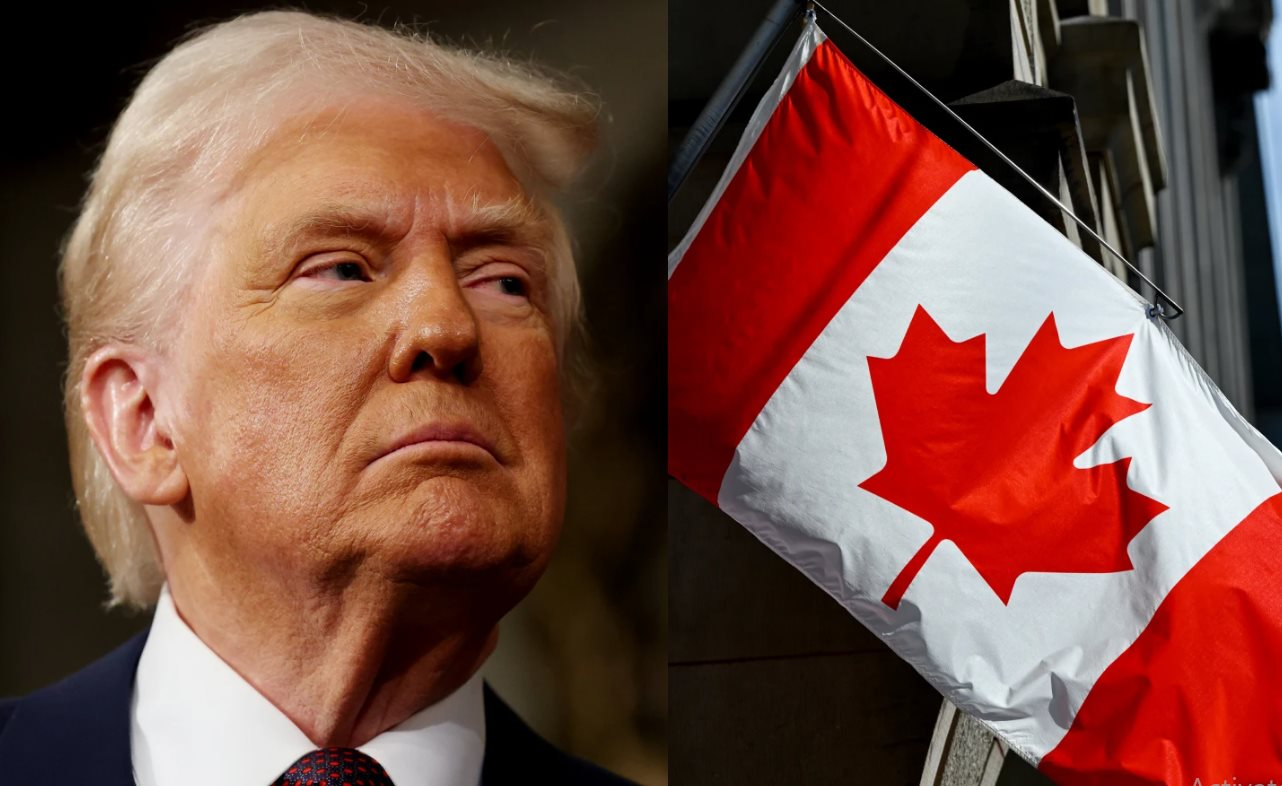
The roots of the shift trace back to early 2025, when the Trump administration imposed 25 percent tariffs on a broad range of Canadian agricultural products, citing trade imbalances and border security concerns. At the same time, China maintained heavy retaliatory tariffs on Canadian canola, pork, and seafood.
The result was a double squeeze on Canadian farmers. Exports of canola to China reportedly fell by roughly 70 percent in mid-2025, while access to U.S. markets became uncertain and costly. Provincial leaders warned of warehouse surpluses, collapsing farm incomes, and potential bankruptcies.
Faced with mounting pressure, Mr. Carney’s government accelerated efforts to diversify trade. The Beijing agreement represents the most dramatic outcome of that strategy.
In remarks that reverberated through Washington, Mr. Carney said China had become “more predictable” as a trading partner than the United States in recent months—a statement that was widely circulated on X and drew sharp reactions from American lawmakers and commentators.
Food Prices and Political Fallout
American consumers may already be feeling the effects. Wheat prices rose roughly 12 percent in the weeks following the initial tariff announcements, according to market data cited by Bloomberg and CNBC commentators. Food manufacturers have warned investors that higher input costs are beginning to flow through to retail prices.
For a typical U.S. household, analysts estimate that rising grain prices could add hundreds of dollars annually to grocery bills, particularly for bread, pasta, cereals, and baked goods.
Rural communities are also at risk. Grain processing plants, cross-border trucking firms, and port facilities in the Pacific Northwest depend heavily on Canadian-U.S. agricultural flows. Several logistics companies have reported volume declines of 40 to 60 percent on certain routes, according to industry associations.
“These are family businesses,” said a transportation analyst based in Iowa. “Once they shut down, those capabilities don’t come back.”
China’s Strategic Gain
From Beijing’s perspective, the deal addresses a core priority: food security. Chinese state media and policy analysts have emphasized the importance of locking in stable, long-term supplies of grains and oilseeds amid climate volatility and geopolitical uncertainty.
Industry experts say Chinese buyers are now offering Canadian farmers multi-year contracts at premium prices—precisely the kind of certainty that American buyers, constrained by tariff risk, struggle to match.
There is also growing attention on Chinese investment. Analysts note that state-owned enterprises are positioning to invest in Canadian agricultural infrastructure, including storage, processing, and transportation assets. If realized, such investments would further entrench the shift toward Pacific-oriented supply chains.
“Once capital, logistics, and contracts align, reversing course becomes extremely difficult,” said an agricultural economist at a major U.S. university.
A Test for North American Integration
The timing could hardly be more sensitive. The United States-Mexico-Canada Agreement (USMCA) is due for review this year, a process that was expected to be routine. Instead, Canadian officials have signaled they will seek firm guarantees against unilateral tariffs, particularly in agriculture.
If those guarantees are not secured, Canada has suggested it may favor shorter review cycles—introducing permanent uncertainty that could deter investment in cross-border supply chains.
American policymakers appear divided. Some farm-state Republicans have privately expressed concern, according to reporting by Politico and Axios, while publicly defending the administration’s trade posture. Democrats have criticized the lack of coordination but have yet to coalesce around an alternative strategy.
A Familiar Historical Echo
Several economists have drawn parallels to the 1980 grain embargo against the Soviet Union, which devastated U.S. farmers while pushing Moscow to develop alternative suppliers. Many of those lost markets were never fully recovered.
“The lesson from history is that food trade, once disrupted, doesn’t snap back,” said one former USDA official. “Relationships matter. Reliability matters.”
An Uncertain Path Forward
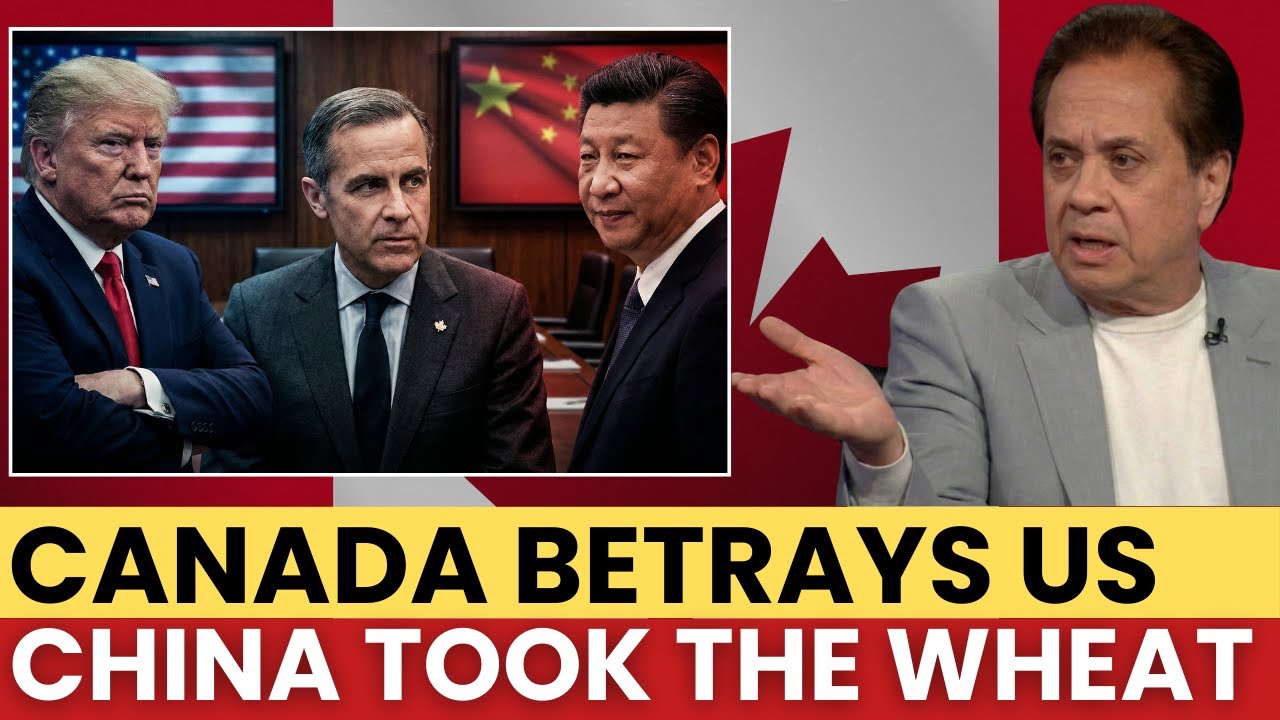
Whether the damage can be contained depends on decisions made in the coming months. If tariffs are eased and market access restored quickly, some analysts believe integration can still be preserved. If not, they warn that planting decisions and long-term contracts signed this spring could lock in a new reality.
For now, one conclusion is widely shared across financial markets, farm communities, and policy circles: the Beijing deal marks a turning point.
North American agriculture, long seen as a strategic asset built on cooperation and scale, is entering a period of fragmentation. And as supply chains shift and alliances realign, the consequences will be felt not only in boardrooms and parliaments, but also in grocery stores and rural towns across the continent.
Whether this moment is remembered as a temporary disruption—or as the beginning of a generational break—may depend on how quickly trust, predictability, and cooperation can be restored.






