As Trump Touts Economic Strength, Warning Signs Emerge Beneath the Surface
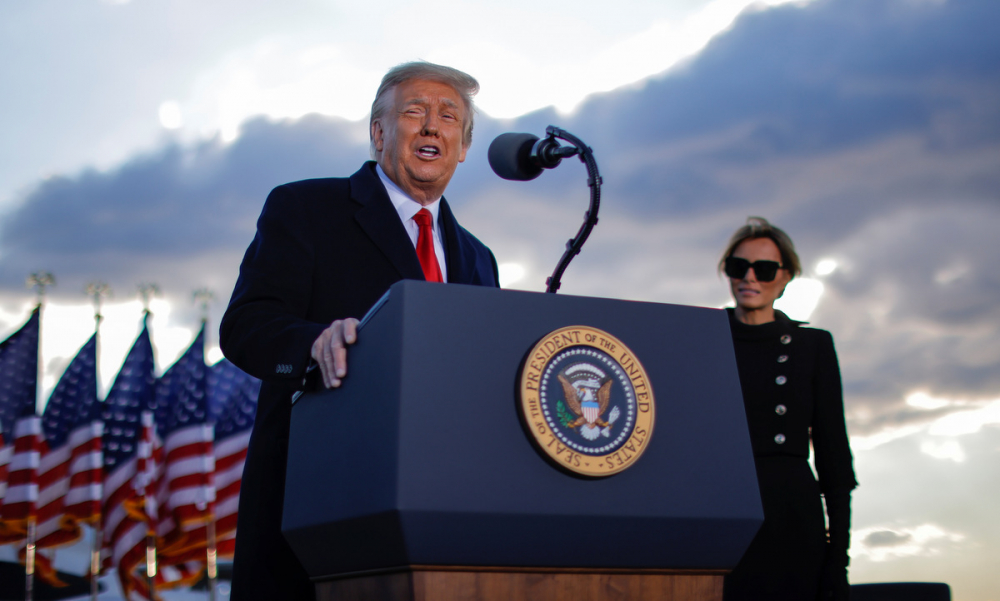
WASHINGTON — President Donald Trump insists that the United States is enjoying “the greatest economy we’ve ever had,” a claim he repeats with increasing frequency as public unease over jobs, prices, and global trade grows. But behind the administration’s confident rhetoric, a widening gap has emerged between official messaging and economic signals that many economists and market analysts say deserve closer scrutiny.
Recent polling underscores that disconnect. A majority of Americans now disapprove of Mr. Trump’s handling of the economy, according to several national surveys conducted over the past month. While inflation has moderated from its post-pandemic highs and headline growth remains positive, public sentiment has turned sharply negative — a development economists often view as an early warning sign rather than a lagging one.
“Economic pain doesn’t show up on Main Street all at once,” said Mark Zandi, chief economist at Moody’s Analytics, in a recent interview circulated widely on social media. “By the time households feel it clearly, the forces causing it have usually been building for quite some time.”
A Labor Market Losing Momentum
The labor market, long one of the strongest pillars of the post-pandemic recovery, is showing signs of strain. Monthly job gains have slowed markedly, with recent reports showing net additions well below historical averages. The unemployment rate has ticked higher year over year, and the number of Americans classified as long-term unemployed has risen.
While the White House has pointed to continued job creation as evidence of success, analysts note that context matters. “Adding jobs isn’t enough,” said Claudia Sahm, a former Federal Reserve economist. “What matters is whether job growth is keeping pace with population growth and whether wages are outpacing living costs. Right now, many households don’t feel that balance.”
Wage growth has cooled, while essential costs — including housing, insurance, food, and healthcare — remain elevated. Though inflation has slowed, prices have not fallen in most categories, a distinction often lost in political messaging but keenly felt by consumers.
Trade, Tariffs, and a Shifting Global Order

Mr. Trump has also renewed his embrace of tariffs, arguing that they strengthen the U.S. economy and force other countries to “pay their fair share.” On social media and at rallies, he has credited tariffs with attracting trillions of dollars in investment and restoring American manufacturing.
But economists across the ideological spectrum have pushed back on that narrative. Trade, they argue, is not a zero-sum competition but a system of mutual benefit — a point made repeatedly in recent television appearances by prominent economists, including Paul Krugman and Jason Furman.
“Trade is fundamentally about cooperation,” one economist explained during a widely shared cable news segment. “When countries stop cooperating, they don’t stop trading. They just trade with someone else.”
That shift may already be underway. Data and diplomatic reporting suggest that European nations and emerging economies are increasingly pursuing trade agreements with China and with one another, partly in response to U.S. tariff threats and geopolitical unpredictability. Several analysts warn that this trend could erode the United States’ influence over global trade rules in the long term.
A Stark Warning From the Bond Market
Perhaps the most unsettling signals are coming not from polls but from financial markets. Despite multiple interest rate cuts by the Federal Reserve since late 2025, long-term Treasury yields have risen — an unusual pattern that some analysts interpret as declining confidence in U.S. fiscal stability.
Peter Schiff, a longtime market commentator known for his bearish outlooks, has amplified these concerns across social media platforms, where his posts regularly attract millions of views. Mr. Schiff argues that rising debt, combined with aggressive tariffs and geopolitical brinkmanship, threatens the dollar’s status as the world’s primary reserve currency.
“The dollar’s reserve role allows the United States to live beyond its means,” Mr. Schiff wrote recently. “If that status is undermined, the adjustment won’t be gradual. It will be brutal.”
Gold and silver prices have surged to record levels, another signal investors often associate with fears of debt crises or currency instability. While not all economists share Mr. Schiff’s conclusions, many agree that the bond market’s behavior warrants attention.
The Reserve Currency Question
For decades, the U.S. dollar’s dominance has allowed Washington to finance deficits at relatively low cost. That privilege, economists note, depends as much on global trust as on raw economic strength.
“Reserve currency status is not guaranteed forever,” said Eswar Prasad, a former International Monetary Fund official. “It rests on stable institutions, predictable policy, and strong alliances. When those pillars weaken, alternatives start to look more attractive.”
China, while facing its own economic challenges, has been actively promoting bilateral trade agreements settled in yuan rather than dollars. At the same time, regional trade blocs are experimenting with payment systems designed to reduce reliance on the U.S. financial system.
Politics Versus Economics
Mr. Trump has dismissed unfavorable polls and critical economic analysis as “fake,” a strategy that has long resonated with his core supporters. But history suggests that economic perception, not presidential assertion, ultimately shapes political outcomes.
James Carville’s famous dictum from the 1992 Clinton campaign — “It’s the economy, stupid” — remains relevant, economists say, precisely because economic distress often becomes politically decisive only after it is impossible to ignore.
“The danger,” said Ms. Sahm, “is mistaking resilience for invulnerability. Economies can absorb a lot of stress — until they can’t.”
Who Bears the Cost?

Analysts warn that the consequences of trade disruptions and financial instability would fall disproportionately on farmers, small businesses, and lower-income households — groups that have historically been most vulnerable to sudden shifts in global demand and credit conditions.
Large corporations may be better positioned to adapt, but even they are not immune. Retail giants dependent on complex global supply chains have already warned investors that prolonged tariff uncertainty could raise costs and disrupt inventories.
An Uncertain Path Ahead
For now, the economy continues to grow, and no single indicator points to an imminent collapse. But economists emphasize that downturns are rarely announced in advance. They arrive through the accumulation of risks — slowing job growth, strained trade relationships, rising debt costs — that individually seem manageable but collectively become destabilizing.
Whether the administration adjusts course remains an open question. What is clear, economists say, is that confidence alone cannot sustain an economy indefinitely.
“Markets don’t respond to slogans,” Mr. Prasad said. “They respond to fundamentals.”
As the United States moves deeper into 2026, those fundamentals — and how quickly policymakers acknowledge them — may determine whether today’s warnings become tomorrow’s reality.