Colbert Crossed a Line on Live TV. CBS Paid the Price—and Trump Celebrated.
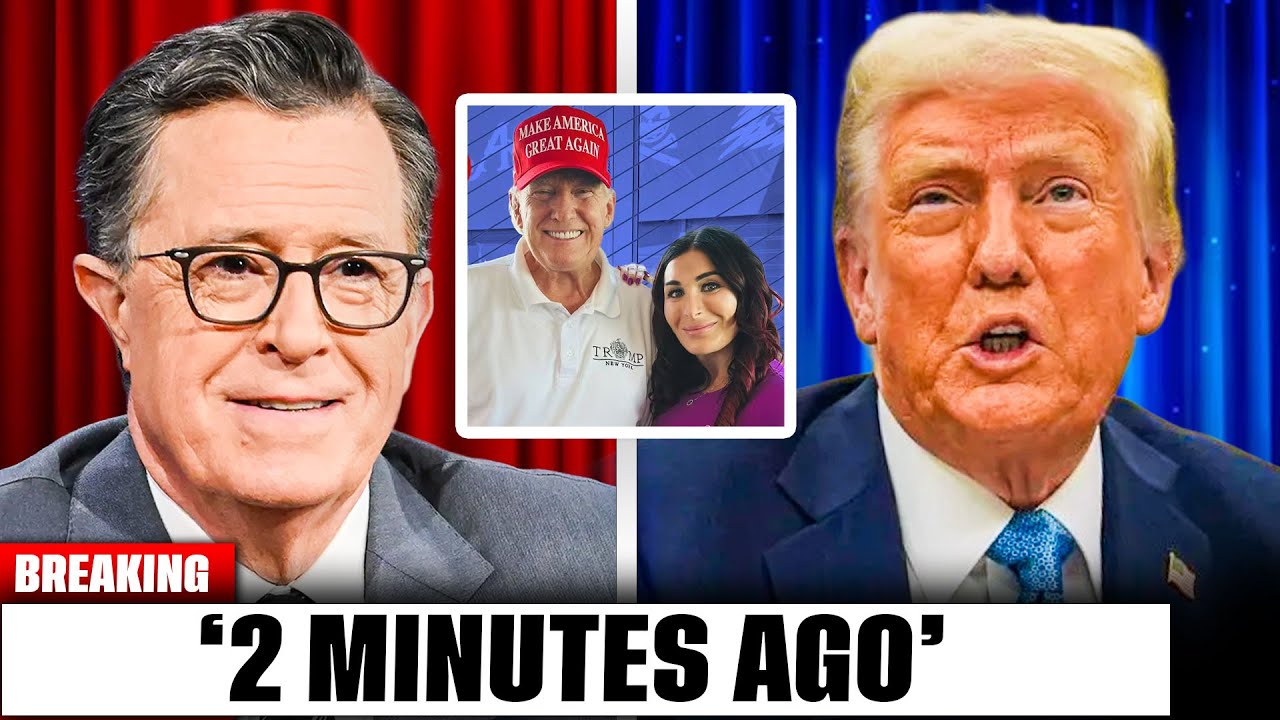
When Stephen Colbert sat down at his desk in mid-July, sporting a new salt-and-pepper mustache and a noticeably sharpened edge, it was clear something had shifted. The jokes were still there, but the tone was different—less playful, more deliberate. Within days, The Late Show with Stephen Colbert, the most-watched program in late-night television for nearly a decade, would be officially canceled. The timing raised a question that CBS insists is purely coincidental. Many viewers, however, are no longer convinced.
The flashpoint came after a report by The Wall Street Journal that former President Donald Trump had sent a sexually suggestive birthday letter to Jeffrey Epstein in 2003. Trump has denied wrongdoing, but the story reignited scrutiny of his past associations with Epstein. Colbert addressed the report on air with a mixture of satire and outrage, calling attention not only to the letter but to what he described as a broader culture of impunity among the powerful.
That alone was not unusual. Late-night hosts have mocked Trump for years. What followed, however, pushed beyond the familiar rhythms of political comedy. Colbert turned his focus inward—directly at his own employer.

Paramount Global, the parent company of CBS, had quietly agreed to pay Trump $16 million to settle a lawsuit related to the editing of a 60 Minutes interview with Vice President Kamala Harris. According to multiple reports, Paramount’s own legal team believed the lawsuit had little chance of succeeding. Yet the company settled anyway, at a moment when it was seeking regulatory approval for an $8.4 billion merger with Skydance Media—approval that would require sign-off from a Federal Communications Commission chaired by a Trump appointee.
On air, Colbert did not hedge his words. He said he was “offended” as an employee of CBS and that he did not know if his trust in the company could be repaired. Then came the line that echoed far beyond late night: Colbert described the settlement as “a big fat bribe.”
It was a stunning moment. A network star, live on CBS, accusing his own parent company of paying off a former—and potentially future—president to smooth a corporate merger. The studio audience erupted, but the reaction inside the company was far quieter. Three days later, CBS announced that The Late Show would end in May 2026, permanently closing a franchise that began with David Letterman in 1993.

CBS’s official explanation was blunt: money. Late-night television, executives said, had become too expensive amid a “challenging backdrop.” The cancellation, they insisted, had nothing to do with content, politics, or Colbert’s recent monologues. Yet the numbers complicate that narrative. The Late Show had been the highest-rated program in its time slot for nine consecutive years, routinely beating Jimmy Fallon and Jimmy Kimmel. Late-night shows, media analysts note, have long functioned as prestige loss-leaders—valuable not for direct profit, but for cultural relevance and brand power.
The reaction outside CBS was swift. Two senior executives—Wendy McMahon, CEO of CBS News, and Bill Owens, the longtime executive producer of 60 Minutes—departed around the time of the settlement. In his resignation letter, Owens wrote that he had lost “the independence that honest journalism requires.” Shortly afterward, CBS News anchor John Dickerson openly questioned his own network’s credibility on air, asking whether audiences could still trust a company that paid millions to the very figure it was supposed to scrutinize.
Trump, for his part, wasted no time. On Truth Social, he celebrated Colbert’s cancellation, calling the host untalented and boasting that his ratings were worse than his jokes. He went further, suggesting that Jimmy Kimmel would be “next.” The message was not subtle: criticism has consequences.
Colbert’s response, when he returned to the air, was characteristically controlled. He joked that “cancel culture has gone too far,” noting that this might be the first time a number-one show had ever been canceled. Then, looking directly into the camera, he addressed Trump’s post with mock formality before delivering a bleeped expletive that sent the audience into a standing ovation. It was not defiance for shock value. It was a signal that, with little left to lose, he would not soften his message.
The episode has become a Rorschach test for American media. To CBS, it is a business decision made under financial pressure. To critics, it looks like a chilling example of how corporate interests, regulatory leverage, and political power can converge to silence inconvenient voices—without the need for explicit censorship.
What makes the moment linger is not just Colbert’s exit, but what preceded it: a comedian using his platform to question the integrity of his own network, live on air, in front of millions. Whether one agrees with Colbert’s conclusions or not, the sequence is difficult to ignore. A critical monologue. A multimillion-dollar settlement. A pending merger. A cancellation. And a former president publicly gloating.
CBS says there is no connection. Viewers are left to decide whether they believe that explanation—or whether, in this case, the joke landed a little too close to the truth.