Crowd Falls Silent as MSNBC Host Delivers a Stark Warning About Trump’s Second Term

The studio grew unusually quiet as an MSNBC host laid out a portrait of Donald Trump’s second term that felt less like partisan critique and more like a diagnosis. In a segment that quickly went viral, viewers watched as familiar rhythms of cable news commentary gave way to something sharper: a sustained argument that the United States is drifting toward an authoritarian model, one moment at a time, while the public risks becoming too exhausted to stop it.
The broadcast stitched together several threads that have come to define Trump’s return to power. At its core was a warning about elections—specifically, the growing effort to cast doubt on the legitimacy of the 2026 midterms before a single vote has been cast. The host described a pattern seen in authoritarian systems around the world: undermine confidence in elections, centralize power, use force symbolically and practically, and dismiss courts when they become inconvenient. Taken together, the argument suggested, these are not isolated controversies but parts of a single, coherent strategy.
Rachel Maddow, whose analysis anchored much of the segment, framed the issue less as a policy debate and more as a test of civic stamina. The danger, she argued, is not only what the administration is doing, but how the public responds. Protests continue and polls show widespread dissatisfaction, yet fatigue is setting in. The chaos is constant, the scandals unending. The risk is that Americans grow numb, distracted by the latest outrage while the machinery of democracy is quietly dismantled in the background.

To illustrate the point, Maddow turned to analogy. Living under the current news cycle, she suggested, is like living next to a construction site. At first, the noise is unbearable. Eventually, you learn to sleep through it—even as the building comes down. The administration, she warned, relies on this exhaustion strategy: flood the zone with so much absurdity that citizens stop paying attention.
The segment moved seamlessly from the abstract to the absurd. On “Morning Joe,” Joe Scarborough dissected the president’s claim that drug prices had fallen by more than 1,000 percent—an assertion that is mathematically impossible. A 100 percent decrease brings a price to zero; anything beyond that defies basic arithmetic. Scarborough joked that by the White House’s logic, pharmacies should be paying customers to take medication. The humor landed, but the point was serious. This was not a simple mistake, he argued, but an assault on reality itself, one that depends on no one inside the administration being willing—or able—to say no.
That theme resurfaced repeatedly: a presidency insulated from correction. Scarborough noted that such errors persist by design, in an environment where loyalty matters more than accuracy. The result is what he called “multiverse math,” a rhetorical style in which facts are optional and confidence substitutes for truth.
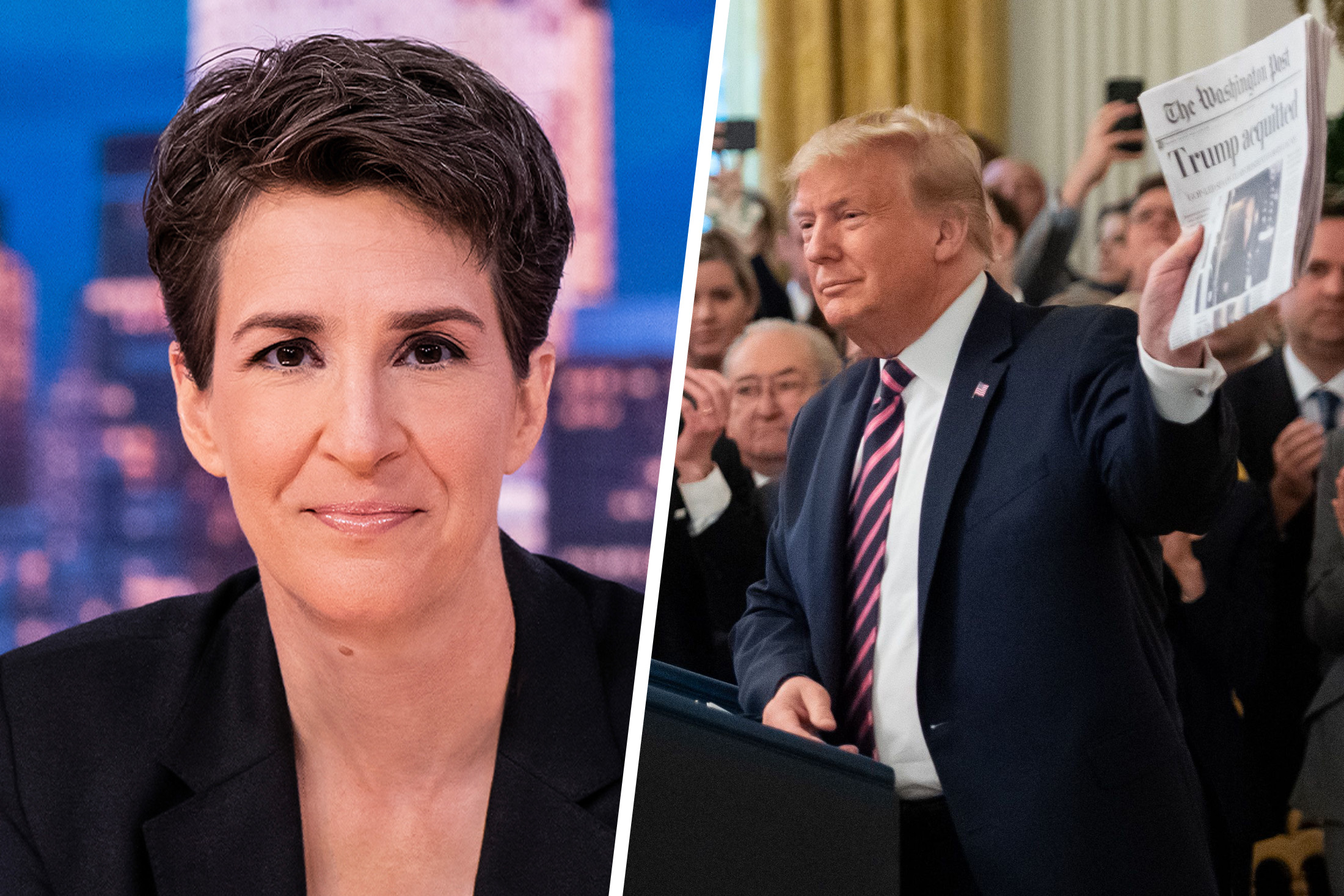
Public opinion, however, has been less forgiving. Maddow cited polling showing that Trump’s first 100 days have been historically unpopular, with approval ratings worse than any president in the modern polling era. The traditional honeymoon period never materialized. Instead, the administration’s early months were marked by public feuds, threats against media outlets, and viral clips of cabinet meetings that seemed to drift between spectacle and farce.
One of the most striking moments in the broadcast came not from a journalist, but from an actor. Robert De Niro, appearing on MSNBC, abandoned Hollywood euphemisms and labeled the president a “monster.” The remark ricocheted across conservative media, but its impact was less about provocation than clarity. De Niro argued that the administration’s cruelty was not accidental, but performative—a way to shock, dominate, and exhaust. When a cultural figure known for playing mob bosses warns of a “totalitarian audition,” it resonates beyond partisan lines.
International embarrassment also entered the frame. MSNBC highlighted Trump’s repeated claim that he had brokered peace between Albania and Azerbaijan—two countries that were never at war. The claim drew laughter abroad, including public mockery from foreign leaders. For critics, the moment symbolized a deeper problem: a president increasingly detached from basic facts, yet unwaveringly confident.
Perhaps most consequential was the discussion of protest. Millions of Americans, including large numbers of older voters, have taken to the streets under the banner of “No Kings.” Republicans have attempted to dismiss these demonstrations as radical or fringe, but Maddow argued that seniors protesting in large numbers should alarm the GOP. Older Americans vote more consistently than any other demographic, and their visible anger suggests erosion at the base.
The segment ended where it began: with democracy itself. The right to vote leaders out of office, Maddow emphasized, is the foundation that makes all other debates possible. Lose that, and the rest becomes theater. The silence that followed her warning was telling. For a moment, the noise stopped. And in that pause, the message landed: the real danger may not be outrage, but indifference—and the cost of blinking at the wrong moment.






