A Transatlantic Shift That Redefines Energy Power
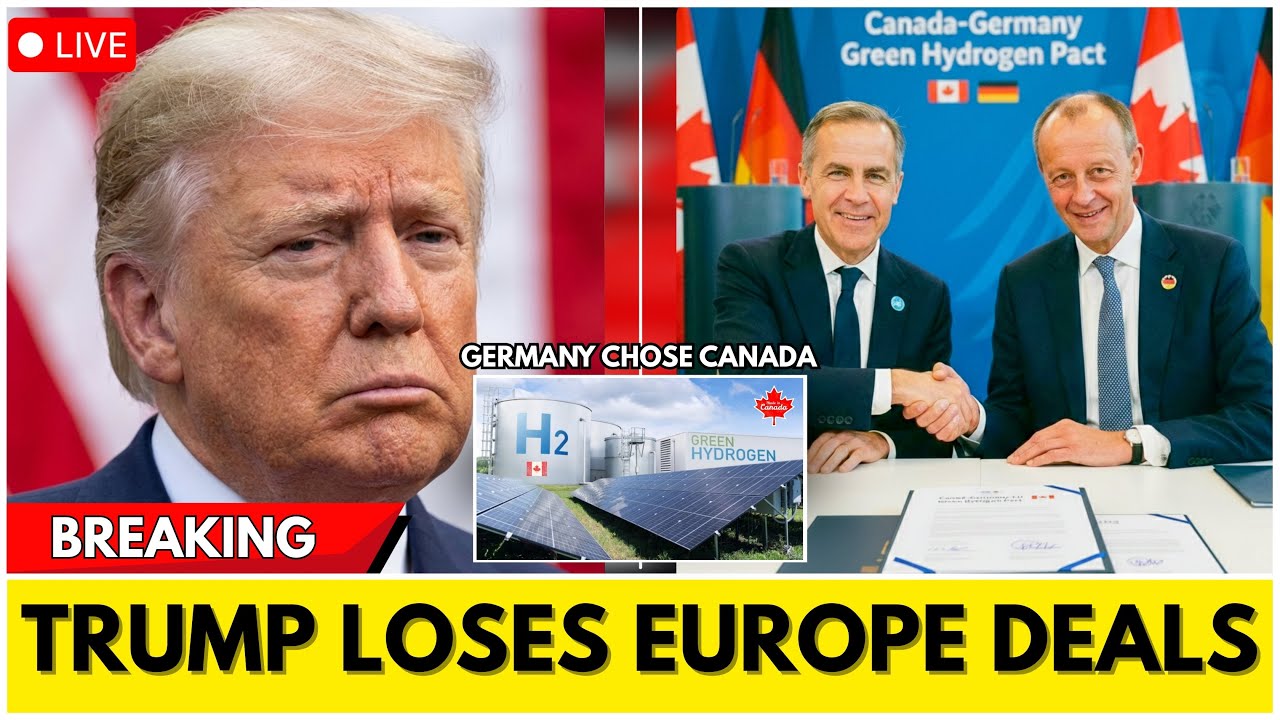
In a stunning geopolitical and economic rupture unfolding right now in early 2026, Canada and Germany have sealed a game-changing €400 million green hydrogen partnership that has abruptly excluded the United States from Europe’s accelerating clean energy future. The European Commission, on January 15, 2026, formally approved a €200 million German state aid scheme under strict EU rules, unlocking matching Canadian funding to support up to 300 megawatts of electrolysis capacity primarily in Newfoundland and other Atlantic provinces. This bilateral tender, part of the H2Global initiative, funnels massive subsidies to produce renewable hydrogen in Canada—powered by abundant hydroelectric and wind resources—and ship it as ammonia derivatives directly to German industrial powerhouses. Overnight, American liquefied natural gas exporters find their long-term European market evaporating, as Europe pivots hard toward zero-emission alternatives amid its REPowerEU drive to ditch Russian fossils and fossil dependencies entirely.
The deal strikes at the heart of U.S. energy dominance. For years, American LNG flooded Europe as a quick fix after Russia’s invasion of Ukraine disrupted supplies. Yet this new pact deliberately bypasses U.S. involvement—no American technology, no Washington approvals, no reliance on volatile fossil-based exports. German steel mills, chemical plants like BASF, and heavy industries facing mandatory emission cuts by 2030 now lock in reliable, renewable Canadian hydrogen streams. Newfoundland’s strategic location—midway across the Atlantic—slashes shipping costs and emissions compared to Gulf Coast routes, turning a once-remote province into Europe’s preferred supplier. Billions in long-term offtake contracts are already materializing, with expansion plans eyeing gigawatt-scale facilities if the initial phase succeeds.

Trump’s Policies Accelerate America’s Exclusion
President Trump’s aggressive trade rhetoric and threats against allies have ironically turbocharged this pivot. Repeated tariff warnings on Canadian goods, annexation-style comments toward neighbors, and a broader rollback of U.S. clean energy incentives—including phased-out tax credits for renewables—have made American suppliers politically toxic in Europe’s climate-first landscape. European buyers, scarred by energy weaponization risks, demand stability from democratic partners committed to net-zero goals. Canada delivers: strict additionality rules ensure new renewables power the electrolysis, temporal and geographical correlations match production to green grids, and full life-cycle emissions drop by at least 70%. U.S. natural gas, even with carbon capture, fails these renewable criteria outright, while policy flip-flops raise red flags about contract reliability.
The fallout hits U.S. industries hard and fast. LNG terminals on the Gulf Coast face shrinking demand as German import infrastructure—massive ammonia terminals at Wilhelmshaven and Brunsbüttel—comes online timed precisely for Canadian arrivals. Factories scramble to retool processes around hydrogen, supply chains disrupt, and exporters hunt desperately for alternative markets in a contracting fossil sector. Meanwhile, Newfoundland booms: hundreds of high-wage construction jobs transition from declining oil to green hydrogen, permanent operations roles emerge, and local economies inject billions over decades. Canada secures export windfalls and industrial growth; Germany slashes emissions equivalent to shuttering a major coal plant annually.

This isn’t just trade—it’s a profound realignment. Europe’s binding Renewable Energy Directive mandates escalating renewable hydrogen quotas in industry, enforceable with penalties. Canadian supply perfectly qualifies, guaranteeing demand. Path dependency sets in: 10- to 30-year contracts, billions in built infrastructure, and converted facilities make reversal nearly impossible. Even if future U.S. administrations reverse course, the damage appears permanent—Canada and Europe have forged an unbreakable transatlantic clean energy corridor.
Insider sources hint at deeper strategic calculations in the EU approval process, where hidden clauses in state aid guidelines quietly favored non-fossil, geopolitically stable suppliers while sidelining volatile alternatives. The full implications ripple outward: France, the Netherlands, and Belgium watch closely, ready to replicate the model. For America, this blindsiding exclusion marks a self-inflicted wound in the race for the future’s dominant energy source.






