A Presidency Under Strain: Trump’s Escalating Threats, Cultural Backlash, and the Fraying of American Institutions

WASHINGTON — In the early hours of a recent morning, Donald Trump issued a message that jolted Washington, Minneapolis, and much of the country awake. Posted on his Truth Social account, the statement warned that if Minnesota officials did not “obey the law” and halt what he called “professional agitators,” he would invoke the Insurrection Act — a rarely used statute that allows a president to deploy active-duty troops inside the United States.
The remark immediately intensified fears that the president was prepared to use extraordinary federal power to respond to unrest that critics say his own policies helped ignite. Immigration enforcement operations by U.S. Immigration and Customs Enforcement in Minneapolis had already prompted protests, some of which turned confrontational. Trump’s response — threatening military force — marked a sharp escalation, one that legal scholars and civil liberties groups warned could set a dangerous precedent.
“This is not routine rhetoric,” said one former Justice Department official, speaking on background. “The Insurrection Act is meant for extreme breakdowns of civil authority, not political messaging.”
The Long Shadow of January 6
For many Americans, Trump’s language revived memories of January 6, 2021 — the violent attack on the U.S. Capitol that followed his refusal to accept the results of the 2020 election. Courts, bipartisan investigators, and even members of Trump’s own administration later concluded that he pressured then–Vice President Mike Pence to overturn the election and encouraged supporters who stormed the Capitol.
Five years later, the specter of that day still hangs over the political landscape. Historians and legal experts have repeatedly cautioned against what they describe as “revisionist narratives” that downplay Trump’s role. The renewed talk of invoking the Insurrection Act, they argue, underscores unresolved tensions about executive power and accountability.
:max_bytes(150000):strip_icc():focal(999x0:1001x2)/Jimmy-Kimmel-db432376425b4b04a35852ec4fbd70b9.jpg)
Cultural Figures Speak Out
The backlash has not been confined to politics. In recent weeks, cultural figures have emerged as some of the most vocal critics of Trump’s second term.
At a red-carpet event in Los Angeles, Jim Carrey delivered an impassioned rebuke, likening the administration to “a rabid dog” turning the country “upside down.” Yet Carrey’s comments were less a call for outrage than for reflection. He urged Americans not to reduce one another to caricatures, arguing that political choices — even disastrous ones — do not define a person’s humanity.
“A bad vote doesn’t make you a bad person,” Carrey said, according to video clips widely shared on social media. “It means it’s time to change.”
His remarks resonated online, where millions viewed and debated them across platforms, seeing in his plea an attempt to bridge a widening cultural divide.
Late-Night Comedy and Presidential Obsession
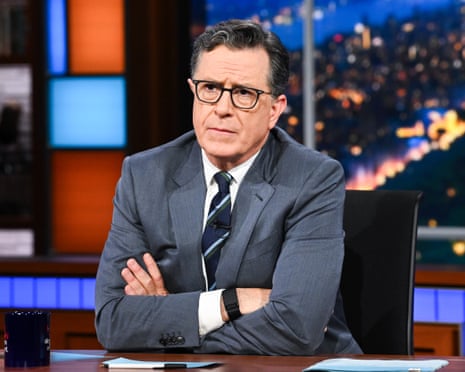
Trump’s sensitivity to cultural criticism has also played out in his ongoing feud with late-night television. He has repeatedly attacked Jimmy Kimmel, calling him “talentless” and “horrible” — comments that Kimmel has turned into punchlines on his show.
When Kimmel recently announced the renewal of Jimmy Kimmel Live!, the news was celebrated by fans as a symbolic rebuttal to the president’s attacks. Media analysts noted that Trump’s fixation on entertainers, from Kimmel to other comedians and actors, reflects a broader pattern: conflating criticism with personal vendetta.
“It’s governance by grievance,” said a veteran political strategist. “Every insult becomes a cause, every joke a threat.”
The Nobel Prize Controversy
That dynamic was on full display in a surreal episode involving the Nobel Peace Prize. Trump has long expressed frustration at never receiving the award, often claiming credit for resolving international conflicts. When the 2025 prize was awarded instead to Venezuelan opposition leader María Corina Machado, the administration reportedly sought to frame the decision as validation of Trump’s foreign policy.
The controversy peaked when Machado symbolically presented her medal to Trump during a White House visit — a gesture quickly clarified by the Norwegian Nobel Committee. In a dry but pointed statement, the committee emphasized that while a physical medal can be gifted, the title of Nobel laureate cannot be transferred or shared.
“History is not for sale,” one European diplomat remarked privately after the clarification circulated.
The episode, widely mocked online, was seen by critics as emblematic of Trump’s hunger for validation — and the limits of spectacle when confronted by institutional rules.
Booed in Public, Online Meltdowns
Public reactions have grown increasingly visible. Videos circulated widely showing Trump administration figures being booed at public appearances, including at sporting events and transit hubs in Washington. While such moments are hardly unprecedented in American politics, the frequency has drawn attention.
At the same time, Trump’s online activity has intensified. According to tracking groups, he posted more than 150 times in a single day on Truth Social, promoting images of himself as “Tariff King” and praising authoritarian leaders abroad, including Iran’s supreme leader, for halting mass executions — a striking reversal from earlier promises to confront such regimes.
Mental health professionals caution against armchair diagnoses but note that the volume and tone of the posts suggest a presidency increasingly governed by impulse.

Institutions Under Pressure
Beyond rhetoric, substantive institutional conflicts are mounting. Trump has clashed with the Supreme Court over attempts to reshape the Federal Reserve, drawing warnings from economists about market instability. His administration has explored creating new Justice Department units operating directly from the White House — a move critics argue would erase the firewall between law enforcement and politics.
With a government shutdown deadline looming and foreign policy crises simmering in Venezuela and the Middle East, even some Republican lawmakers have privately expressed concern about the administration’s direction.
“This is not normal stress-testing of institutions,” said a former GOP senator. “This is stress-fracturing.”
A Nation at a Crossroads
Taken together — the threat to invoke the Insurrection Act, the cultural backlash, the fixation on personal slights, and the erosion of institutional norms — the moment feels precarious. Trump’s supporters continue to see him as a disruptor fighting entrenched elites. His critics see something far darker: a presidency unraveling under the weight of its own confrontations.
The question, as one historian put it, is not whether American democracy is resilient, but how much strain it can endure at once.
As protests simmer in Minneapolis, comedians draw standing ovations for political monologues, and international bodies remind Washington that rules still apply, the United States finds itself grappling with a familiar but intensifying dilemma: how to contain power when the person wielding it shows little interest in restraint.
The answer, many observers say, will not come from a single court ruling, election, or viral clip — but from whether institutions, and citizens, insist that the line between authority and abuse still matters.






