Mark Carney’s Davos Speech and the Quiet Revolt Against American Hegemony
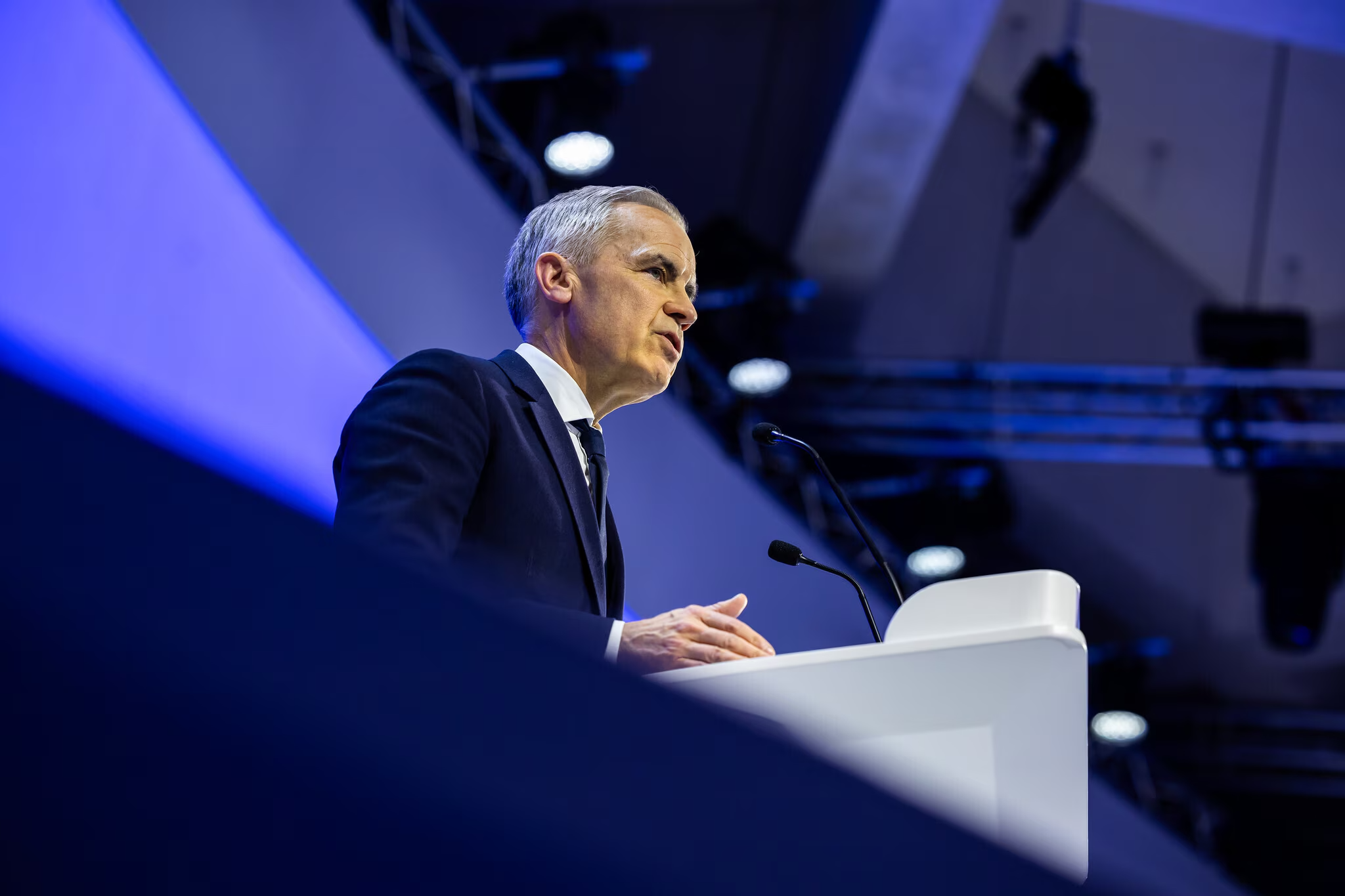
Davos, Switzerland — At the World Economic Forum this year, two radically different visions of global power were presented on the same stage. One was methodical, self-aware, and quietly disruptive. The other was rambling, grievance-driven, and untethered from empirical reality. Together, they captured a growing rupture in the international system — and perhaps the beginning of a new era.
Canadian Prime Minister Mark Carney’s speech at Davos has been widely described by diplomats, scholars, and commentators as one of the most consequential addresses by a Western leader in years. Without naming U.S. President Donald Trump once, Carney articulated what many governments have privately acknowledged but rarely stated publicly: the rules-based international order, long anchored by American leadership, no longer functions as advertised.
“This bargain no longer works,” Carney said, referring to decades of economic integration under U.S. hegemony. “We are in the midst of a rupture, not a transition.”
Across global media — from The Guardian to Foreign Policy, from academic threads on X (formerly Twitter) to extended analysis on Substack and YouTube — Carney’s speech was received as something rare: a Western leader openly acknowledging the fiction underpinning post–Cold War globalization.
For decades, Carney noted, middle powers like Canada benefited from American dominance even while knowing that international law and trade rules were enforced unevenly. The system worked because it was predictable, not because it was fair. But predictability, he argued, has vanished.
“Great powers have begun using economic integration as weapons,” Carney said, listing tariffs, financial infrastructure, and supply chains as tools of coercion. “This is not sovereignty. It is the performance of sovereignty while accepting subordination.”
The line reverberated widely. Analysts at the Council on Foreign Relations called it one of the clearest articulations yet of why middle powers are reassessing their relationship with Washington. On social media, foreign policy experts contrasted Carney’s language with years of cautious euphemisms from European leaders still hoping for U.S. reliability.
A Stark Contrast on the Same Stage
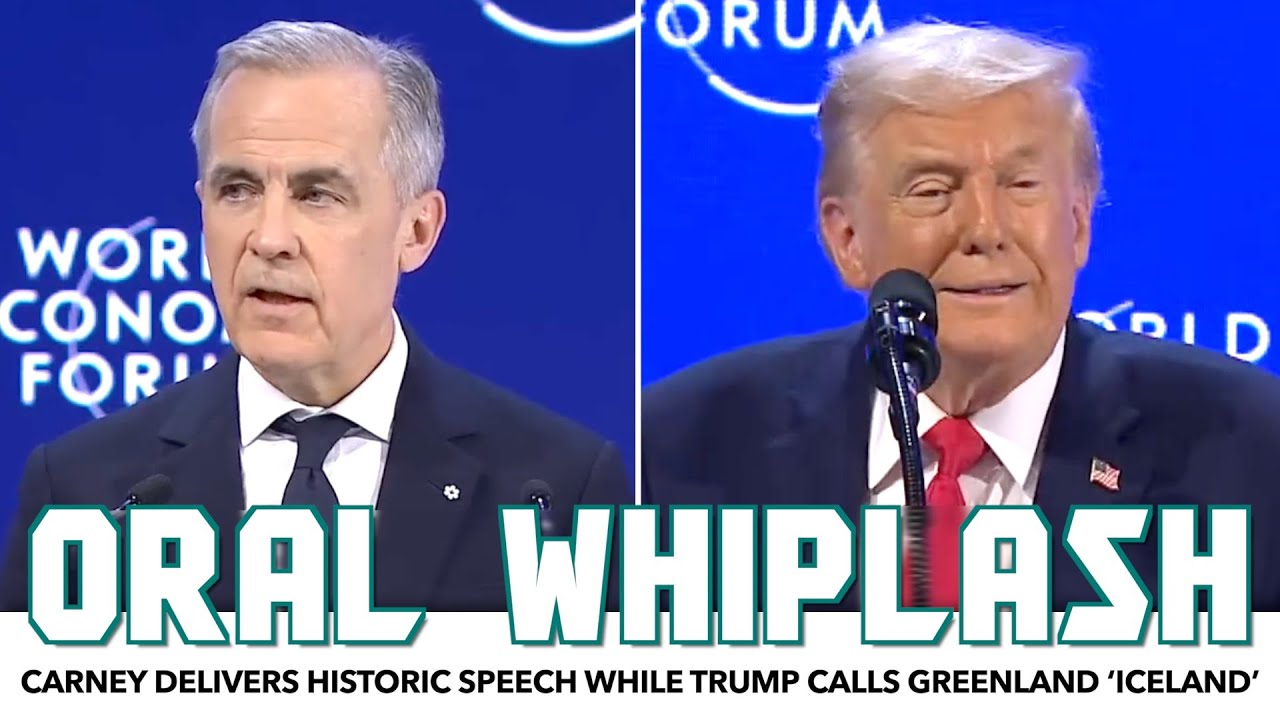
The contrast with President Trump’s Davos appearance could not have been sharper.
In a speech that quickly went viral for all the wrong reasons, Trump revisited claims about the 2020 election, repeated falsehoods about wind energy, confused Iceland with Greenland, and reminisced about being called “daddy” by unnamed foreign leaders — remarks that drew disbelief and ridicule across American and international media.
Clips circulated rapidly on X, TikTok, and YouTube, often juxtaposed with excerpts from Carney’s address. One widely shared post from a former U.S. diplomat summed up the sentiment: “This is what decline looks like — not loss of power, but loss of seriousness.”
Fact-checkers quickly debunked Trump’s claims about China lacking wind farms. According to data from the International Energy Agency and widely reported by outlets such as The New York Times and Reuters, China installed more wind and solar capacity last year than the rest of the world combined.
Yet the deeper issue, analysts argued, was not factual accuracy but credibility. As one columnist at The Atlantic noted, Trump’s speech reinforced a growing perception among allies that American commitments — whether on trade, security, or climate — are subject to sudden reversal.
Carney’s speech was, in many ways, an answer to that reality.
“Value-Based Realism” and a Third Path
Carney framed Canada’s new approach as “value-based realism,” borrowing a phrase from Finnish President Alexander Stubb. The idea is straightforward but politically fraught: remain committed to sovereignty, human rights, and international law while acknowledging that not all partners share the same values — and that progress is often incremental.
This approach rejects both naïve idealism and blind alignment.
“Middle powers must act together,” Carney warned. “If we are not at the table, we are on the menu.”
The implication was clear. Bilateral negotiations with a hegemon — particularly one that openly weaponizes interdependence — leave smaller states negotiating from weakness. Competing to be “the most accommodating,” as Carney put it, erodes genuine sovereignty.
Scholars interviewed by The Guardian described the speech as the first by a major Western leader to fully internalize the implications of Trump’s second term. “Others hint at the danger,” one professor of international relations said. “Carney states it outright.”
The Gap Between Rhetoric and Policy
Yet the speech has also drawn criticism — particularly at home.
Canadian commentators and civil liberties groups have noted that some of Ottawa’s recent actions do not yet match Carney’s rhetoric. Canada briefly entertained participation in a U.S.-backed “Gaza Peace Board,” despite President Trump’s record of violating international agreements and despite the inclusion of leaders accused of war crimes.
Canada has also stopped short of formally recognizing Israel’s actions in Gaza as genocide, despite growing consensus among leading genocide scholars and United Nations experts. Critics argue this hesitation undermines Carney’s stated commitment to international law.
There is also concern over proposed border legislation that expands surveillance powers and deepens security cooperation with the United States — a move critics see as accommodating Trump-era narratives about migration and fentanyl trafficking, despite data showing Canada accounts for a minimal share of U.S. fentanyl seizures.
Even supporters of Carney’s Davos message acknowledge the tension. “This speech plants a flag,” one Canadian policy analyst wrote on X. “Now comes the harder part: walking toward it.”
A Signal Beyond Canada
Still, the broader significance of the speech extends far beyond Canadian politics.
Carney received a standing ovation at Davos — a rarity previously accorded to figures like Nelson Mandela and Volodymyr Zelensky. Diplomats from Europe, Asia, and Latin America privately described the address as articulating what many governments are already doing quietly: diversifying trade, reducing exposure to U.S. pressure, and building coalitions that do not depend on Washington’s approval.
Whether this marks the beginning of a coordinated “third path” for middle powers remains uncertain. But as American unpredictability becomes structural rather than episodic, the logic Carney laid out is increasingly difficult to ignore.
As one former U.S. official wrote in a widely shared Substack post, “The most damaging thing Trump has done is not any single policy — it’s teaching allies that American power can no longer be relied upon, even when it’s well-intentioned.”
At Davos, Mark Carney did not celebrate that reality. He named it.
And in doing so, he may have given shape to a world that has already begun to move on.






