Donald Trump blinked. After days of threatening to take Greenland by force, after using tariffs to intimidate Europe, after openly floating annexation, Donald Trump has backed down. No invasion. No takeover. No tariffs. And this didn’t happen because of NATO press releases or because Europe begged. It happened because one leader refused to stay silent: Mark Carney.
Today, Trump tried to pretend nothing happened, but his words, his body language, and his sudden retreat tell a very different story. Let’s be clear about what just happened. Donald Trump didn’t adjust his position on Greenland. He didn’t refine it. He didn’t negotiate. He abandoned it. Just days ago, he was threatening European countries with tariffs unless Greenland was handed over. He openly talked about force and treated sovereignty as optional. That triggered global outrage—and something Trump did not expect: unified resistance.
Denmark pushed back. Greenland pushed back. Europe pushed back. And then Canada stepped forward publicly, clearly, and without hesitation. Trump felt it immediately. You could hear it in his voice and see it in his frustration. At public events, instead of laying out policy, Trump spent long stretches praising himself before suddenly lashing out at Canada. He complained that Canada wasn’t grateful, singled out Mark Carney by name, and warned him to remember who keeps Canada alive. That wasn’t strength. That was anxiety. That was a man reacting to a speech that landed harder than he expected.
Trump didn’t back down because he wanted to. He backed down because Mark Carney cornered him. Trump’s Greenland strategy was simple: threaten tariffs, talk about force, and wait for allies to blink. It has worked before because most leaders stay quiet. Carney didn’t. At the World Economic Forum, he publicly named Trump’s approach for what it was: economic blackmail. Not misunderstanding. Not tough negotiating. Blackmail.
That mattered because Trump’s power depends on ambiguity. As long as no one names what he’s doing, he controls the narrative. Carney destroyed that shield. He said sovereignty is not negotiable. He said tariffs are escalation. He said threatening Greenland is unacceptable. And he said it in front of the world’s most powerful leaders and media, not behind closed doors. In that moment, Trump lost his exit ramp. If he escalated, he would be openly challenging NATO and Arctic security. If he pushed further, he would be isolated.
So Trump did what he always does when confronted publicly. He folded and tried to pretend it was a win. After meeting with NATO’s Secretary General, he rushed to social media to announce a vague “framework” on Greenland. No details. No terms. No ownership. No enforcement. Just empty language and a promise that tariffs would no longer be imposed. This is Trump’s oldest move: create a crisis, lose control of it, and declare victory anyway.
If this were a real deal, Trump would have explained it. If it were a real win, he would have bragged about specifics. Instead, he backed away and tried to save face. Trump did not get Greenland. He did not get ownership. He did not get compliance. What he got was resistance—and he folded.
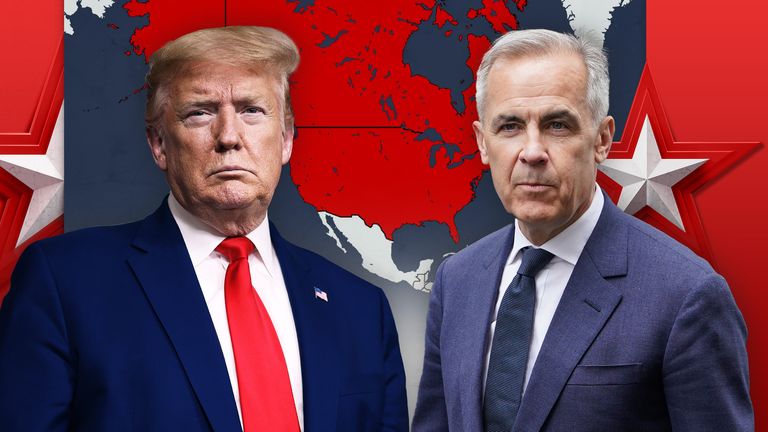
This didn’t just end a Greenland crisis. It changed the balance of power around Donald Trump. By standing up for Greenland, Mark Carney did more than defend a territory. He proved that intimidation can be resisted and that resistance attracts allies. He aligned Canada with Denmark, with Europe, and with NATO. At the same time, Carney has been reducing Canada’s vulnerability by strengthening global partnerships and building alternatives to American pressure. That’s not symbolism. That’s insurance.
Trump’s biggest mistake wasn’t backing down. His biggest mistake was showing the world that his threats can be neutralized. Now every future bluff carries less weight. If Trump tries this again—against Canada, Europe, or any other ally—he will face countries that already know he can be forced to fold. He didn’t just lose Greenland. He taught the world how to stand up to him. Trump tried to redraw borders with threats. Mark Carney drew a line instead. And today, that line held.