At Davos, a Transatlantic Rift Laid Bare as Trumpism Takes the Stage
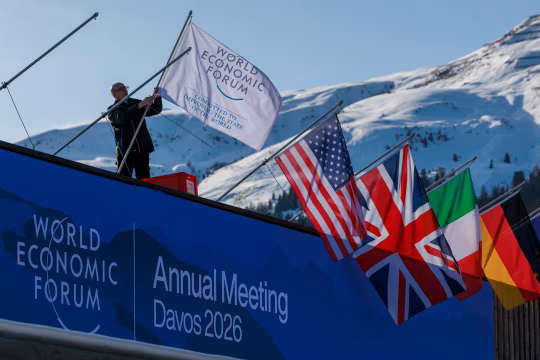
Davos, Switzerland — Each January, the snow-dusted Alps become a familiar backdrop for the World Economic Forum, an annual gathering that bills itself as a place where the world’s most powerful political and economic actors convene to “improve the state of the world.” Critics have long argued that Davos functions less as a laboratory for reform than as a clubhouse for global elites, a venue where inequities are discussed but rarely disrupted.
This year, however, the tension in the air was sharper than usual. The reason was not merely inflation, climate change or geopolitical instability, but the renewed and destabilizing presence of Donald J. Trump in global affairs — and the spectacle created by those sent to defend his worldview on the international stage.
No moment captured that tension more clearly than the appearance of Howard Lutnick, a prominent Wall Street executive and outspoken Trump ally, who found himself facing an audience far less deferential than the American cable news studios to which he appears accustomed.
A Different Audience, a Different Reaction
European leaders, economists and historians at Davos were not subtle about their unease. With trade wars once again looming, alliances fraying and rhetoric around territorial sovereignty — including Greenland — reemerging from Washington, many attendees were openly questioning how seriously the United States could be taken as a steward of global stability.
Lutnick’s panel appearance was intended to defend what Trump allies increasingly refer to as “Trumponomics”: a mix of aggressive tariffs, economic nationalism, hostility toward climate policy and disdain for multilateral institutions. Instead, it became a case study in the widening cultural and intellectual divide between Washington’s populist right and much of the transatlantic policy establishment.
When John Adam Tooze, the English-American historian and Columbia University professor known for his rigorous analysis of global economic systems, posed a straightforward question — asking Lutnick to imagine the perspective of Denmark’s leadership amid U.S. pressure over Greenland — the exchange quickly veered off course.
Rather than engaging with the diplomatic reality faced by a small NATO ally, Lutnick pivoted to a sweeping denunciation of globalization, declaring it a “failed policy” and, more controversially, labeling it “an invention of the left.”
The statement landed with an audible thud.
A Claim Untethered From History
For many in the room, and for observers watching online, Lutnick’s assertion was not merely debatable but historically indefensible. The modern architecture of globalization — from free trade agreements like NAFTA to China’s accession to the World Trade Organization — was largely constructed through bipartisan, corporate-driven consensus in Washington during the late 20th century.
Progressive movements, by contrast, were among the loudest critics. From the 1999 “Battle of Seattle” protests against the WTO to labor opposition to offshoring and environmental campaigns against deregulated supply chains, the political left spent decades warning of precisely the outcomes Lutnick now decried: hollowed-out manufacturing, weakened labor protections and rising inequality.
As commentators at outlets like The New York Times, The Atlantic and The Washington Post have repeatedly noted, Trumpism did not dismantle globalization so much as weaponize its failures rhetorically, while leaving many of its underlying structures intact.
At Davos, Lutnick appeared either unaware of this history or uninterested in acknowledging it.
Climate Policy as a Punchline
The exchange grew more strained when the discussion turned to climate and energy policy. Lutnick mocked Europe’s commitment to renewable energy targets, questioning the logic of pursuing net-zero emissions while relying on battery production outside the continent.
The response from the panel and audience was curt, even dismissive. The counterargument — that fossil fuels are finite, geopolitically destabilizing and environmentally catastrophic — required little elaboration among an audience deeply immersed in climate risk assessments.
Here again, the contrast was stark. In the United States, climate skepticism still enjoys significant airtime on partisan media platforms. At Davos, it was treated less as a legitimate policy position than as an anachronism.
Greenland and the Refusal of Accountability
Perhaps the most revealing moment came when Lutnick was pressed to address renewed American rhetoric around Greenland — a subject that has become emblematic of Trump’s transactional approach to diplomacy.
Rather than clarifying policy or acknowledging allies’ concerns, Lutnick refused to engage, deflecting responsibility to unnamed “national security people” and insisting the matter was “unnecessary” to discuss publicly.
For European observers, the refusal spoke volumes. It reinforced a perception that Trump’s inner circle views sovereignty, alliances and international norms as inconveniences rather than constraints — and that accountability is something to be evaded, not embraced.
Performance Over Policy
What emerged over the course of the panel was less a coherent defense of U.S. policy than a performance — one calibrated for an audience elsewhere. Lutnick’s talking points echoed familiar Trump-era slogans, seemingly designed to resonate with domestic political bases and social media ecosystems rather than with the experts seated before him.
Political analysts across American media, from CNN to Politico, have increasingly described this dynamic as a hallmark of Trumpism: governance as spectacle, diplomacy as provocation, and expertise as an obstacle rather than an asset.
At Davos, stripped of a friendly press environment and confronted by scholars and policymakers with deep institutional memory, the limits of that approach were laid bare.
A Broader Signal
The Lutnick episode was not merely an embarrassment for one individual. It served as a signal — to allies, investors and adversaries alike — of the uncertainty surrounding America’s role in the world should Trumpism continue to define U.S. policy.
As one European diplomat privately remarked to reporters, “We are not confused about America’s power. We are confused about America’s intentions.”
That confusion carries real consequences: for global markets, for climate cooperation, and for the fragile network of alliances that has underpinned relative stability since World War II.
The Meaning of Davos, Revisited
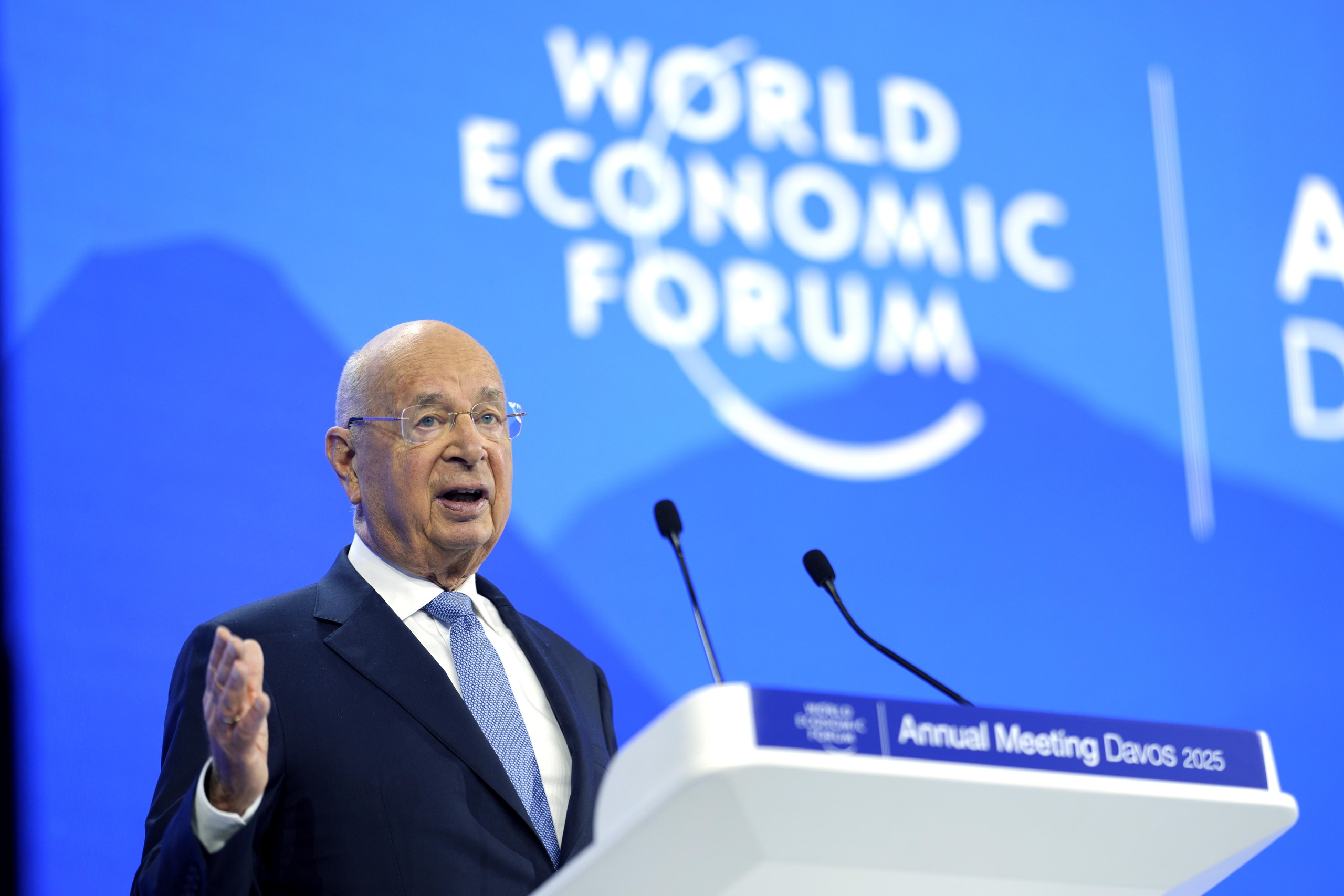
Davos has often been criticized as a place where elites talk past the world’s problems. This year, however, it functioned as something else: a mirror reflecting the growing estrangement between the United States’ populist political culture and the norms of global governance it once championed.
If the goal of the World Economic Forum is to foster dialogue, the Lutnick appearance demonstrated both the necessity of that dialogue and the difficulty of sustaining it when facts, history and accountability are treated as optional.
In the end, the question raised at Davos was not simply whether globalization has failed, but whether the United States — under the influence of Trump and his allies — is prepared to engage the world in good faith at all.






