A Quiet Diplomatic Shock: How Canada and Mexico Began Rethinking North America Without Washington
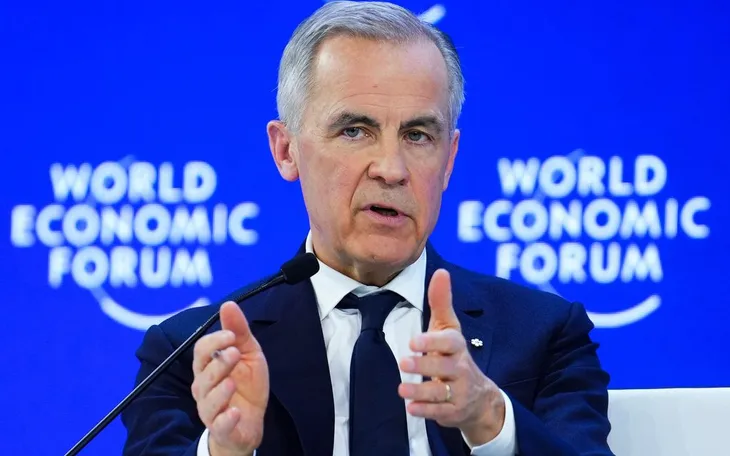
When Canada’s prime minister took the stage at the World Economic Forum in Davos last week, few expected anything more than a carefully worded affirmation of multilateralism. Davos speeches, after all, are famous for their polish and forgettability.
Instead, Mark Carney delivered something closer to a challenge.
“The illusion of a rules-based international order has finally vanished,” he said, calling on so-called middle powers to choose between competing for favor from great powers or combining to create what he termed a “third path.”
At first, much of the American financial press heard familiar rhetoric — a variation on themes long discussed in academic journals and policy panels. Market analysts on Wall Street focused instead on interest rates, China, and the U.S. election cycle. On social media, Carney’s remarks circulated briefly on X (formerly Twitter), attracting modest attention among foreign policy specialists but little mainstream traction.
Then Mexico responded.
Within 48 hours, President Claudia Sheinbaum publicly praised Carney’s speech during her nationally broadcast morning press conference in Mexico City, calling it “very good” and “in tune with the current times.” She did not need to answer the question. She chose to.
That choice has begun to reverberate across North America.
A Signal Heard Loudly in Washington — and Online
Among U.S. policy commentators on X and Substack, the reaction was swift. Former diplomats, trade lawyers, and think-tank analysts noted that Mexico’s endorsement was unusually explicit — and unusually fast. Several posts described it as a “soft rupture” in North American diplomatic habits, while others called it the clearest sign yet that traditional assumptions about hemispheric dependence on Washington no longer hold.
For decades, Canada and Mexico have managed their U.S. relationship largely in parallel, often competing quietly for American goodwill. Trade disputes, security cooperation, and treaty negotiations were handled bilaterally, rarely in coordination. The logic was simple: proximity to power demanded deference, not coalition-building.
Carney’s Davos speech proposed something else entirely.
Middle powers, he argued, should stop competing for scraps of influence and instead combine their economic weight to create leverage. It was a subtle but unmistakable critique of American unpredictability — and of the transactional nature of recent U.S. diplomacy.
Mexico City did not miss the point.
Why Mexico Moved First
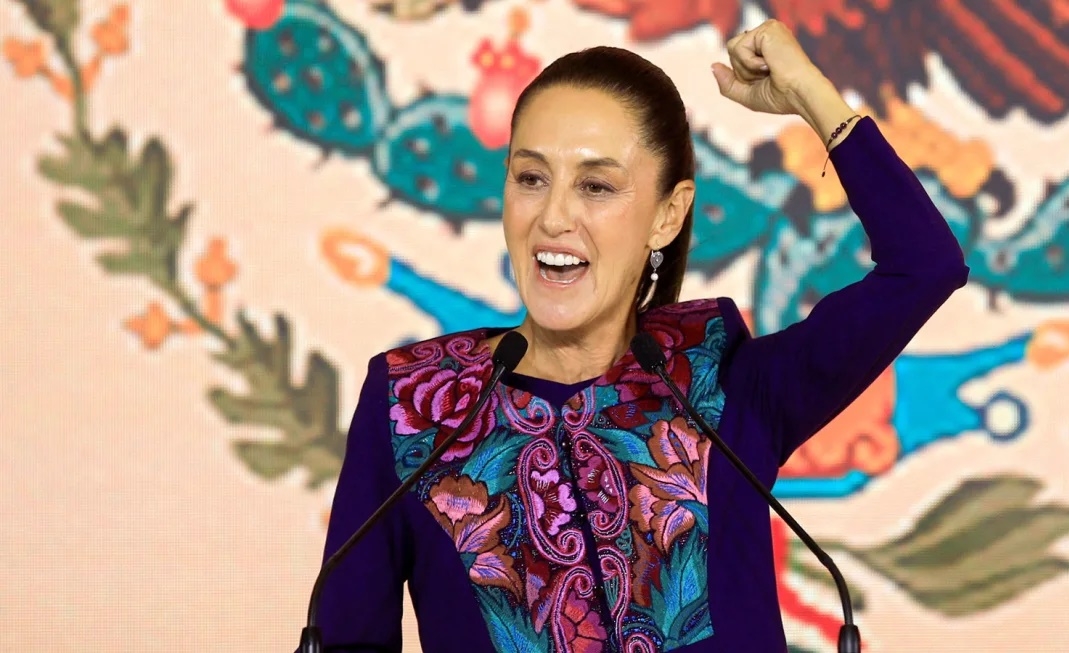
President Sheinbaum entered office with a deep awareness of asymmetry. Mexico’s relationship with the United States has long been shaped by migration, trade, and security pressures, often dictated from the north. The experience of the Trump years — from tariff threats to the renegotiation of NAFTA into the six-year-renewable USMCA — reinforced the sense that dependence itself had become a vulnerability.
On American social media, several analysts noted that Sheinbaum’s response reflected not emotion, but calculation.
Canada offered an alternative framework: sovereignty through partnership, not separation. Autonomy within North America, not withdrawal from it.
The timing was also deliberate. Just days earlier, Canada’s Governor General, Mary Simon, had concluded a three-day visit to Mexico City — the first such visit by an Indigenous governor general. The symbolism resonated widely, particularly among commentators focused on reconciliation politics and post-colonial statecraft.
Mexican lawmakers across party lines amplified the message. Members of the governing Morena party and the opposition alike described Carney’s speech as “clear,” “intelligent,” and strategically necessary. On Mexican political X accounts, clips circulated framing Canada not as a distant partner, but as a counterweight.
Trade as Strategy, Not Ideology
At the heart of the emerging alignment is economics — but not ideology.
As several U.S. trade analysts pointed out online, Canada and Mexico possess complementary economies often tied, unnecessarily, to American intermediaries. Mexico imports canola largely from the United States, while Canada exports the same commodity primarily to China. Both relationships are vulnerable to political pressure.
The solution, increasingly discussed in policy circles and social media threads: substitution.
Mexico could source more agricultural products directly from Canada. Canada could secure a stable North American market less exposed to geopolitical leverage. Similar logic applies to energy, critical minerals, and manufacturing inputs.
Recent Canadian negotiations with China — notably resolving electric vehicle and canola tariff disputes — did not go unnoticed in Mexico City. They signaled pragmatism, not alignment. Sovereignty, not loyalty.
A Shared Fear: 2026
Hovering over the conversation is the looming 2026 review of the USMCA trade agreement. Both Ottawa and Mexico City remember the uncertainty of the last renegotiation. Both watched how trade became a political weapon in Washington.
On U.S. social platforms, several former trade officials noted that a coordinated Canadian-Mexican approach could fundamentally alter the bargaining dynamic. Together, their combined GDP exceeds $4 trillion — leverage that is meaningful even to the world’s largest economy.
Separately, each negotiates from weakness. Together, they negotiate from structure.
That insight — unity as leverage — lies at the core of Carney’s “third path.”
Not Anti-American — Post-Dependent
Despite some alarmist reactions online, the emerging Canada-Mexico alignment is not anti-American. It is post-dependent.
Neither country is abandoning the United States. Both are recalibrating. They are building optionality — a concept frequently discussed in American strategic circles, now being applied by U.S. neighbors.
Ironically, it was American behavior that accelerated the shift. Public insults, arbitrary tariffs, and the casual questioning of sovereignty — including social media imagery portraying Canada as subordinate territory — eroded assumptions that respect was automatic.
As one widely shared post by a U.S. foreign policy scholar put it: “Power that assumes dependence eventually manufactures resistance.”
What Comes Next
In February, Canada’s trade minister will lead a major trade mission to Mexico. Observers across North America will be watching closely. New bilateral agreements — in agriculture, energy, technology, or supply chains — would transform rhetoric into structure.
For now, the significance lies less in policy detail than in precedent.
Canada articulated a vision of middle-power collaboration. Mexico endorsed it publicly, quickly, and without hedging. The conversation has shifted — not in Washington boardrooms, but in open daylight, streamed live from a press room in Mexico City.
History rarely announces itself with fanfare. More often, it arrives through choices that did not have to be made — but were.
When historians look back at how North American power dynamics began to change in 2026, they may not point to a treaty or a crisis. They may point instead to a speech in Davos — and to a president who chose to say, plainly, that she agreed.
The world order once assumed permanent has become negotiable. And for the first time in a long while, that negotiation is happening not just with Washington — but around it.






