When Comedy Stops Joking and Starts Keeping Records
:max_bytes(150000):strip_icc():focal(999x0:1001x2)/Jimmy-Kimmel-db432376425b4b04a35852ec4fbd70b9.jpg)
By the time Jimmy Kimmel held up the papers, the audience already assumed they knew where the joke was headed. Late-night television has trained viewers to expect a rhythm: setup, punchline, applause, move on. But this was different. Kimmel didn’t rush. He didn’t grin for effect. He paused, stacked the pages neatly, and told the audience he was going to do something controversial.
“I’m going to read things in order.”
It was a small line, delivered lightly. But order, it turned out, was the entire point.
Behind him, the screen lit up with a simple title card: “JD Vance: Three Moments.” No graphics, no flames, no ominous music. Just dates.
For years, political comedy has thrived on exaggeration. This segment did the opposite. It relied on chronology.
The first clip showed Vance in a polished interview, speaking in careful, conciliatory language about working families, dignity, and fairness. The tone was calm, reassuring, almost technocratic. The audience reacted politely, the way people do when they recognize a version of a politician they’ve seen before.
Then came the second clip. Vance at a rally. Sharper voice. Combat language. Critics dismissed, conflict embraced. The laughter this time was uneasy, not because the moment was shocking, but because the contrast was unmistakable.
The third clip followed quickly: Vance insisting he had always been consistent, that his words had been misinterpreted, that critics were distorting his record.
Kimmel didn’t interrupt the footage. He let it end.
“I’m not even roasting him yet,” he said, stepping aside and gesturing at the screen. “I’m just showing you the before and after photo.”
The joke landed, but the effect lingered. What Kimmel had done wasn’t satire in the traditional sense. It was closer to what media scholars call juxtaposition journalism—placing statements side by side and allowing the audience to draw its own conclusions.
In an era when political debate is often flattened into slogans, the simple act of sequencing felt almost radical.
The Coworker Everyone Recognizes
Kimmel’s eventual punchlines were restrained, even generous. He mimicked the tonal shifts gently: the thoughtful senator voice, the combative rally persona. The audience laughed not because the caricature was cruel, but because it was familiar.
“You’ve met this guy,” Kimmel said, looking directly into the camera. “He’s the coworker who tells the boss one thing and tells the break room another. Then acts shocked when the email thread exists.”
That line, clipped and conversational, traveled fast. Within an hour, short clips of the segment appeared across TikTok, X, Instagram, and YouTube. Reaction videos followed, not only from partisans but from viewers who framed their responses less around ideology and more around recognition.
Social media didn’t argue with the joke. It replayed the timeline.
That distinction mattered. Political scandals traditionally erupt around hidden information: leaked audio, secret documents, undisclosed meetings. This one revolved around material that had always been public. The friction came not from exposure, but from alignment—or the lack of it.
As media critics have noted repeatedly, audiences are increasingly skeptical not of politicians changing their minds, but of politicians denying that they ever did.
“People can evolve,” Kimmel said during the segment. “But when you evolve three times in one month, that’s not growth. That’s a costume change.”
Trump Enters the Frame

The response from Donald Trump arrived quickly and predictably. In a post shared widely across platforms, Trump denounced Kimmel as a disgrace, labeled late-night television “propaganda,” and defended Vance as a “great American” being attacked by a “failing comedian.”
The post followed a familiar pattern: emphasis on ratings, accusations of bias, repetition as strategy. What it did not do was address the clips themselves.
There was no alternative timeline offered. No claim that the dates were wrong. No explanation for the tonal shifts. The rebuttal targeted the messenger, not the message.
That omission became the story.
Media analysts and casual viewers alike noted the asymmetry. Kimmel had presented a sequence. Trump responded with volume. The mismatch highlighted a dynamic that has defined much of contemporary political communication: outrage as substitution for refutation.
The next night, Kimmel opened his show holding a printed copy of Trump’s post like a homework assignment.
“I saw this,” he said calmly. “And I just want to say, thank you for watching.”
The audience erupted.
But again, Kimmel didn’t linger. He didn’t escalate. He pointed out what hadn’t happened.
“If the clips were misleading,” he said, “post the full context. That ends this in ten seconds.”
Then he paused.
“But notice what didn’t happen. No correction. Just more yelling.”
Receipts Over Rhetoric
Kimmel put up a short list on screen: Signs You Can’t Handle the Receipts.
You attack the person holding them.
You change the subject.
You demand everyone stop looking.
The audience laughed, but the laughter carried the weight of recognition. This wasn’t just about one senator or one former president. It was about a pattern Americans have grown accustomed to seeing across politics, media, and even corporate culture.
When confronted with contradictions, the response is often not clarification but escalation.
“What they don’t understand,” Kimmel said, leaning forward, “is when you react louder than the evidence, you’re telling people the evidence matters.”
That line, stripped of humor, could have fit comfortably into a media ethics panel or a journalism textbook. It captured a shift that researchers have been documenting for years: trust is no longer built through confidence alone, but through coherence.
Audiences don’t demand perfection. They demand continuity—or at least honesty about change.
A Different Kind of Damage
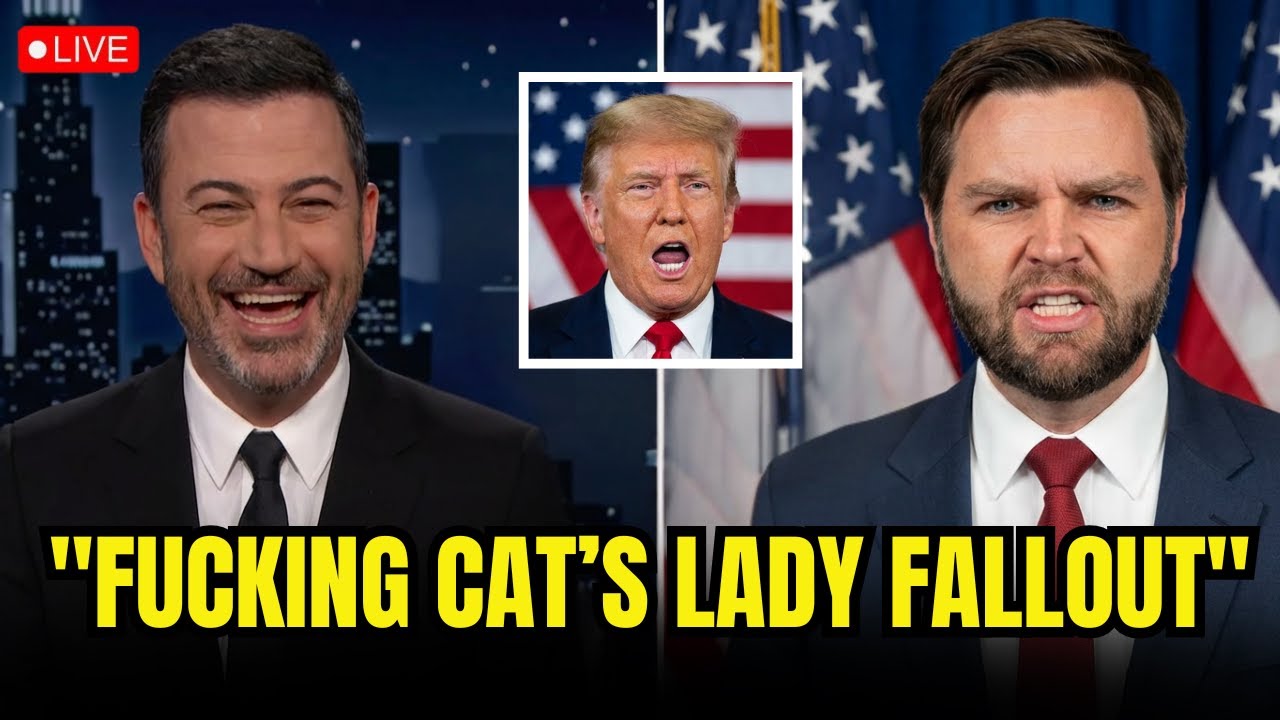
The segment did not destroy JD Vance’s career. It didn’t end Trump’s influence. It didn’t dominate cable news for weeks. Its impact was quieter, and in some ways more enduring.
It forced a question into the public conversation that couldn’t be dismissed as partisan: If nothing changed, why did the wording change every time the audience changed?
That question lingered not because it was cruel, but because it was simple.
In recent years, late-night comedy has often been criticized for preaching to the choir. But this moment suggested a different function—less sermon, more archive. Kimmel wasn’t telling viewers what to think. He was reminding them what had been said.
In an information ecosystem flooded with takes, timelines are underrated. They don’t shout. They don’t moralize. They just sit there, waiting to be explained.
And when they aren’t, people notice.
In the end, the segment didn’t land like a punchline. It landed like a filing cabinet opening.
Order matters.
Receipts matter.
And sometimes, the most uncomfortable spotlight isn’t satire—it’s sequence.






