When “Low IQ” Becomes a Political Weapon, and a Liability

By the time Donald J. Trump labeled Representative Jasmine Crockett “low IQ” before a cheering crowd, the phrase had already become a familiar instrument in his political vocabulary. For years, Mr. Trump has wielded intelligence as a blunt-force insult — a way to dismiss critics without engaging their arguments. Presidents, generals, professors, journalists and lawmakers have all been branded incompetent or dim by the former president, often to applause from supporters who see the provocation itself as the point.
What made this moment different was not the insult, but the response.
Ms. Crockett, a first-term Democratic congresswoman from Texas and a former public defender, did not counter with her own attack. She did not raise her voice, stage a theatrical rebuttal, or attempt to out-insult a man known for thriving on spectacle. Instead, she posed a question — one that spread rapidly across social media platforms and late-night television alike: If intelligence is the standard by which Mr. Trump judges others, where is the proof behind his own long-standing claims of genius?
The exchange, and the online storm that followed, offered a revealing case study in how political power, media repetition and personal branding collide in the modern attention economy.
A Brand Built on Brilliance
Mr. Trump has spent decades cultivating an image of intellectual dominance. He has repeatedly described himself as having “one of the highest IQs,” called himself a “very stable genius,” and portrayed elite institutions — particularly his alma mater, the Wharton School at the University of Pennsylvania — as evidence of exceptional ability. The claims are delivered so often, and with such confidence, that they have hardened into a kind of slogan.
Yet unlike many public figures whose academic records are well documented, Mr. Trump’s own educational history has remained largely opaque. No official transcripts, aptitude test scores or IQ assessments have been released publicly. Wharton, like most universities, does not comment on individual student records, and Mr. Trump has declined repeated calls to provide documentation.
This gap between assertion and evidence has long been noted by journalists, but rarely has it been pressed so directly by a political opponent — particularly one responding to a personal attack.
Crockett’s Pivot: From Insult to Inquiry
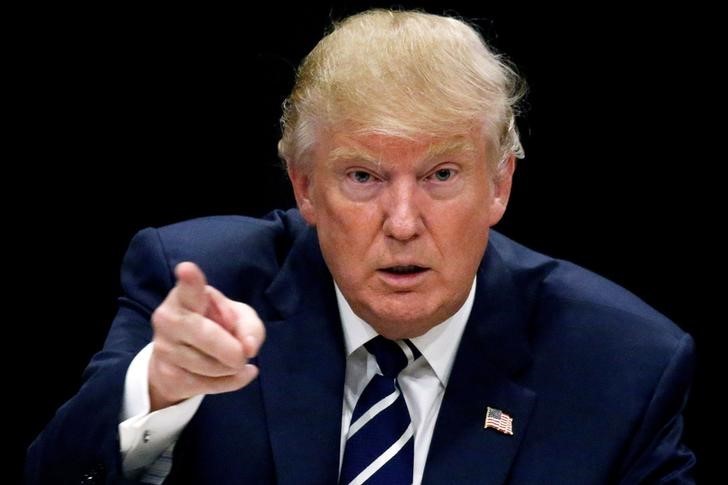
At a campaign rally, Mr. Trump dismissed Democrats broadly as unintelligent before singling out Ms. Crockett by name, questioning her competence and mocking her intelligence. The moment fit a familiar pattern: a sharp insult, a laugh line, and a pivot away from substance.
Ms. Crockett’s reply, delivered later and clipped widely on platforms like X, TikTok and Instagram, did not dwell on the insult itself. Instead, she highlighted a pattern: Mr. Trump’s frequent habit of questioning others’ intelligence while refusing scrutiny of his own claims.
“If intelligence is the flex,” she said in essence, “where are the receipts?”
The phrasing resonated. Within hours, hashtags referencing “receipts” and “genius claims” were trending. Commentary accounts, political influencers and late-night hosts replayed Mr. Trump’s boasts alongside Ms. Crockett’s challenge, allowing the contrast to speak for itself.
The Question of the Records
Some viral posts went further, circulating screenshots and documents alleged to show Mr. Trump’s historical aptitude scores, suggesting results inconsistent with his self-described genius. These claims, however, remain unverified. No authoritative outlet has confirmed the authenticity of the documents, and there is no publicly available primary source validating specific scores or percentiles.
Responsible coverage has treated these figures as alleged, not established fact. What mattered more, analysts noted, was not the numbers themselves but the vulnerability exposed by the question.
Political brands built on superiority are inherently fragile. They depend on repetition, not verification. Once an audience is invited to ask for evidence, the absence of proof becomes conspicuous.
The Familiar Reaction
Mr. Trump’s response followed a well-worn script. Rather than addressing the substance of the challenge, he dismissed it, escalated personal attacks, and portrayed the criticism as politically motivated. Allies rushed to his defense, while critics amplified the moment through memes, commentary and satire.
Late-night television seized on the dynamic. Hosts replayed Mr. Trump’s claims of exceptional intelligence, then juxtaposed them with Ms. Crockett’s calm inquiry. The humor was not in the insult, but in the repetition — a technique that has long proven effective in puncturing inflated political narratives.
“The joke isn’t the punchline,” one media critic noted online. “The joke is the replay.”
Why This Moment Landed
What distinguished this exchange from countless others in the Trump era was its symmetry. Mr. Trump himself established intelligence as a metric of worth. Ms. Crockett simply applied that metric back to its source.
In doing so, she avoided the trap of outrage politics. She did not argue that IQ tests are meaningless or that intelligence cannot be measured — debates that would have shifted focus. Instead, she accepted Mr. Trump’s premise temporarily and asked him to meet it.
The effect was disarming. Confidence, psychologists and political strategists alike often note, rarely requires constant reinforcement. Leaders secure in their abilities tend to demonstrate them through explanation, decision-making and results, not slogans. When self-assertion replaces demonstration, audiences eventually notice.
A Broader Pattern
This episode also reflects a larger shift in political discourse. Social media has reduced the distance between claim and counterclaim, allowing moments of inconsistency to circulate rapidly and repeatedly. What once might have been a throwaway insult at a rally now becomes a looping clip, a meme, a late-night segment, and a topic of debate across platforms.
For public figures who rely on spectacle, this environment can be both an asset and a liability. The same repetition that amplifies bravado can amplify doubt.
The Stakes Going Forward

Whether this moment has lasting political consequences remains to be seen. Mr. Trump’s supporters have shown little inclination to abandon him over questions of academic verification. For them, the insult itself is often the appeal.
But for undecided voters and casual observers, the exchange underscored a deeper issue: credibility. When leaders invite evaluation on their own chosen terms, they cannot easily retreat when the evaluation arrives.
Ms. Crockett’s challenge did not attempt to redefine intelligence. It simply asked for evidence. In a political culture saturated with claims, that restraint may be precisely why it resonated.
As the 2024 campaign continues, moments like this suggest a subtle evolution in how power is contested. Not through louder insults, but through quieter questions. Not by rejecting the metric, but by asking it to apply evenly.
And once an audience starts asking for proof instead of applause, even the loudest slogans begin to sound different.






